
















Small bathrooms come with a particular set of headaches. There’s rarely enough natural light, the layout is often dictated by pipework rather than good sense, and every fitting seems to compete for the same space.
The wrong wall finish can feel cramped. Get it right, and the same footprint can feel calm, bright and surprisingly generous.
This is where shower panels earn their reputation. They’ve become one of the most popular upgrades for compact bathrooms, and not simply because they look good in a showroom. They solve real, practical problems that tiles often make worse.
Why your bathroom wall finish matters
In a larger room, wall finishes are mostly about style. In a small one, they’re doing structural work for the eye. A busy or heavily segmented surface draws attention to every corner and edge, which makes the room feel boxed in.
A calmer, more continuous surface does the opposite. It lets the eye travel further before it hits a break, and that small trick of perception makes the whole space read as bigger than it is.
How panels create the illusion of more space
Tiles, however neatly laid, are made up of dozens or hundreds of individual pieces, each one outlined by a grout line. In a small shower enclosure, that adds up to a lot of visual noise. PVC shower panels are installed as large, continuous sheets, so there’s far less interruption across the wall.
Fewer grout lines mean fewer shadows for the eye to stop and register a boundary. The result is a seamless run of the wall that feels open rather than chopped up.
Pair that with a lighter colour or a finish with some sheen, and you get a bounce of light around the room, which tiles struggle to match once grout starts to dull with age.
A stylish alternative to tiles
There’s also a misconception that panels mean compromise, that you’re trading style for practical design.
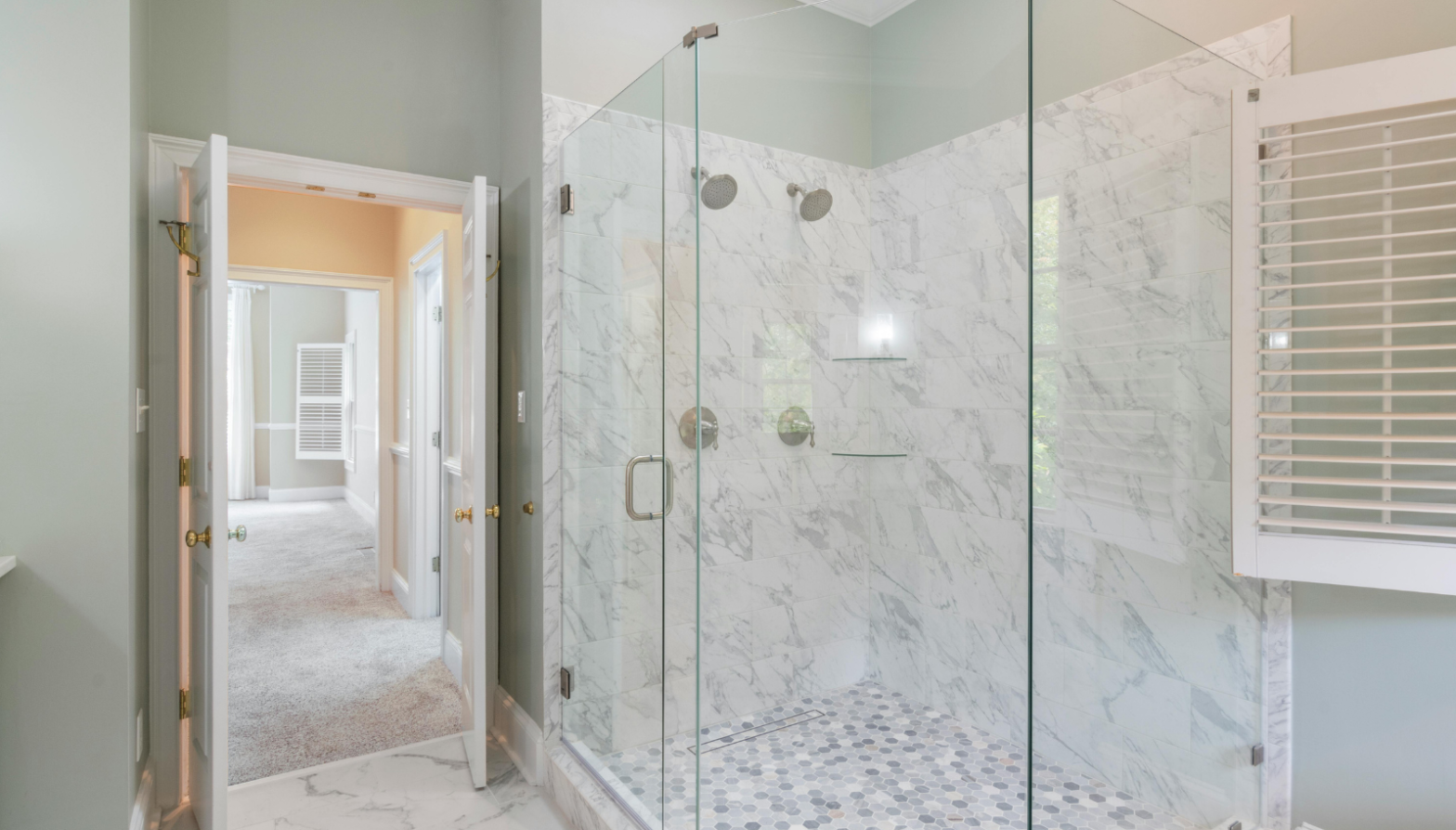
Modern ranges argue against that quite convincingly. Marble-effect and stone-effect panels have come a long way, with realistic veining and texture that hold up to scrutiny beyond a quick glance.
Concrete-style and contemporary finishes offer the same calm, architectural look that’s become popular in higher-end renovations, without the expense. You get the appearance of a luxury bathroom finish, but without the sealing, staining, or upkeep that natural stone demands.
Practical benefits of shower panels
Aesthetics aside, this is where panels really separate themselves from tiles. A correctly installed panel system creates a fully waterproof surface with none of the grout lines that tiles rely on for jointing, and grout is, frankly, the weak point of most tiled showers. It absorbs moisture, it discolours, and it gives mould somewhere to take hold.
With panels, there’s no grout to maintain. Cleaning becomes a case of wiping the surface down rather than scrubbing between joints with a toothbrush, which is a small thing on paper but makes a genuine difference to how often a bathroom actually gets cleaned properly.
Many homeowners specifically choose shower panels for this reason. They combine a fully sealed, waterproof finish that can cope with daily use, steam and temperature changes without warping or cracking.
For landlords and anyone renovating a rental property, that performance matters even more. It’s a finish that holds up under tenants coming and going, with far less upkeep needed compared to a tiled wall that’s developed cracked grout or a loose tile.
Fast, simple bathroom renovations
Installation is the other half of the appeal. Tiling shower areas properly takes time: surfaces need to be prepared, tiles set, grout applied and left to cure, and any mistakes are awkward to correct.
Panels go up far more quickly, often in a single day for a standard enclosure, and in many cases can be fitted directly over an existing surface rather than requiring it to be stripped back first.
That means less mess, less disruption to the rest of the house, and a bathroom that’s back in use far sooner.
Design tips for small bathrooms
There are a few principles that consistently work well in compact bathroom spaces:
- Choose lighter finishes: They reflect more light and make walls recede rather than close in.
- Use the same panel finish: Mixing it with a different tile elsewhere breaks up the eye line; keeping it consistent lets the space flow.
- Keep fixtures and fittings simple: Minimal contrasting trim reinforces that same sense of continuity rather than fighting against it.
- Limit the number of materials: Every extra texture or finish adds another visual full stop, which works against the open feel you’re trying to create.
Redefine your bathroom space
A small bathroom doesn’t have to feel small. The right wall finish does a surprising amount of the work, and shower panels tick boxes that tiles simply can’t match. That means fewer joints, a more spacious feel, genuine waterproofing, and a renovation that’s faster and far less disruptive.
For anyone weighing up options for a limited bathroom space, they’re well worth the purchase.