


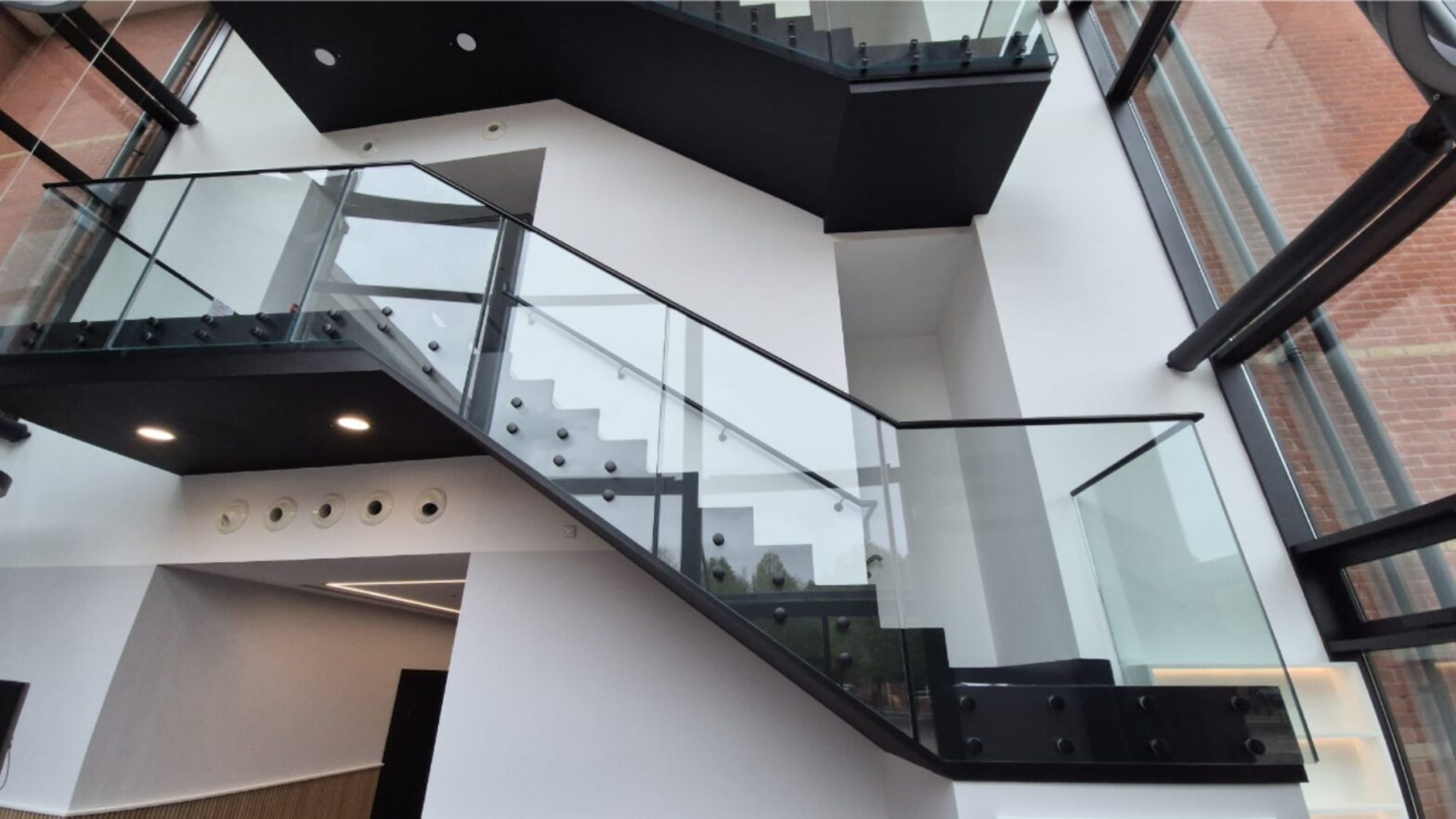











Modern commercial architecture continues to prioritise openness, natural light, and clean contemporary design. As a result, glass balustrades have become increasingly popular across office developments, hotels, retail spaces, apartment buildings, and public environments.
However, while aesthetics are important, balustrades are ultimately safety-critical features that must comply with strict building regulations and structural standards. For developers and architects specifying modern commercial balustrades, understanding compliance requirements early in the design process is essential to avoiding costly issues later in a project.
Why Compliance Matters
In commercial environments, balustrades play a vital role in protecting people from falls on staircases, balconies, mezzanines, terraces and elevated walkways. Poorly specified systems can lead to safety risks, failed inspections, project delays and potential legal liabilities.
As commercial buildings continue to embrace minimalist design and open-plan layouts, developers increasingly require balustrade systems that deliver both safety and visual appeal. When specified correctly, modern glass balustrades can enhance a building’s appearance while fully meeting compliance requirements.
Understanding UK Building Regulations
One of the key considerations for developers is Approved Document K of the UK Building Regulations, which covers protection from falling, collision, and impact.
These regulations outline important requirements relating to staircases, landings, balconies, and raised areas within commercial properties. Key areas include balustrade height, load resistance, and glazing performance.
Height Requirements
Balustrade height requirements vary depending on the application. Internal staircases generally require a minimum height of 900mm, while balconies and external raised areas typically require 1100mm.
Failing to meet these standards can create compliance issues during inspections and may result in costly remedial work.
Load and Structural Performance
Commercial balustrades must also withstand specific line loads and crowd loads depending on the building type and expected footfall. Public buildings, retail spaces, and hospitality venues often require higher structural performance than residential applications.
This makes accurate specification and structural calculations essential from the early stages of a project.
Toughened vs Laminated Glass
Understanding the difference between toughened and laminated glass is another important consideration for commercial developments.
Toughened glass is heat-treated to increase strength and, if broken, shatters into smaller blunt fragments to reduce injury risk.
Laminated glass consists of multiple layers bonded together with an interlayer designed to hold the glass in place if breakage occurs. This added protection is particularly valuable in commercial environments where preventing falling glass is critical.
For this reason, laminated toughened glass is often specified for commercial balustrade systems where enhanced safety and compliance are required.
Frameless vs Framed Systems
Frameless glass balustrades have become increasingly popular in commercial architecture thanks to their minimalist appearance and ability to maximise natural light.
Commonly used in offices, hotels, retail environments, and luxury developments, frameless systems create clean sightlines and help spaces feel brighter and more open.
Framed systems, however, may still be preferred where additional structural support or specific design detailing is required. Each option presents different engineering and installation considerations, making early planning particularly important.
Common Specification Mistakes
One of the most common mistakes developers make is prioritising aesthetics before compliance. While appearance is important, overlooking structural performance can create major issues later in the project.
Other common mistakes include:
- Choosing the wrong glass specification
- Underestimating load requirements
- Leaving the balustrades too late in the design process
- Using installers without specialist commercial experience
Early collaboration between architects, contractors, and balustrade specialists can help avoid unnecessary delays and redesigns.
The Importance of Specialist Support
Commercial balustrade systems require far more than simply selecting an attractive design. Structural performance, durability, compliance, and installation quality all play a key role in the success of a project.
Working with experienced specialists can help developers navigate technical requirements while ensuring the finished system complements the wider architectural vision. Working with an experienced commercial balustrade supplier such as SMART Balustrades can also help developers avoid common specification issues while ensuring systems align with current building regulations and performance standards.
Final Thoughts
As commercial architecture continues to evolve, balustrades are becoming increasingly important in shaping both the safety and appearance of modern buildings.
By understanding current building regulations, selecting the correct glazing specification, and involving experienced specialists early in the process, developers can ensure their projects remain safe, compliant, and visually impressive for years to come.