










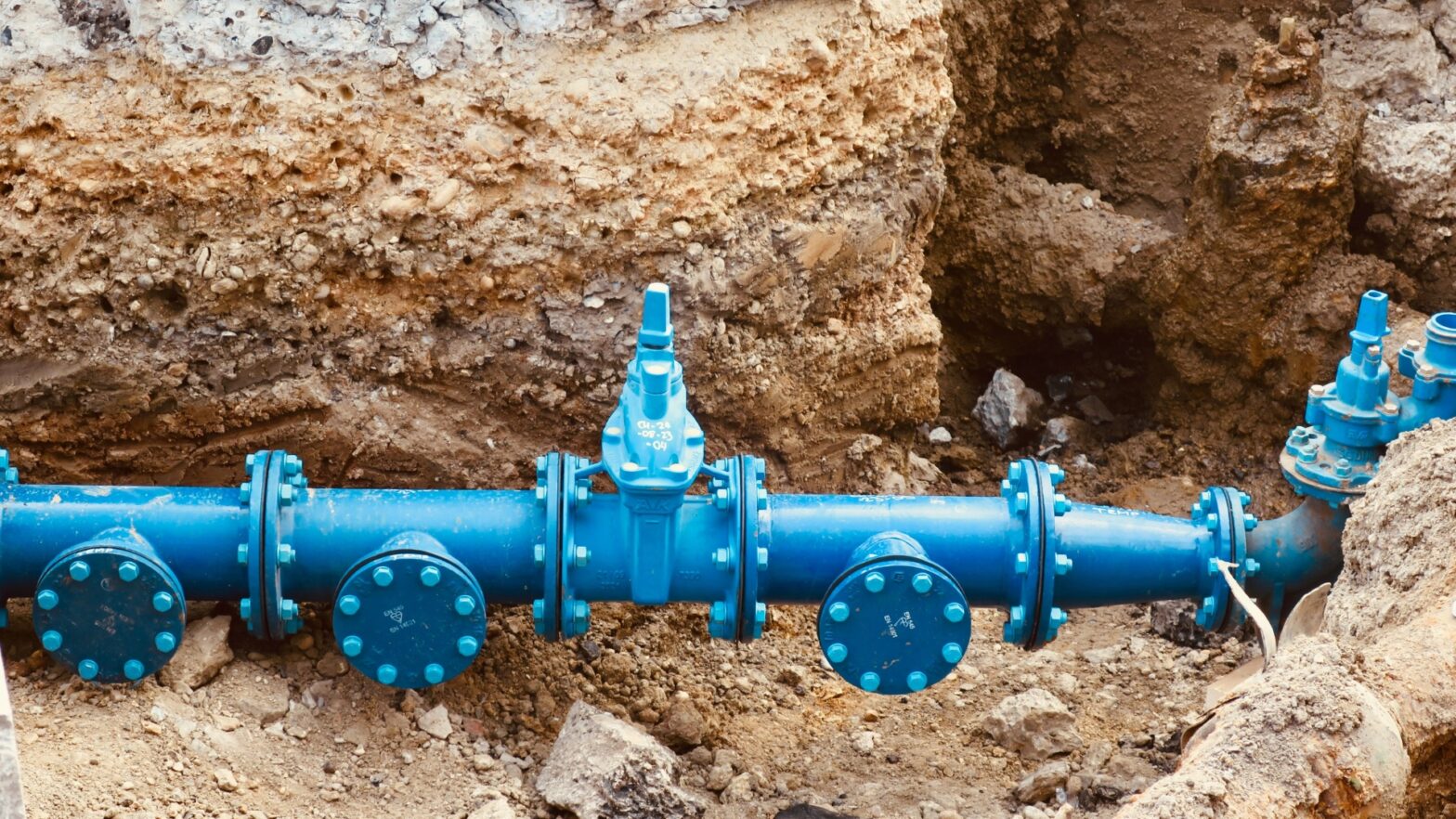











If you are building new homes or a commercial development in England or Wales, you will need water mains and service connections on site. You have two options: ask the water company to install them (known as requisitioning), or appoint your own contractor to do the work and have the water company adopt the infrastructure once it is complete. The second option is known as self-lay, and the contractor you appoint is called a Self-Lay Provider, or SLP.
Self-lay has grown significantly since Ofwat introduced the Code for Adoption in January 2021, which standardised the process across all water companies in England. For developers, self-lay can offer real advantages: lower costs, more flexibility around build programme timing, and the ability to coordinate water infrastructure alongside gas and electricity under one contractor. But those benefits only materialise if you choose the right provider.
Check WIRS Accreditation First
This is non-negotiable. Every self-lay provider must hold accreditation under the Water Industry Registration Scheme (WIRS), administered by LRQA (formerly Lloyd’s Register). WIRS accreditation confirms that the contractor meets national industry standards for laying water mains and making service connections. Water companies will not adopt infrastructure installed by a non-accredited provider.
You can search the LRQA WIRS directory to verify whether a contractor is accredited. There are over 200 WIRS-accredited providers across the country, so you have options, but accreditation status should be the first thing you check before any conversation about pricing or programme.
Understand What the Provider Actually Covers
Not all SLPs offer the same scope of service. At a minimum, a self-lay provider will handle mains installation, testing, chlorination, and commissioning. But the work on a development site does not end when the pipes are in the ground. There is trenching, backfilling, reinstatement of road surfaces and footways, and coordination with the water company for inspection and adoption.
The strongest providers cover the full scope from excavation through to final surface reinstatement, so you are not left coordinating a second contractor to make good after the pipework is complete. Hertfordshire-based McFadden Utilities, for example, combines WIRS-accredited self-lay capability with tarmac surfacing, reinstatement, and groundworks under one team. That end to end approach means fewer interfaces on site, simpler programme management, and less risk of one trade waiting on another.
Check Experience in Your Water Company Area
Each water company has its own Design and Construction Specification (DCS), its own application forms, and its own approach to inspection and adoption. A provider who works regularly with Affinity Water will know their specific requirements, timescales, and inspection expectations. A provider whose experience is entirely with a different water company may need to learn on the job, which adds risk to your programme.
Ask which water company areas the SLP has worked in and whether they have existing relationships with the development services teams. This is especially relevant if your development straddles water company boundaries, which can happen in areas like Hertfordshire where Affinity Water and Thames Water territories overlap.
Confirm Who Handles the Design
This is a common area of confusion. The water company typically produces the mains design for your site. Some SLPs can also submit their own design for the water company to vet and approve, which can sometimes reduce the application fee. But the design must still meet the water company’s DCS requirements and be formally accepted before any construction begins.
Make sure you are clear on whether your SLP is providing design services, submitting the water company’s design for construction only, or simply building to a design that has already been accepted. Misalignment on this point is one of the most common sources of delay on self-lay schemes.
Look Beyond the Water-Specific Accreditations
WIRS accreditation tells you a provider is competent to lay water mains. But it does not tell you how well they manage health and safety, quality, or environmental impact on site. For that, look at their broader accreditation stack.
ISO triple certification (ISO 9001 for quality management, ISO 14001 for environmental management, and ISO 45001 for occupational health and safety) is a strong indicator that a contractor operates structured management systems rather than relying on informal processes. Constructionline Gold and Achilles UVDB Audited status are widely used pre-qualification standards in the construction industry and confirm that a contractor has been independently assessed for financial standing, compliance, and capability.
Understand the Adoption Timeline
Once your SLP has completed the mains installation and the water company has inspected and approved the work, the water company will issue a vesting certificate and make an asset payment to the developer or SLP. The mains then become part of the water company’s network, and a maintenance period begins from the date of commissioning.
For service connections, the SLP will need to confirm that private pipework meets the Water Supply (Water Fittings) Regulations before connections are made. Meter installation may be handled by the SLP or the water company, depending on the arrangements in your adoption agreement.
The key thing to build into your programme is that adoption is not instant. There are inspection windows, paperwork turnaround times, and non-contestable works (like the final connection to the existing network) that only the water company can carry out. A good SLP will help you plan for these dependencies rather than leaving you to discover them mid-build.
Summary: Questions to Ask Before Appointing
Before you sign up with a self-lay provider, make sure you can answer these questions confidently. Are they WIRS accredited and can you verify it on the LRQA directory? Have they worked in your water company area before? Do they cover reinstatement and surfacing, or will you need a second contractor? Who is handling the design, and is it accepted by the water company? What broader accreditations do they hold? And can they walk you through the adoption timeline so there are no surprises when you need water on for first occupations?
The right SLP will not just install pipes. They will help you navigate a regulated process that most developers only encounter a handful of times in their career.