

















By Costel Radescu, Founder and Director of CR Group
As regulatory requirements tighten across the UK housing market, sustainable home renovation is increasingly being driven by compliance as much as design. The government’s Warm Homes Plan introduces stricter Minimum Energy Efficiency Standards (MEES), requiring all private rental properties to meet higher efficiency thresholds by 1st October 2030.
Rather than optional upgrades, improving existing housing stock is becoming a necessity. Properties will need to achieve EPC C or above, or meet new EPC metrics based on fabric performance and system efficiency. For developers, contractors and design professionals, this makes retrofitting existing infrastructure a critical route to ensuring assets remain lettable, compliant and competitive.
Improving insulation and airtightness
A key priority in any sustainable renovation project is addressing thermal performance. Much of the UK’s existing housing suffers from inadequate insulation, leading to significant heat loss and increased energy demand.
Upgrading roof, wall and floor insulation, particularly with recycled or bio-based materials such as cellulose or sheep’s wool, can deliver immediate efficiency gains. Alongside this, improving airtightness through sealing gaps around windows and doors is a low-cost intervention with high impact.
For industry professionals, these measures form the foundation of a “fabric-first” approach, which aligns closely with the direction of future EPC requirements, where fabric performance will form part of the primary standard.
Upgrading systems to meet EPC requirements
Under the Warm Homes Plan, properties will need to meet either a valid EPC C rating issued before October 2029 or comply with new EPC metrics, including a secondary standard linked to heating systems or smart readiness.
This means system upgrades will play a role in achieving compliance, particularly where fabric improvements alone are insufficient. However, there is no single prescribed solution. The requirement is outcome-based, meeting the EPC threshold.
For developers, the focus should therefore be on identifying the most effective combination of improvements to reach EPC C (or equivalent), while managing cost and disruption. Landlords must either meet this standard or invest up to £10,000 in energy efficiency improvements, after which an exemption can apply.
Integrating improvements to achieve EPC C
On-site upgrades should be considered in the context of achieving the required EPC rating rather than as standalone enhancements. The introduction of new EPC metrics, covering fabric performance alongside heating systems or smart readiness, means that multiple elements may contribute to compliance.
For developers and contractors, this reinforces the need for a coordinated retrofit strategy. Some properties may require only minimal intervention to reach EPC C, while others may need more substantial upgrades.
Timing is also critical. EPCs issued before October 2029 will remain valid for their full term, creating an opportunity to secure compliance early. Delaying improvements may result in increased costs or limited availability of resources as the deadline approaches.
Enhancing water efficiency
Water efficiency is often underrepresented in retrofit discussions, yet it presents a clear opportunity to reduce resource consumption. The specification of low-flow fixtures, dual-flush systems and efficient appliances can significantly reduce water usage without compromising performance.
More advanced solutions, such as rainwater harvesting and greywater recycling systems, are also gaining traction, particularly in larger or higher-spec projects where sustainability credentials are a key selling point.
Prioritising sustainable material choices
Material selection plays a crucial role in reducing the environmental impact of renovation projects. Reclaimed and recycled materials not only minimise waste but also reduce the demand for new resource extraction.
Locally sourced materials can further lower transport-related emissions, while low-VOC paints and finishes contribute to improved indoor air quality, an increasingly important consideration in modern building design.
For industry professionals, balancing sustainability with durability and cost remains key, with clients placing growing emphasis on both environmental performance and long-term value.
Upgrading lighting and appliances
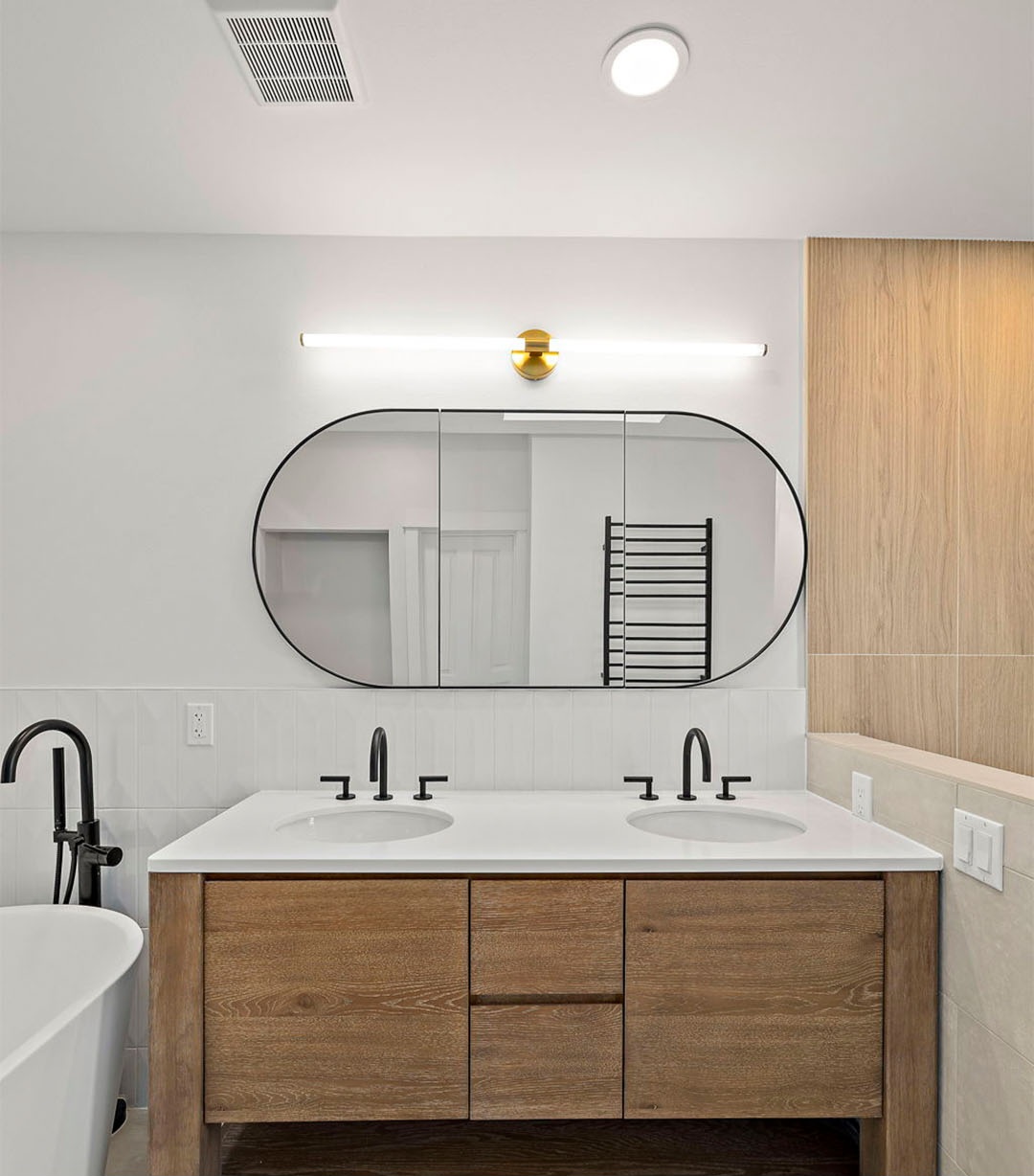
Specifying energy-efficient lighting and appliances is a straightforward yet effective way to reduce operational energy use. LED lighting, in particular, offers significant efficiency improvements and longevity compared to traditional alternatives.
Similarly, high-efficiency appliances can contribute to overall energy reductions, supporting broader sustainability targets within residential projects.
Designing for longevity and adaptability
Future-proofing is an essential component of sustainable renovation. Designing flexible, adaptable spaces reduces the likelihood of further resource-intensive alterations, extending the lifecycle of the property.
Durability should also be a core consideration. Investing in high-quality materials and construction methods ensures that upgrades deliver long-term performance, reducing maintenance requirements and replacement cycles.
Minimising construction waste
Construction and demolition waste remains a significant issue across the industry. Sustainable renovation projects should prioritise waste reduction through careful planning, material reuse and responsible recycling practices.
Adopting a deconstruction approach, where materials are recovered rather than discarded, can further support circular economy principles and reduce landfill impact.
Delivering sustainable retrofit at scale
Ultimately, sustainable home renovation is no longer just a design consideration, it is a compliance requirement. With all rental properties needing to meet higher EPC standards by 2030, improving existing infrastructure is essential.
Developers who take a strategic approach, focusing on efficient, targeted upgrades to achieve EPC C or equivalent, will be better positioned to manage costs, maintain asset value and ensure properties remain lettable in a more regulated market.