





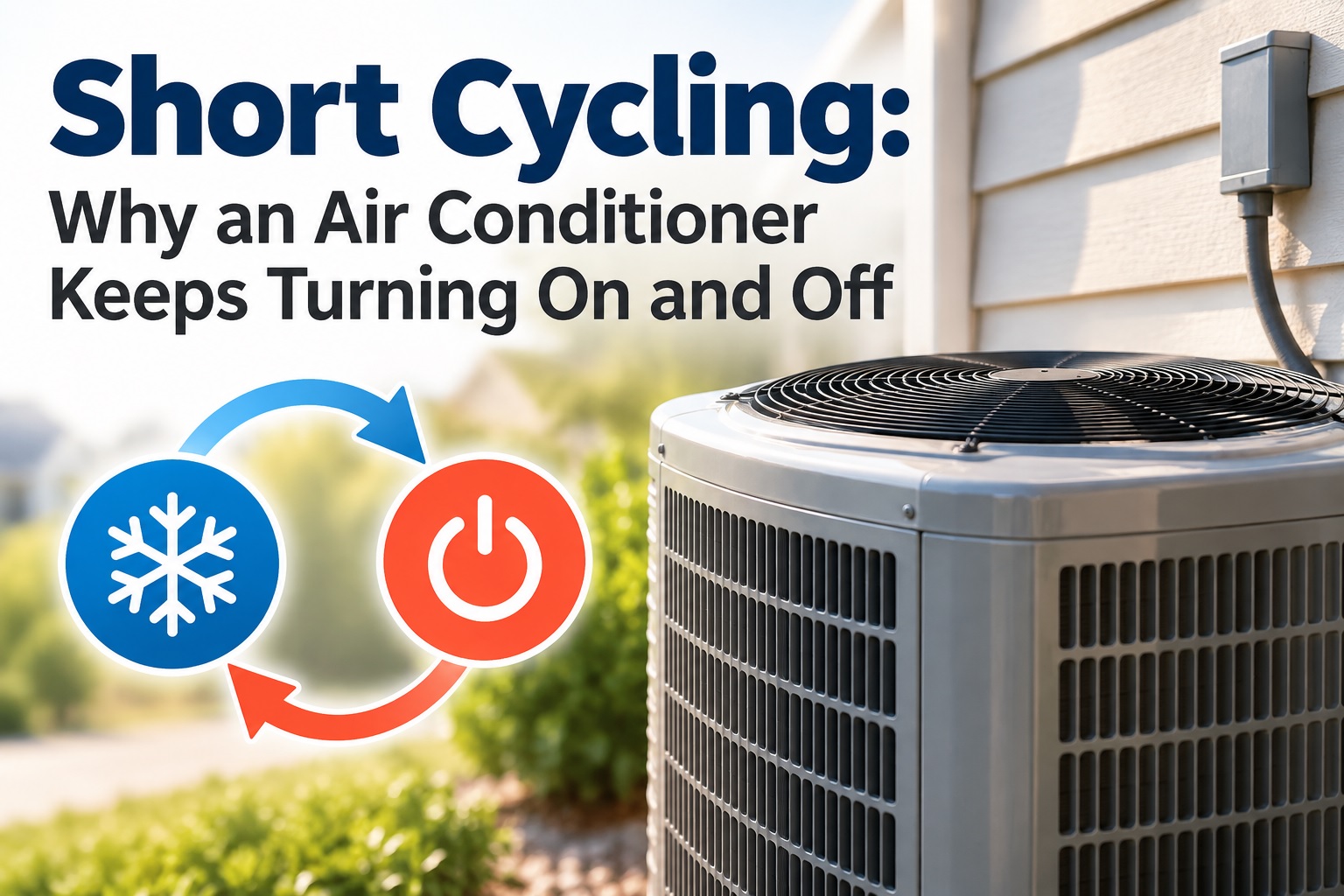











A central air conditioner should run long enough to cool a home, then rest until the thermostat calls for cooling again. In a Missouri summer, an outdoor unit that switches on and off every few minutes may signal a problem known as short cycling. Homeowners may notice repeated clicks, uncomfortable rooms or higher electricity use before the system fails outright. The cause could be a simple airflow issue, a malfunctioning component or equipment poorly matched to the house.
Short cycling is a symptom, not a diagnosis. Identifying the reason matters because changing parts without checking the underlying cause can lead to repeat breakdowns.
What a Normal Cooling Cycle Looks Like
On a warm day, many residential systems run for roughly 15–20 minutes at a time, although actual cycles vary with the weather, equipment and building. Longer operation during extreme heat can be normal. A concern arises when the compressor runs only briefly, shuts down and restarts repeatedly while indoor comfort remains poor.
Frequent startups place additional demands on electrical components and the compressor. Short runs can also limit moisture removal, leaving rooms cool but clammy. Technicians handling air conditioning repair lees summit calls often need to examine both mechanical operation and airflow before identifying the cause.
Common Causes Homeowners Can Check First
Some causes can be identified without opening equipment or handling electrical parts. Basic observations about the thermostat, filters and surrounding airflow give a technician a useful starting point and may reveal an easily corrected issue.
Thermostat Placement and Settings
A thermostat positioned in direct sunlight, beside a warm doorway or beneath a cooling supply vent can sense temperatures that do not represent the rest of the house. If cold air reaches it too quickly, the system may shut down before other rooms cool. Check the temperature setting, replace batteries where appropriate and ensure nearby vents or heat sources are not affecting the sensor. Relocating a thermostat is best assessed by a professional when wiring or wall placement is involved.
Airflow Restrictions
A clogged air filter or blocked return grille limits air passing over the indoor coil. The coil may become excessively cold, sometimes triggering a protective shutdown. Check the filter and make sure furniture does not obstruct returns. Closed registers can also affect system airflow; opening them may help, depending on the duct design.
The outdoor condenser needs unobstructed airflow. Grass clippings, fluff and nearby shrubs can contribute to overheating. Clear loose debris from around the unit, but avoid opening electrical panels or using aggressive cleaning methods that could damage delicate coil fins.
Problems That Need a Technician
If straightforward checks do not help, the cause may involve refrigerant pressure, electrical components or a condensate safety device. These systems need proper diagnostic tools and trained service personnel. Refrigerant is not consumed during normal cooling, so a low charge may indicate leakage that needs to be located rather than repeatedly topped up.
A weakened capacitor, worn contactor or faulty control board can cause difficult startups or intermittent shutdowns. Loose electrical connections can create similar symptoms. Continuing to operate equipment that repeatedly struggles to start may compound the damage. A technician should inspect and test components before deciding which part requires replacement.
Condensate drainage presents another possibility. In humid weather, algae or debris can block a drain, allowing water to raise a float switch and stop the system. Once the level falls, cooling may resume until water accumulates again. This pattern resembles an electrical fault but requires a different remedy.
Ice forming on the indoor coil or refrigerant line is another warning sign. Restricted airflow and refrigerant problems are possible causes. Avoid running an iced-up system continuously; obtain an inspection before assuming the ice itself is the original fault.
When the System Is Simply Too Big
Not every short-cycling air conditioner has a failed part. An oversized unit may cool the air around the thermostat rapidly, shut down and repeat before the whole house reaches a comfortable temperature. Humidity removal may also suffer because the cooling cycles are too brief.
Correct equipment sizing requires a load calculation that considers insulation, window area, orientation, air leakage and other building features. Replacing an old unit with the same capacity without reviewing these factors can perpetuate the problem, particularly if renovations have reduced the home’s cooling demand. The service overview at https://n1serves.com/lees-summit-hvac-services/ also addresses heating and cooling work relevant to local homes.
Ductwork can affect performance too. Leaks or inadequate duct capacity may undermine an otherwise suitable installation. Some airflow improvements can help the existing system; if replacement becomes necessary, a properly sized two-stage or variable-speed model may provide longer, steadier cooling.
A Few Minutes of Listening
A homeowner can help identify short cycling by noting how long the system runs, how frequently it restarts and whether the indoor temperature actually improves. Checking the filter, thermostat surroundings and outdoor airflow takes little time and may reveal useful clues. Share those observations with a technician rather than repeatedly resetting equipment or replacing parts by guesswork.
Short cycling is worth investigating before it becomes a complete breakdown. Finding its cause early can protect equipment, restore comfort and help avoid unnecessary repairs.