









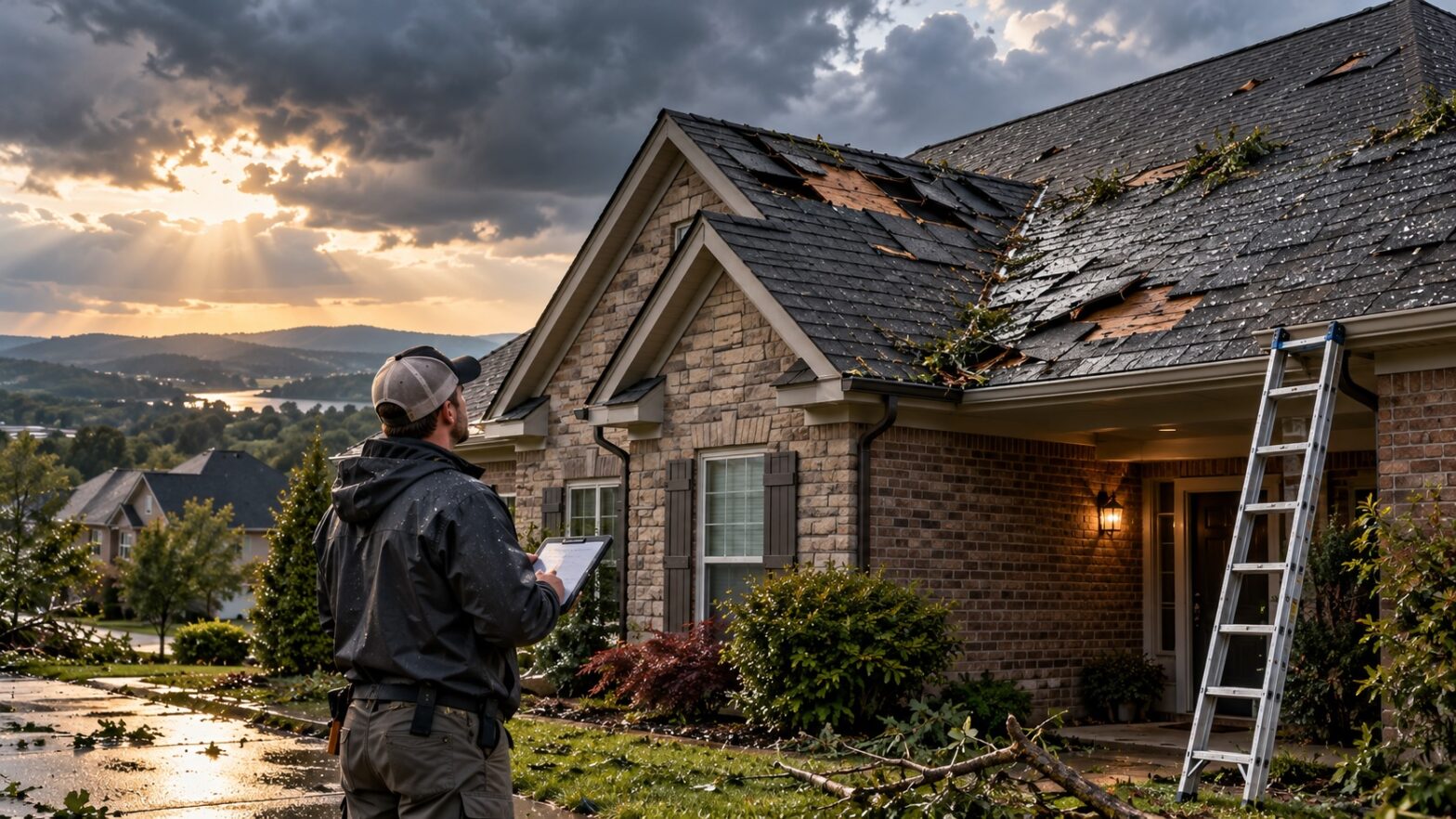











Severe weather across Middle Tennessee can leave homeowners wondering whether a roof needs a small repair or complete replacement. Wind may lift individual shingles, while hail can create damage that is almost invisible from the ground. The condition of the roof before the storm matters too: a relatively new installation can often be repaired, whereas an older, deteriorating roof may need broader work.
The best decision comes from identifying the type and extent of damage rather than assuming every storm requires a new roof or that an undamaged appearance guarantees safety.
What Wind Does to Shingles
Asphalt shingles rely on adhesive strips to help each course resist uplift. Strong wind may break those seals, fold tabs back or crease the shingle mat. A damaged tab can settle flat afterward, hiding the problem from someone looking up from the driveway.
Ridges, roof edges and exposed corners often receive the strongest pressure. Contractors such as Quality Exteriors may find localized damage along these areas even when most of the roof looks intact. Limited damage can sometimes be repaired, while widespread failures across several slopes can make replacement more appropriate.
Missing Shingles and Exposed Decking
Missing shingles leave protective layers vulnerable. If underlayment is torn or decking is exposed, rain may reach the attic. A properly secured temporary covering can limit damage until permanent work is arranged; homeowners should avoid climbing onto a storm-damaged roof themselves.
Checking From the Inside
Inspect accessible attic spaces safely for damp insulation, darkened decking, daylight near roof penetrations or fresh water marks. Interior ceiling stains may appear only after moisture has spread. Record signs of leakage and arrange professional evaluation rather than assuming a dry ceiling proves the roof is sound.
Hail Damage Is Harder to See
Photographs from the ground can document conditions, but a close roof inspection should be performed by someone equipped to work safely at height. A professional can check vulnerable flashings and penetrations as well as the shingles. It is also helpful to distinguish preexisting deterioration from fresh damage, since storms do not erase years of ordinary wear.
Hail can dislodge protective granules and damage the underlying shingle mat. Some impacts create bruised areas that are difficult to recognize without a close inspection. Over time, exposed asphalt may deteriorate faster under sunlight.
Dented gutters, vents and metal flashing can provide supporting clues, though damage to one component does not establish damage to every shingle. Inspectors evaluate the pattern and condition across roof slopes. Normal aging or manufacturing-related granule loss must also be distinguished from storm impact before recommending costly work.
When a Repair Makes Sense
The number of affected areas matters as much as their individual size. A small repair on a healthy slope differs from repeated patches around valleys, chimneys and ventilation openings. Ask for photographs of the areas identified and an explanation of how the repair will tie into the surrounding roof, including any flashing or underlayment work.
A repair may be sufficient when the problem affects a small area, the surrounding shingles remain flexible and compatible replacement materials are available. Flashing, pipe-boot and ridge-cap defects can sometimes be corrected without replacing the full roof.
For homeowners arranging roof repair murfreesboro services, roof age and the condition of nearby shingles should be discussed early. Brittle material can crack when lifted for patching, expanding what initially looked like a minor repair.
The Matching Problem
Older shingle colors and profiles may no longer be sold. Even a currently available product can look different beside weathered materials. Ask the contractor to explain any visible mismatch and check the insurance policy rather than assuming matching will be covered automatically. A technically adequate repair and a visually identical repair are not always the same result.
Signs That Point Toward Replacement
Replacement becomes more reasonable when multiple slopes show extensive damage, the decking is soft or decayed, leaks occur in several locations, or the roof is already near the end of its useful life. Several layers of existing roofing may also complicate repairs.
Material age alone is not conclusive. Installation quality, ventilation, sun exposure and past maintenance all influence performance. An inspection should connect the replacement recommendation to observable conditions rather than relying on a generic number of years.
Working With the Insurance Claim
Keep dated photographs of visible damage, relevant weather information, estimates and any interior stains. Review whether the policy provides replacement-cost or actual-cash-value coverage and whether a separate wind or hail deductible applies. A roofer and adjuster may inspect the same areas, but coverage is determined by policy terms.
Be cautious of contractors demanding immediate payment or making unsupported promises about insurer approval. Verify business details, insurance and a written scope of work before authorizing repairs.
The Next Storm Season
A maintenance file should identify the contractor, materials used and approximate age of the roof. That helps future inspectors recognize earlier repairs and gives homeowners a consistent record when comparing new estimates. Responding promptly to a small leak is also preferable to waiting until damp insulation or interior finishes need restoration.
Document the roof’s condition after significant weather, and consider periodic inspections to catch small problems before they spread. Keep estimates, invoices and warranty information together. Whether repair or replacement is appropriate, the strongest decision is one grounded in roof condition, written findings and realistic expectations about future service life.