





















Soft furnishings—the textiles that fill a living room—do more than decorate a space. From area rugs and curtains to throw pillows and cozy blankets, these layers quietly shape how comfortable and welcoming a room feels day after day. Since the living room tends to be the most-used space in a home, its sensory qualities—how it looks, feels, even sounds—have a direct effect on relaxation and connection with the people around us. Layering textiles of different textures, weights, and colors helps strike that balance between style and comfort over the long haul. This isn’t about chasing the latest trend; it’s about understanding a handful of lasting principles around scale, texture, and color that you can apply with what you already own.
Understanding the Role of Soft Furnishings in Comfort and Mood
Textures like wool, velvet, and brushed cotton send subtle signals of safety and rest, helping people unwind without even realizing why. This works on two levels: the physical (support, warmth) and the emotional (that sense of being “held” by a room). Two concepts are worth keeping in mind here: tactile contrast, which pairs smooth and rough surfaces to add depth, and visual balance, which mixes large solid surfaces—think a sofa or rug—with smaller, more detailed pieces like cushions. One homeowner I spoke with said her living room felt sterile for years, until she added a wool rug and a few textured cushions. Suddenly, guests were lingering longer instead of drifting toward the kitchen.
Starting with a Strong Foundation: Rugs, Upholstery, and Curtains
Every layered room begins with a base layer—the rug, sofa fabric, and curtains that set the overall tone. A properly sized rug should let the front legs of your major seating rest on it; this small detail helps anchor the space rather than letting it feel disconnected or afterthought. Durable upholstery in cotton blends or performance linen strikes a balance between comfort and longevity, while layering sheer and heavier curtains—hung higher and wider than the window frame—improves light control and makes a room feel more spacious than it actually is.
Layering Textures for Depth and Warmth
Texture layering is what keeps a room from feeling flat and one-dimensional. A simple framework to follow: heavy textures (wool rugs, chunky knits) for warmth, medium textures (linen, cotton) for everyday comfort, and light textures (fine weaves) for a touch of airiness. Keeping dominant textures to a minimum, and testing combinations in both daylight and evening light, goes a long way toward avoiding visual overload.
Using Color and Pattern to Keep the Room Cohesive
A limited palette—somewhere between two and four colors—keeps a layered room feeling cohesive rather than chaotic. The 60–30–10 rule offers a simple guide here: 60% dominant neutral, 30% secondary color, and 10% bold accent. Mixing pattern scales within similar tones, rather than throwing clashing colors together, is what preserves that sense of harmony.
Building Comfort: Cushions, Throws, and Small Soft Furnishings
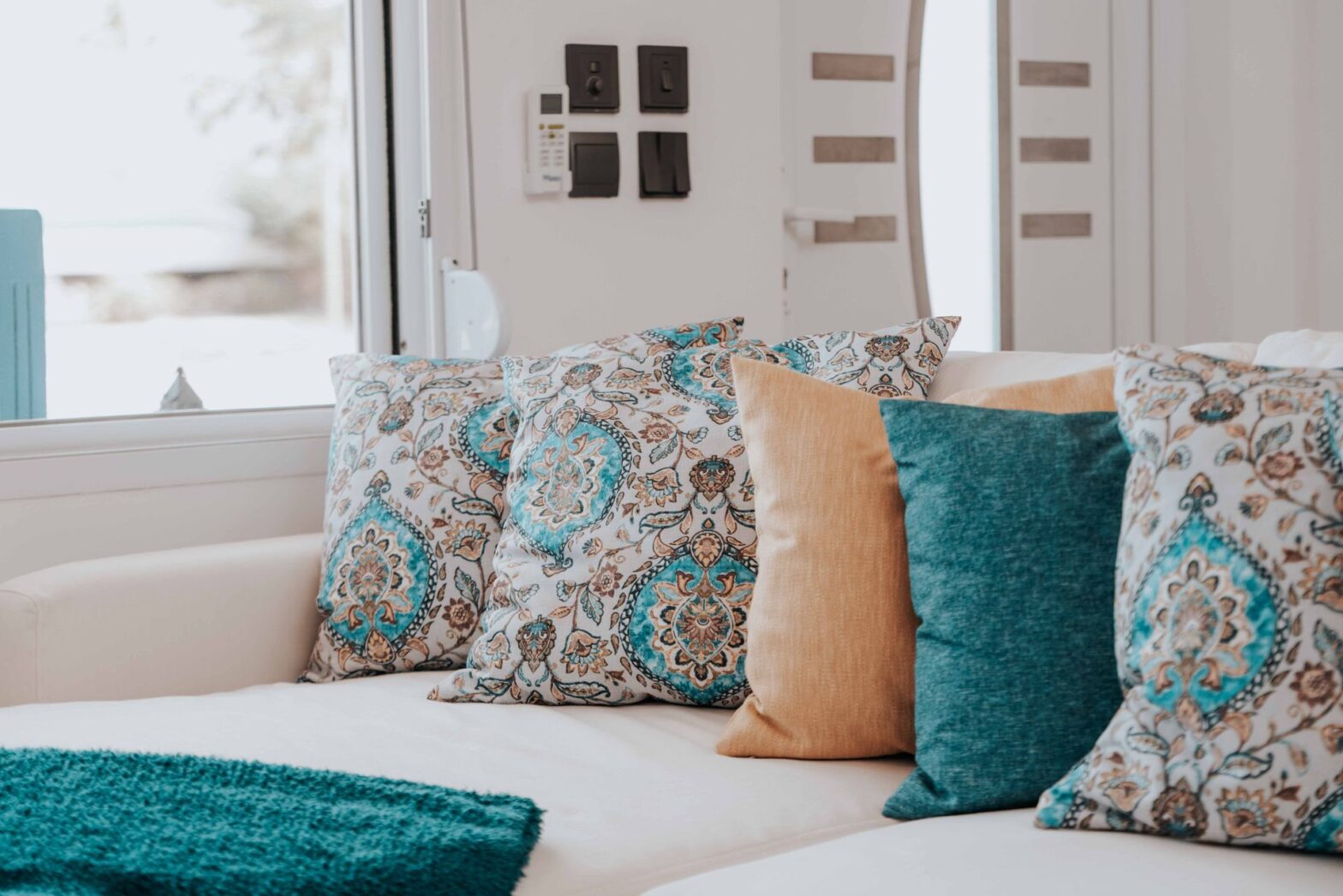
Once the foundation is in place, comfort layers like cushions and throws are where personality comes through. Odd numbers—three or five cushions, say—tend to look more natural than even ones, and mixing sizes while pairing solids with patterns adds interest without tipping into chaos. A throw draped over an arm or folded at the back of a sofa adds warmth without clutter; one or two is usually plenty.
Practical Walkthrough: Layering a Typical Living Room Step by Step
- Place the rug so seating legs rest on it.
- Set a neutral foundation with sofa and curtains.
- Add medium textures through curtains or an ottoman.
- Introduce cushions in odd numbers and varied sizes.
- Add one or two throws for warmth.
- Check color balance against the 60–30–10 ratio.
- Sit, use the space, and adjust as needed.
Key Takeaway: Layering is a process, not a one-time task.
Maintaining a Cozy Living Room Over Time
Supporting long-term comfort means rotating in lighter fabrics during warmer months and denser textures once it cools down, along with regular cleaning and rotating cushions to spread out wear. It’s worth reassessing periodically, too, as life circumstances shift—pets, kids, new routines all change what a room needs.
Bringing It All Together: A Living Room That Supports Everyday Life
Comfort comes from how your living room feels to live in, not just how it looks in a photo. A strong foundation, thoughtful choices around texture and color, and small, adjustable layers like cushions and throws all work together to create a space that feels genuinely lived-in. The best measure of success isn’t a finished, magazine-ready look—it’s whether the room invites you to stay a while longer.