


















For most of the last two decades, pre-construction marketing has followed a familiar formula: a set of polished renderings, a printed brochure, a scale model in the sales suite and, if the budget allowed, a fly-through video. It worked well enough when buyers were prepared to take the developer’s word for it. Today, that formula is starting to show its age.
Why renders and brochures are no longer enough
A rendering is a beautiful answer to a question the buyer did not ask. It shows the building from the angle the marketing team chose, in the light that flatters it most. What it cannot do is respond. It cannot show the view from the fourteenth floor rather than the twentieth, compare two layouts side by side or tell the buyer which units are still available this afternoon.
Buyers, meanwhile, have changed. They research online long before they speak to anyone, they expect to explore rather than be told, and they are increasingly comfortable making large decisions from a screen. When the marketing material is static, the burden of imagination falls on the buyer – and imagination is where doubt creeps in.
There is also a practical cost on the developer’s side. Every design revision means new renders, new brochures and new price sheets. Sales teams end up managing a patchwork of files that are never quite in sync, and the scale model in the sales suite, however impressive, stays frozen at the moment it was built.
What a digital twin means for sales, not just design
In construction, the term digital twin usually refers to a data-rich model used to plan, build and operate an asset. In sales, the idea is simpler and more immediate: a precise, interactive replica of the future development that buyers and agents can explore before it exists.
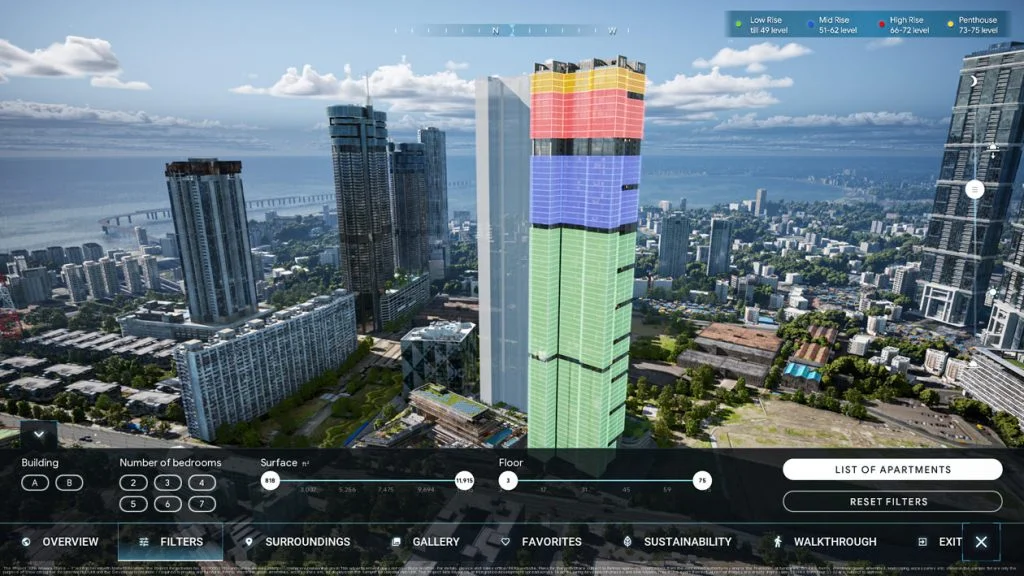
The difference from a traditional visualisation is not the quality of the image. It is the fact that the model is connected to information. Each apartment, townhouse or office floor is an object with its own layout, area, orientation, price and status. Click on it, and the buyer sees exactly what they would be signing for.
Turning architectural data into an interactive sales tool
The good news for developers and architects is that most of the raw material already exists. The design team’s models, plans and site data form the foundation. A specialist studio such as Lunas, an architectural visualisation studio that has built digital twins since 2015, then turns them into a real-time experience: the building is placed on accurate terrain and surroundings, interiors are furnished to show scale and lifestyle, and every unit is linked to the developer’s inventory.
The result is a single source of truth for the sales process. When a unit is reserved, it changes colour in the model. When a price changes, it changes everywhere at once. And when the design evolves, the model can be updated rather than rebuilt from scratch. This is what separates a modern 3D interactive sales platform for real estate from a collection of marketing assets.
Benefits for developers, architects and sales teams
For developers, the main gain is momentum. Buyers who can explore a project in detail tend to commit earlier, and early commitments strengthen financing and phasing decisions. Live availability also gives management a clear, real-time view of how each building, floor or phase is selling.
For architects, an interactive model protects the design intent. Instead of being reduced to a few hero shots, the architecture is experienced as it was conceived: in context, at the right scale, with real light and real views. It also becomes a useful tool in planning consultations and stakeholder presentations, where a shared model often settles questions faster than a stack of drawings.
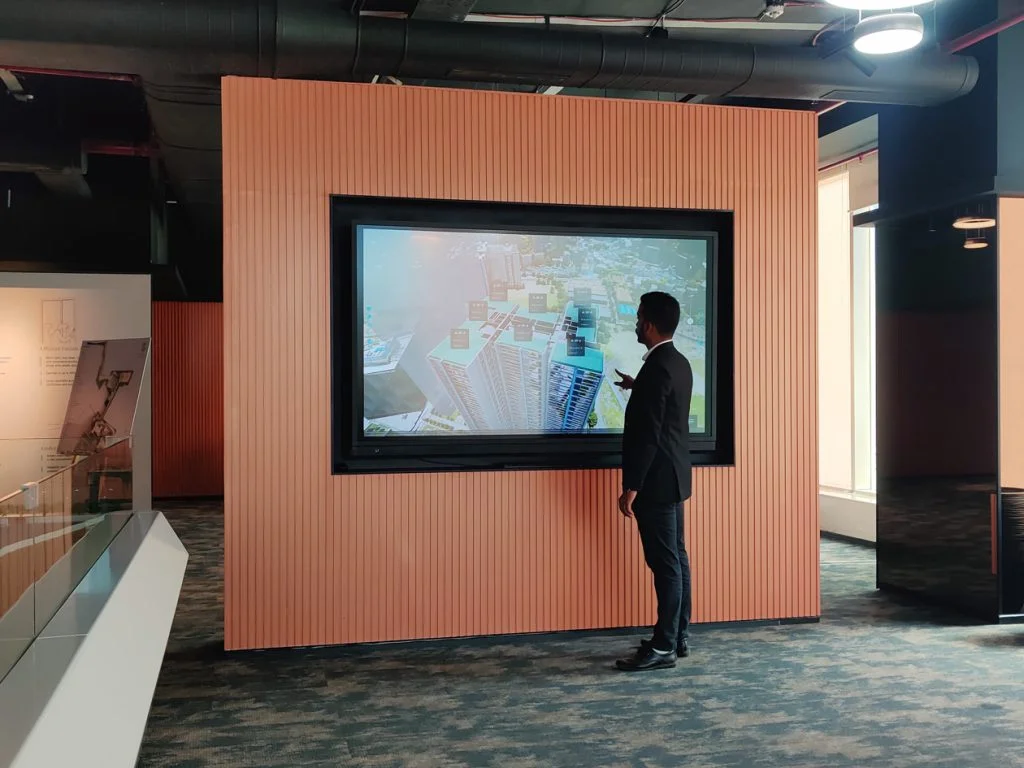
For sales teams, the model replaces guesswork with a conversation. Agents can answer specific questions on the spot – how much sun the terrace gets, what sits across the street, how two layouts compare – and they no longer need to cross-check spreadsheets to confirm availability. The same experience can run on a touchscreen in the sales suite, on a website and in a remote presentation, so the buyer’s journey stays consistent from first click to signature.
How implementation works
A typical project moves through a few clear stages:
- Brief and data collection. The studio gathers architectural models, plans, site information, unit schedules and the developer’s sales priorities.
- Modelling and environment. The building is recreated in 3D and placed in an accurate representation of its surroundings, including terrain, neighbouring buildings and key landmarks.
- Interiors and materials. Show apartments or typical layouts are furnished and finished to communicate scale, specification and lifestyle.
- Interactivity and integration. Units are made selectable and linked to inventory and pricing, and filters are added for the criteria buyers care about most.
- Testing and launch. The sales team is trained, the experience is deployed in the sales suite and online, and updates continue as the project progresses.
The timeline depends on the scale of the development and the level of detail required, but because the work builds on existing design data, it can usually be aligned with the launch schedule rather than delaying it.
What’s next for pre-construction marketing
The shift from static images to interactive models is already well under way, and the next steps are easy to see. Sales experiences will increasingly be streamed to any device without heavy downloads, allowing a buyer abroad to explore a project in the same detail as someone standing in the sales suite. Personalisation will play a larger role, with buyers able to test finishes and furniture options before they reserve. And the model built for marketing will have a longer life – supporting handover, leasing and, eventually, the management of the completed building.
What will not change is the underlying principle. People buy homes, offices and investments they can understand. The developers and design teams that make an unbuilt project easy to understand – accurately, honestly and on the buyer’s terms – will be the ones that sell it first.