





















Perimeter security has historically been treated as a secondary consideration for commercial properties, something handled with a padlocked chain and a manual boom gate staffed during business hours. That approach has been shifting as property managers, warehouse operators, and facility owners look for ways to control access more precisely without relying entirely on staffed security.
Automated gate systems sit at the centre of that shift. Rather than functioning as a simple barrier, modern gate automation integrates with access control, monitoring, and traffic management systems to give commercial properties a level of control that a manual gate simply cannot match.
Why Manual Gates Fall Short for Commercial Sites
•Manual gates rely on someone being physically present to open, close, or monitor access.
•There is no automatic record of who entered a site or when, which becomes a problem for insurance, incident investigation, or compliance.
•Peak traffic periods, such as shift changes at a depot or warehouse, create bottlenecks when every vehicle needs manual clearance.
•Security is only as strong as the discipline of whoever is responsible for locking up at the end of the day.
What Automated Gate Systems Actually Add
Automation replaces manual entry points with systems that can be controlled remotely, scheduled, and integrated with the rest of a site’s security infrastructure. For commercial and industrial properties, this typically includes a combination of the following:
•Integrated keypads, intercoms, and swipe access for controlling who can enter and when.
•Remote access technology, allowing site managers to open or restrict access without being on-site.
•Automatic logging of entry and exit activity, creating a usable record for security or compliance needs.
•Integration with existing CCTV and alarm systems for a more complete security picture.
Integrating Gates Into a Wider Site Security Plan
Automated gates work best when they are treated as one component of a broader site security plan rather than a standalone fix. Coordinating gate automation with lighting, CCTV placement, and pedestrian access points typically produces a far more coherent security posture than automating the vehicle entry alone while leaving other access points unaddressed. Workplace health and safety guidance also encourages businesses to assess security and traffic risks as part of broader site planning rather than addressing hazards in isolation.
The Security Case for Automation
The security benefit of an automated gate system is not just that it is harder to force open than a manual one, although that is part of it. The bigger shift is in visibility and control. A property manager can see exactly who accessed a site and when, restrict access outside business hours without relying on staff, and respond to a security event remotely rather than needing someone to physically attend the gate.
•Reduced reliance on on-site security personnel for basic access control.
•Faster response to unauthorised access attempts through integrated alerts.
•Consistent enforcement of access rules, regardless of time of day or staffing levels.
Common Applications Across Commercial Sectors
Automated gate systems are no longer limited to a narrow set of use cases. As adoption has grown, the range of commercial and industrial sectors relying on them has expanded significantly.
•Property groups managing multiple commercial buildings, where consistent access control across sites simplifies management.
•Government departments and public facilities requiring documented, auditable access control.
•Logistics and freight depots managing high vehicle turnover throughout the day.
•Retail and mixed-use developments needing to control after-hours access to loading docks and car parks.
•Manufacturing and industrial sites where controlling vehicle and pedestrian access is tied directly to workplace safety requirements.
Across all of these sectors, the common thread is the same: replacing a manual, staff-dependent process with a system that runs consistently regardless of who is rostered on that day.
Planning an Automation Rollout Across Multiple Sites
Property groups and facility managers responsible for more than one site face an additional planning question: whether to automate gates one site at a time, or roll out a consistent standard across a portfolio in a coordinated project.
•A coordinated, portfolio-wide rollout tends to secure better pricing and more consistent equipment specifications than piecemeal, site-by-site installations.
•Standardising on a single access control platform across sites simplifies management and reduces staff training requirements.
•Staging the rollout by site risk profile, starting with the highest-traffic or highest-value locations, allows budget to be allocated where it delivers the most immediate benefit.
Considerations Before Automating a Commercial Gate
Not every automated gate system suits every site. Traffic volume, vehicle types, and layout all influence which system makes sense, and getting this assessment wrong at the design stage tends to create ongoing operational friction well after installation.
•High-traffic sites with frequent vehicle movement generally suit boom gates for their fast cycle times.
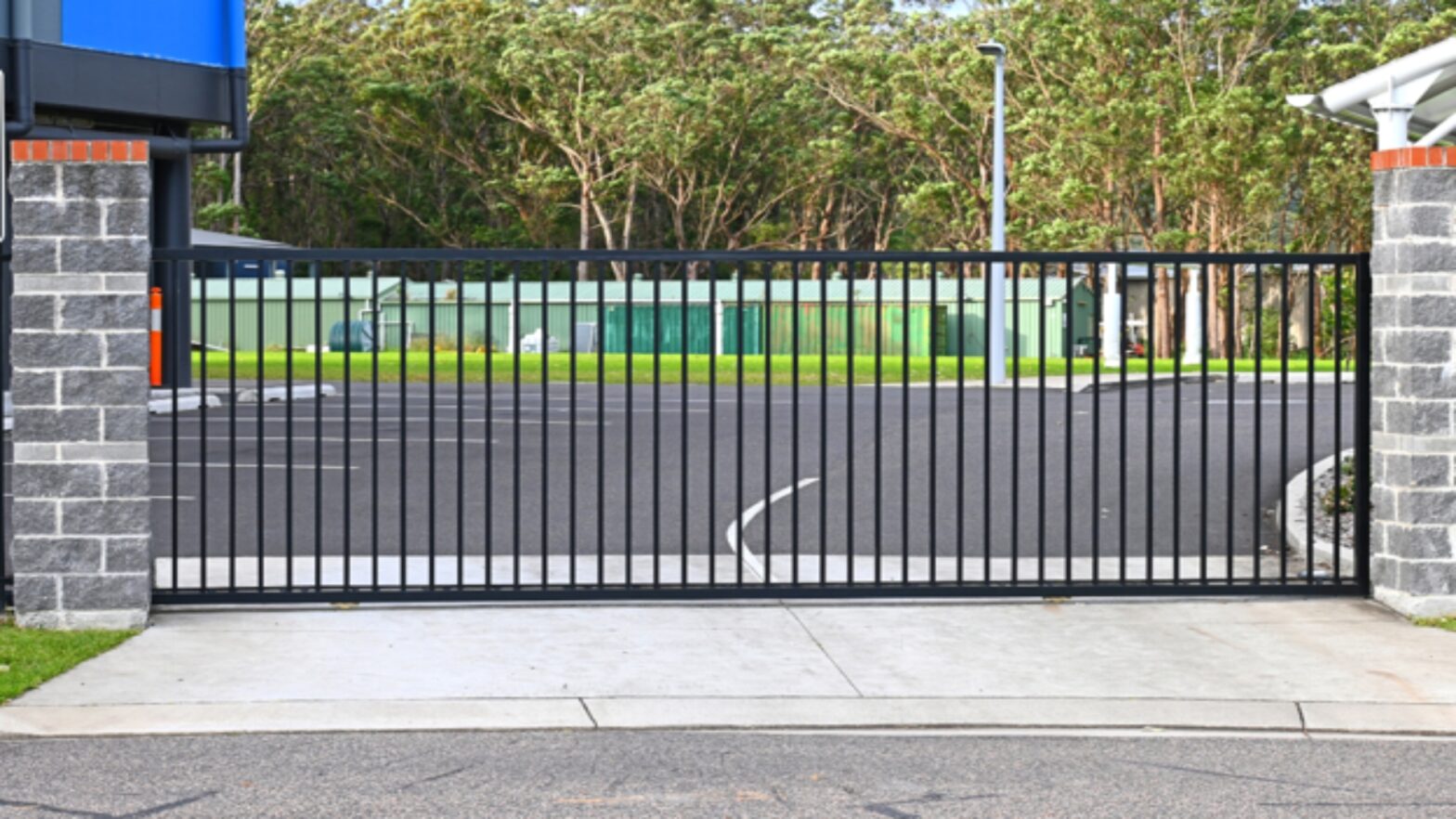
•Warehouses and depots with limited space often benefit from sliding gates rather than swing gates that require clearance to open.
•Sites with existing access control or CCTV infrastructure should confirm new gate systems can integrate rather than operate in isolation.
•Ongoing servicing and support matter as much as the initial installation, since a gate that fails open or closed creates its own security risk.
Specialists such as Smart Access Solutions work specifically with commercial and industrial sites to design gate and access control systems suited to traffic flow and security requirements, rather than applying a one-size-fits-all installation.
As commercial properties continue to move away from manual, staff-dependent access control, automated gate systems are becoming less of an upgrade and more of a baseline expectation, particularly for warehouses, depots, and managed facilities where controlling who comes and goes is central to how the site operates. For property managers and facility owners weighing up next steps, a practical starting point is auditing existing access points against current traffic patterns and security requirements, since this groundwork makes it far easier to identify which gate type and access control features will genuinely suit the site before committing to an installation.