







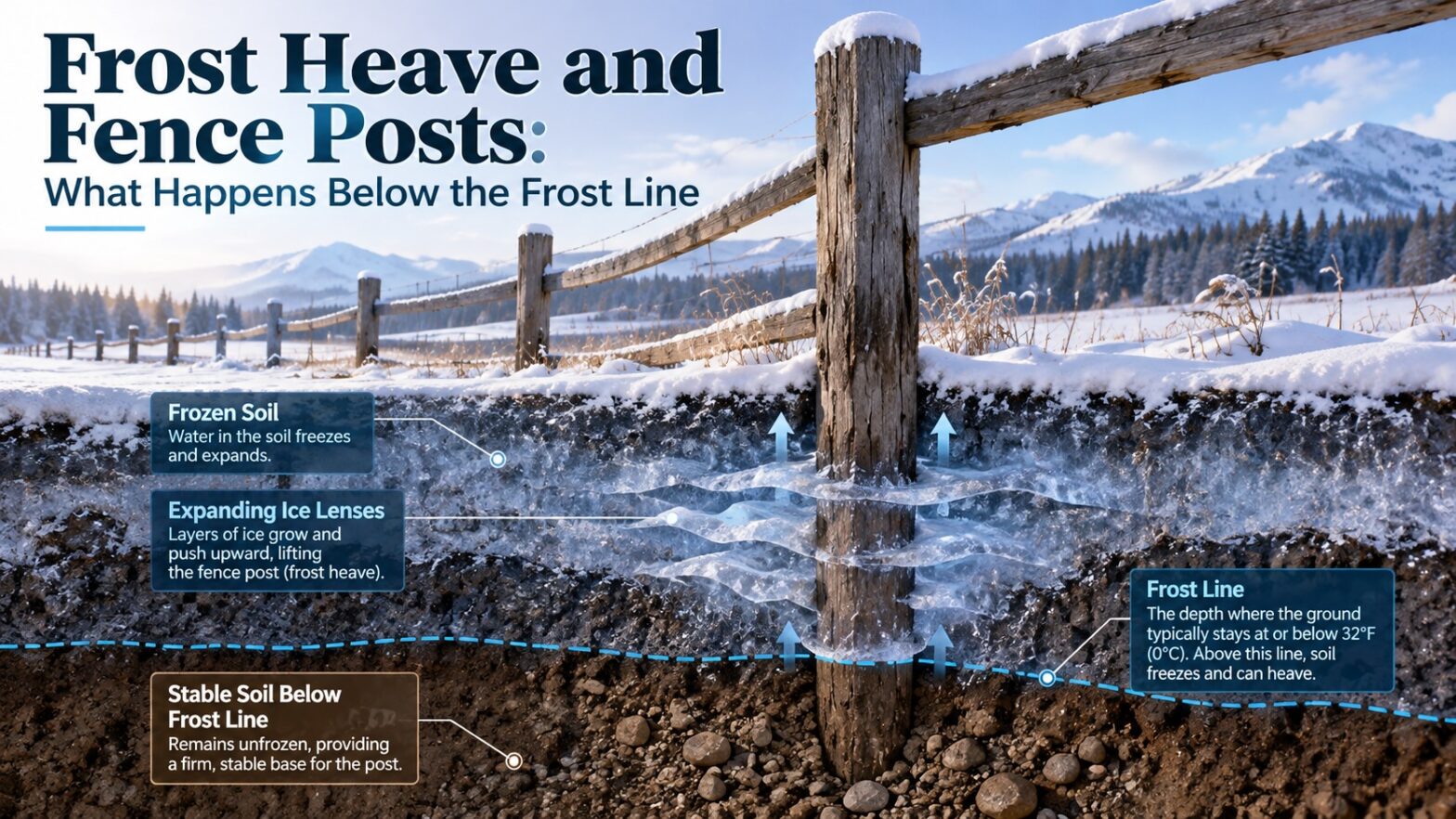











Every spring, homeowners in northern Illinois and northwest Indiana discover fence posts that have risen, leaned or shifted enough to stop a gate closing. The apparent damage may be above ground, but its cause is often below: water in the soil freezes, expands and pushes against the buried posts. This process, known as frost heave, is especially common where clay-rich ground holds moisture through winter.
Understanding the interaction between soil, drainage and footing design explains why some fences remain straight while others move after only a few cold seasons.
How Frozen Ground Moves a Fence
As ground temperatures fall, moisture can collect near the freezing front and form layers of ice. These ice lenses expand and lift the surrounding soil. Fine-grained clay and silt are particularly vulnerable because they retain water and draw additional moisture upward.
Frozen soil can grip a buried post and pull it higher as the ground heaves. During thawing, loose material may settle into the space beneath the post, preventing it from returning to its previous position. Repeated cycles can leave the entire fence line uneven.
Regional contractors such as Cedar Rustic Fence Co. encounter these conditions in the Chicago suburbs, where wet autumn soil followed by prolonged freezing can expose weaknesses in installation.
Depth, Footings, and the Shortcuts That Backfire
Getting Below the Frost Line
A reliable installation usually anchors posts below the local frost depth, leaving the base supported by ground less affected by seasonal freezing. Depth requirements and recommended methods vary by jurisdiction and fence type, so a shallow hole should not be assumed sufficient simply because it was easy to dig. Deep setting is particularly important on poorly drained, clay-heavy lots.
The Mushroom Problem
Concrete footings can make frost heave worse when the concrete flares outward near ground level, creating a collar for freezing soil to lift. A properly shaped footing avoids that broad upper ledge and sheds water away from the post.
Compacted gravel is another option used for some wooden posts because it drains readily and simplifies future replacement. However, tall privacy fences may need greater lateral resistance. Some installations combine a gravel drainage layer beneath concrete, with the details selected for the soil, post and fence design.
Soil and Site Conditions Change the Plan
Two neighboring properties can have very different drainage. A fence along a low corner near a downspout may heave while posts on higher, sandy ground remain stable. This is why a site assessment matters as much as a standard installation depth.
A homeowner obtaining quotes from a merrillville fence company should discuss soil conditions, footing dimensions and any local requirements. Northwestern Indiana includes both sandy soils and heavy glacial clay, which do not behave identically during winter.
Before installation, check whether gutters, sump pumps or hard surfaces direct runoff toward the fence. Redirecting unnecessary moisture may be easier than resetting posts repeatedly. Underground utility lines must also be located before digging, and privately installed lines may need separate locating arrangements beyond public utility markings.
Reading the Fence Line After a Hard Winter
A post sitting higher than its neighbors, an uneven top rail, a new gap beneath a panel or a gate that sticks can indicate frost movement. Examine the fence after the main thaw, when temporary freezing effects have diminished.
A single shifted post may be reset at an appropriate depth after addressing drainage and footing problems. Movement across an entire section may suggest a broader site issue. Repairing individual posts without considering trapped water can lead to recurring damage.
Materials That Tolerate a Little Movement
Wooden panels allow some individual boards and connections to be adjusted after minor changes. Rigid vinyl panels may bind or disengage when neighboring posts rise by different amounts. Aluminum and steel sections can accommodate limited changes in grade, but their posts can still tilt. Flexible chain-link fabric generally tolerates modest movement better than rigid privacy panels.
Material choice cannot compensate for inadequate footings. Instead, it determines how movement appears and how easily damage can be repaired.
Gates Take the Hardest Hit
Gate posts bear the weight of moving panels and must maintain accurate alignment for hinges and latches. Even a small vertical shift can prevent secure closure. Installers may specify heavier posts or larger footings at entrances. Ask for those details separately when reviewing a fence estimate, especially for broad or frequently used gates.
Planning for February
When comparing installation proposals, request enough detail to understand how the contractor intends to manage moisture, not simply a total price per linear foot. Confirm whether removing old footings, restoring disturbed soil and adjusting gates are included. A cheaper installation can prove costly if buried details are omitted from the written scope.
Fence design often begins with appearance, height and material. Long-term performance depends just as much on conditions that cannot be seen after installation: soil moisture, footing depth, drainage and the shape of buried concrete. Before hiring an installer, ask how those details are intended to perform during February freezes and spring thaws. The answers help distinguish a fence designed for local conditions from one that merely looks level on installation day.