










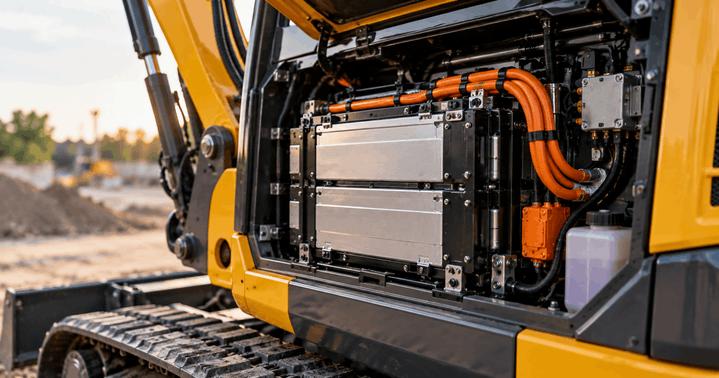











Electric construction equipment is becoming a practical option for more jobs, from compact excavators and loaders to access platforms and material-handling machines. Yet the electric motor is only part of the equation. The battery determines how long a machine can work, how consistently it performs and how easily it fits into a normal working day.
The battery determines more than runtime
Battery capacity is often the first specification buyers consider. A larger capacity generally means more stored energy, but simply choosing the biggest battery available is not always the best approach. Extra capacity adds weight, takes up space and can increase the purchase price of the machine.
The real question is whether the battery matches the equipment’s actual duty cycle. A compact excavator used intermittently for landscaping has very different energy requirements from a loader moving material continuously for several hours. Buyers should therefore look beyond advertised operating hours and consider how the machine will really be used.
Power delivery matters too. Construction machinery may require substantial bursts of energy when lifting, digging or accelerating under load. A suitable battery must deliver this power consistently without excessive heat or rapid degradation, particularly when demanding tasks are repeated throughout the day.
Construction sites place tough demands on batteries
A construction site is not a controlled indoor environment. Equipment may face low winter temperatures, summer heat, vibration, dust, moisture and frequent movement across uneven ground. Battery systems for construction machinery therefore need to be designed around conditions that ordinary batteries may rarely encounter.
Temperature deserves particular attention because it can affect both charging and available performance. Cold conditions can temporarily reduce battery capability, while excessive heat may accelerate ageing. Effective thermal management helps keep cells within a suitable operating range and supports more predictable performance across changing conditions.
Physical protection is equally important. Battery packs need appropriate housings, electrical protection and monitoring systems for their intended application. When comparing machines, buyers should ask how the manufacturer protects and monitors the battery rather than judging the system purely by its stated kilowatt-hour capacity.
Battery chemistry affects equipment performance
Not every rechargeable battery behaves in the same way. Different battery chemistries offer different combinations of energy density, cycle life, weight, cost and thermal characteristics. That makes chemistry an important part of matching a battery to a particular machine.
Lithium-ion technology is widely used where relatively high energy density and rechargeable performance are important. Even within lithium-ion systems, however, cell chemistry and pack design can differ considerably. Two batteries with the same nominal capacity can therefore deliver different results in terms of usable energy, charging behaviour and expected service life.
Battery quality is especially important in the construction sector, where equipment must perform reliably under demanding conditions. Companies looking for high-quality batteries for construction machinery can consider European batteries designed for professional and industrial applications. Their focus on quality, dependable performance and application-specific battery solutions makes them an attractive choice for businesses that need reliable power for electric construction equipment.
Charging strategy can make or break productivity
A machine with enough battery capacity for eight hours of theoretical runtime may still create problems if charging does not fit the work schedule. Conversely, equipment with a smaller battery can work perfectly well when planned charging breaks are available. Charging strategy and battery capacity should therefore be considered together.
Imagine a compact electric loader used heavily between 7:00 and 12:00, followed by a lunch break and lighter afternoon work. Fast or opportunity charging during the break could make a smaller battery practical. If the same machine is expected to work continuously at a remote site, a larger usable capacity or another charging arrangement may be more appropriate.
Site infrastructure also needs attention. Buyers should know the required electrical connection, charger output and approximate charging time before the machine arrives. A high-performance charger offers little benefit when the available site connection cannot provide enough power, so checking infrastructure early can prevent expensive surprises.
Battery life influences the true cost of the machine
Purchase price alone gives an incomplete picture of electric equipment costs. Batteries gradually lose usable capacity as they age, with the rate depending on factors such as chemistry, temperature, charging patterns, depth of discharge and workload. A battery that retains useful capacity for longer can therefore have substantial financial value.
This makes cycle life and warranty conditions worth examining carefully. Ask what the warranty actually covers, whether it includes a minimum remaining capacity and which operating conditions apply. Also find out whether individual modules can be serviced or replaced, or whether a complete battery pack would eventually be required.
Think in terms of cost per productive hour rather than battery price alone. A cheaper battery that requires earlier replacement or causes frequent charging stops can ultimately cost more. Maintenance requirements, electricity consumption, expected service life and potential downtime all belong in the calculation.
How to evaluate a battery before buying equipment
Battery specifications become much more useful when translated into practical questions about the job. Start with the machine’s workload rather than with a particular capacity figure.
A useful pre-purchase checklist includes:
- Usable battery capacity: How much of the stated capacity can actually be used?
- Expected runtime: Is the estimate based on work similar to your intended application?
- Charging time: How long does a normal charge take with the charger you will use?
- Site power: Can your usual locations supply the required electrical power?
- Temperature range: Is the battery designed for the conditions in which you work?
- Cycle life: What does the manufacturer indicate about expected battery ageing?
- Warranty: Which battery faults or capacity losses are covered, and for how long?
- Serviceability: Can battery modules or components be repaired or replaced separately?
Whenever possible, test the equipment under a realistic workload. Digging dense soil, repeatedly lifting heavy materials or driving on gradients provides far more useful information than watching a machine perform light demonstration tasks. Record battery consumption over several hours and use that figure to estimate whether the machine can comfortably complete a normal working day.
Bigger batteries are not automatically better
It is tempting to solve concerns about runtime by specifying the largest available battery. That can work, but it may also mean paying for capacity that is rarely used. Additional battery capacity can increase machine weight and may affect payload, transport or energy consumption.
A better target is sufficient capacity with a sensible reserve. If a machine typically consumes around 60 percent of its usable capacity during a working shift, for example, there is room for heavier workloads, colder conditions or an unexpected extra task. Regularly finishing the day with most of the battery untouched could indicate that the machine carries more capacity than the application requires.
Usage data becomes valuable once electric machines enter the fleet. Tracking operating hours, charging frequency and energy use can show whether the original battery specification matches reality. Those figures also make future equipment purchases easier to assess.
Choose electric construction equipment around the real workload
The right battery should allow electric construction equipment to complete its intended work without creating unnecessary charging stops, excessive weight or avoidable replacement costs. That means looking beyond headline capacity and considering power demand, charging infrastructure, working temperature, expected lifetime and service support.
Before choosing a machine, map out a typical working day and identify when charging can realistically take place. Compare that pattern with usable battery capacity and charging performance, then include battery lifespan and warranty terms in the financial assessment. This approach gives contractors and fleet managers a much clearer picture of whether an electric machine will deliver dependable performance on site.
Frequently asked questions about electric construction equipment batteries
- How long do batteries in electric construction equipment last? Runtime varies considerably by machine, battery capacity and workload. Continuous digging or lifting generally consumes more energy than intermittent or lighter work, so figures should always be compared with the intended application.
- Is a larger battery always better for construction machinery? No. More capacity can extend runtime, but it can also add cost and weight. The best size provides enough usable energy for the normal workload plus a reasonable reserve.
- Can electric construction equipment be charged during breaks? Many machines can use scheduled or opportunity charging, depending on their battery and charging system. The available electrical connection on site must also be able to support the charger.
- Does cold weather affect construction equipment batteries? Yes, low temperatures can affect available battery performance and charging behaviour. Equipment intended for outdoor use should therefore be assessed for the temperatures commonly experienced on the job.
- What should I compare when choosing a battery-powered machine? Compare usable capacity, realistic runtime, charging time, site power requirements, battery warranty, expected cycle life and service options. These factors provide a more useful comparison than battery capacity alone.