

















The parking lots or driveways are the very first point of interaction employees and clients have when they pull into any business location. Yet many slip-and-fall accidents happen in these areas more than business owners think. These incidents cost firms millions of dollars and operational downtime each year. Here are the top paving features that can lower slip-and-fall liability risks.
Slip-Resistant Surface Finishes
One of the common features of good paving is a textured surface with enough traction. Clients and employees rarely look at their feet while walking. They are either looking at their phones, focused on their destination, or on what brought them into the business. When the surface begins to lose its traction, it causes a trip risk that can catch even the most careful visitor. This happens when asphalt or concrete degrades as it ages and becomes smoother.
Businesses should ensure their paving or pathways remain flush and predictable. This may involve regular resurfacing and patching to remove the sharp edges of potholes and dangerous depressions caused by settling. A broom finish on concrete or exposed aggregate or a friction-enhancing sealant, can also raise traction without changing much about how the paving looks. OSHA recommends a static coefficient of friction of 0.5 as a reasonable value for a walking surface.
Effective Drainage Prevents Standing Water
Water is a natural enemy of some paving materials like asphalt, and one of the major causes of falls within a business. A poorly graded surface allows water to stand on low spots and create large puddles that can hide deeper structural problems. Stagnant water can also turn into black ice during rainy months. Ignoring these small signals can turn a normal surface into a dangerous spot that causes falls within a few hours. It is recommended to ensure the paving stays dry at all times.
Good drainage starts with ensuring there is the right slope to move water toward the drain, usually 1-2%. Research states that poor water flow is a major cause of pavement failure. This means standing water and structural problems usually occur together. This is one place where working with an experienced commercial paving company makes a real difference. The team catches grading issues a property manager might walk past without noticing. Fixing drainage during the paving process costs far less than a lawsuit over ice that never should have formed.
High-Visibility Pavement Markings
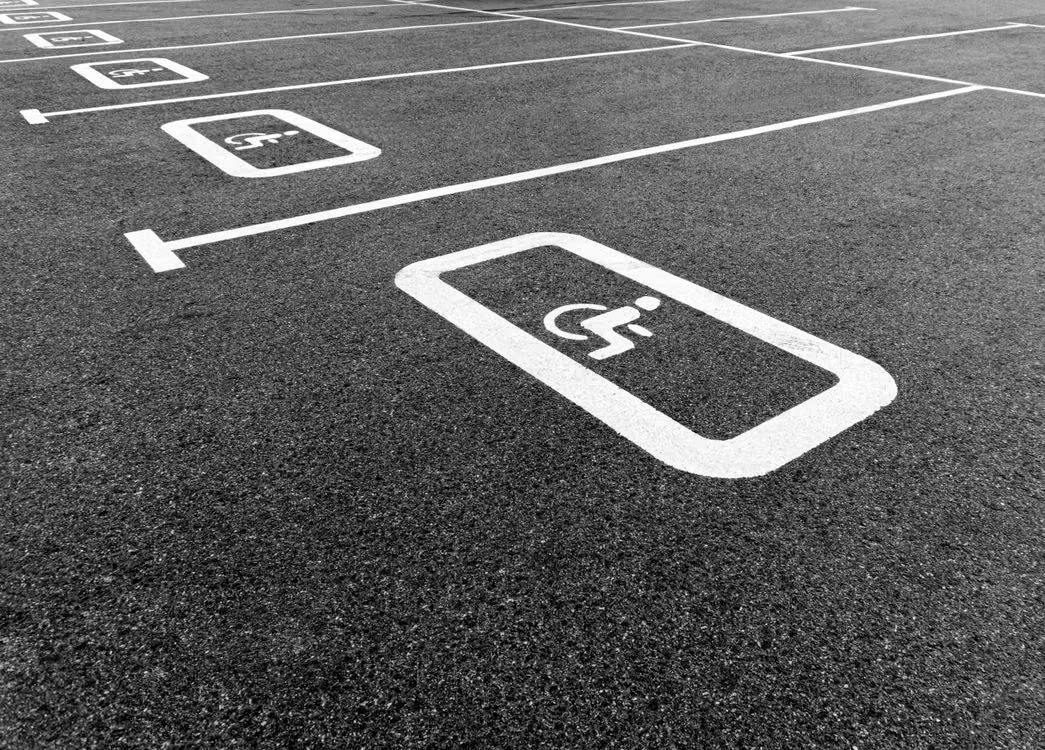
People trip over things they did not see coming. These include curbs, speed bumps, and uneven areas where a lot meets a sidewalk. Clear and high-contrast markings give visitors and workers a visual map to slow down or watch their footing. That is particularly important at night or in bad weather. The fault changes when a driver parks in an unmarked area or a visitor walks on the wrong path.
The Manual on Uniform Traffic Control Devices has rules for how reflective markings should be so they are easily seen after dark. Faded or worn-out markings become a risk that is easy to miss until someone is hurt. A crosswalk line that barely exists, or a curb edge with no paint, can turn an ordinary walk into a fall. Repainting regularly and using reflective or textured paint in busy areas keeps such risks visible.
Endnote
None of these features is complicated. Texture, drainage and visibility each address a different way people fall, and together they cover most of what causes slip-and-fall claims on commercial property. Owners who treat pavement as part of their safety planning, rather than just something that needs to look decent, deal with fewer injuries and claims tied back to their lot.