















By Ross Bliben from Bathroom Spare Parts
For many years, the bathroom industry has largely been built around replacement. A dripping tap, a faulty shower valve or a broken toilet seat often leads to an entire product being discarded and replaced, even when only a single part has failed. While this approach has become common, it is increasingly difficult to justify in a world facing rising environmental pressures, increasing material costs and growing consumer awareness of sustainability.
Repairing rather than replacing
Repairing instead of replacing is one of the easiest ways to cut waste and help products last longer. As the construction and home improvement industry continues to focus on reducing its environmental impact, the bathroom sector in particular has a major opportunity to finally lead on a more sustainable model which focuses on maintenance, repair and long term thinking.
One of the biggest hidden costs of replacing bathroom products is the energy and raw materials needed to make new ones. Taps, showers, toilets and brassware all require metals, plastics, ceramics and packaging, with every stage of manufacturing and transport using valuable resources. If a mixer tap is replaced simply because the cartridge has worn out, you’re manufacturing, shipping and eventually throwing away a whole product when, in reality, only one small part needs replacing.
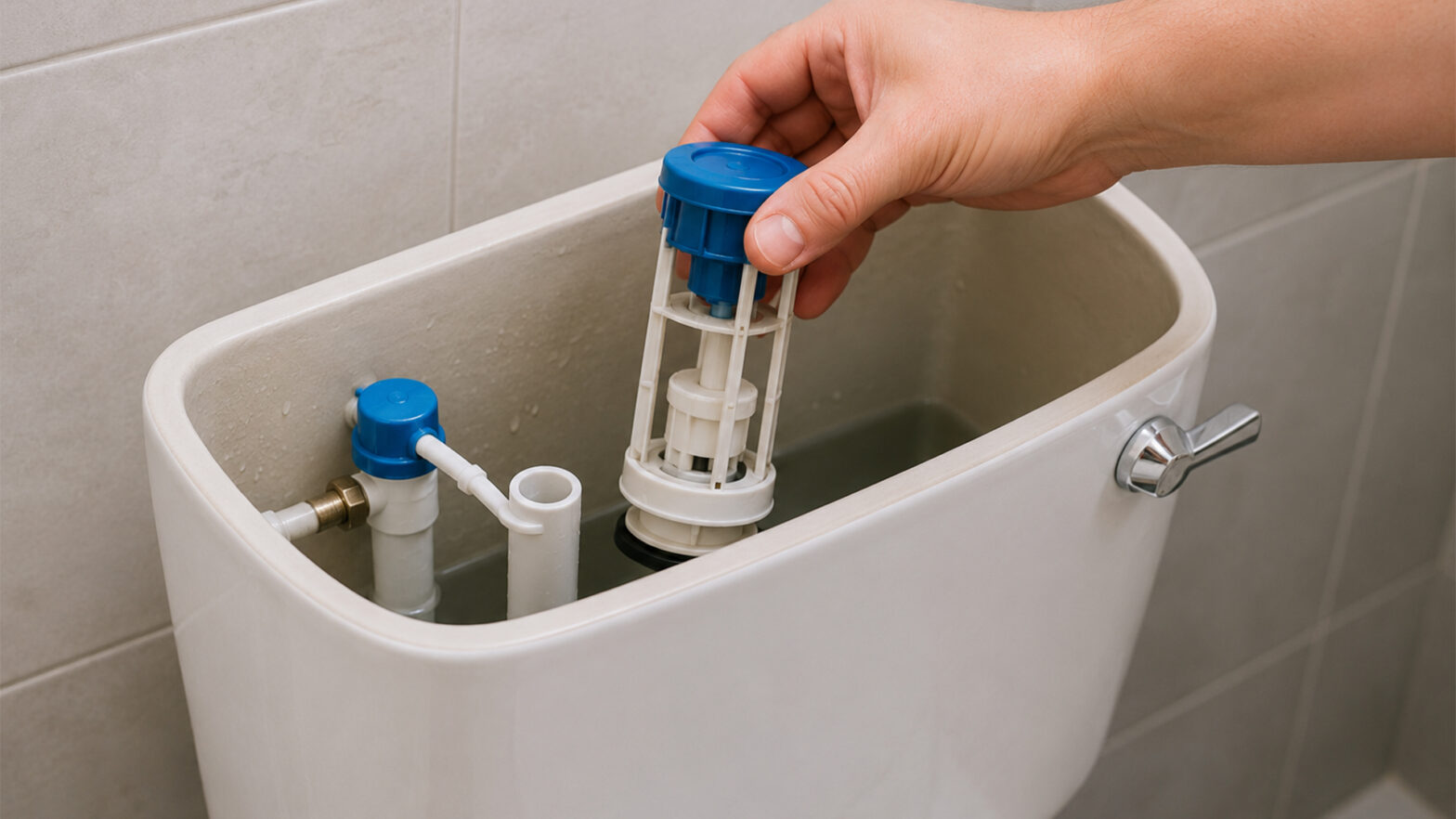
In many cases, replacing a simple internal part can restore a product to full working order within minutes. The environmental savings become substantial when this idea is applied across thousands or even millions of homes. Government research highlights that keeping products in use for longer through repair and reuse can reduce waste, lower emissions across the product lifecycle and reduce demand for new resources.
The bathroom industry has a waste issue
Waste is another major consideration. Every year, countless bathroom products end up in landfill simply because replacement has become the default solution. Ceramic toilets, basins and furniture are particularly problematic because they are heavy, difficult to recycle and costly to transport. Even products made from recyclable materials often never enter the recycling stream due to contamination, collection limitations or the complexity of separating mixed materials. Keeping existing products in service for longer significantly reduces the volume of waste entering the already overloaded waste management system.
Consumer thinking is changing
Consumers are also beginning to rethink value. Rising household costs have encouraged many homeowners to question whether replacing an entire bathroom fitting is really necessary when a much lower-cost repair may solve the problem just as effectively. Sustainability and affordability increasingly go hand in hand. Repairing a faulty component is often considerably less expensive than purchasing and installing a brand-new product, particularly when labour costs are taken into account.
The bathroom industry itself also stands to benefit from shifting towards a repair-first mindset. Manufacturers who continue to support products with readily available spare parts demonstrate confidence in the quality and longevity of their products. This strengthens customer trust, improves brand loyalty and enhances after-sales service.
An opportunity for retailers and installers
Retailers, likewise, have an opportunity to become long-term support partners rather than simply suppliers of new products. Helping customers identify the correct replacement part, providing installation guidance and offering ongoing technical support creates stronger relationships than encouraging unnecessary replacements. These additional services add value while contributing to more sustainable outcomes.
Installers also play an important role. Increasingly, plumbers are recognising that many faults can be resolved quickly by replacing a worn internal component rather than removing and reinstalling complete fixtures. Not only can this reduce disruption for customers, but it also demonstrates professional expertise and often provides a faster solution.
Tech is helping repair-first gain momentum
Technology is making repairs more accessible than ever before. Improved online resources, exploded parts diagrams, instructional videos and AI-assisted identification tools are making it easier for homeowners and professionals alike to identify the correct replacement components. What once required specialist product knowledge can increasingly be achieved through digital support, reducing the barriers that have historically led people towards replacement.
Of course, not every product can or should be repaired indefinitely. There will always be situations where replacement is the most practical or safest option. However, those situations should be the exception rather than the starting point. Too often, products are replaced simply because spare parts are difficult to source or consumers are unaware that a repair is even possible.
Why the future should be repair-forward
The future of the bathroom industry won’t be about bringing in the next launch of innovative new products all the time, it can’t be with changing consumer behaviours and the need for sustainability. It will be shaped by how well the industry supports the products already installed in millions of homes and commercial buildings.
Repair used to be seen as simply saving money, but it no longer is. It’s about conserving resources, reducing waste, lowering carbon emissions and extending the useful life of products wherever possible. As businesses across the built environment seek more sustainable ways of operating, embracing repair over replacement represents one of the most practical and immediately achievable changes the bathroom sector can make.
Sometimes, the most sustainable bathroom is not the newest one. It is the one that continues to perform reliably because someone chose to repair it instead of replace it.