









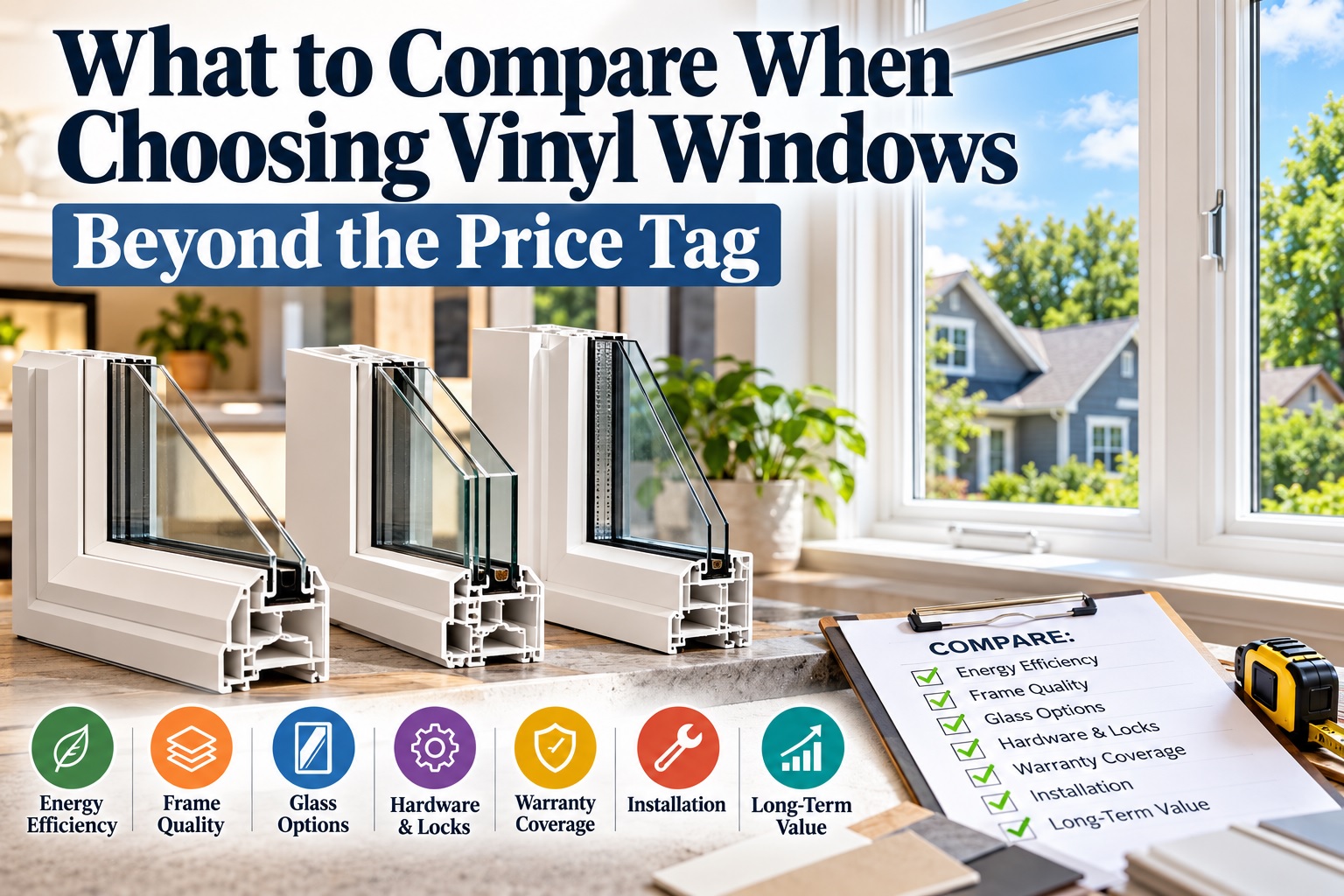











Window quotes can look similar while differing substantially in construction, glazing, weather seals and installation scope. A higher or lower price per opening rarely explains those differences. Vinyl, also called uPVC in some markets, offers relatively low maintenance and useful thermal performance, but not every profile or glass package is designed for the same conditions.
Comparing specifications rather than headline prices helps owners and builders identify which features contribute to comfort, durability and long-term value.
The Frame Profile and How It Is Built
Vinyl frames are formed as profiles containing internal chambers. Their geometry affects stiffness and heat transfer; wall thickness, reinforcement and dimensions also matter. Simply counting chambers does not provide a complete measure of performance. Larger openings and heavy operating sashes may require additional structural support.
European-style systems sometimes use deeper profiles with multiple seals and internal reinforcement. Manufacturers such as GEALAN Window Systems Inc. offer tilt-and-turn designs that tilt inward for ventilation or swing open for cleaning and access. The moving hardware places different demands on frame stability from those of common sliders or single-hung windows. Buyers should compare whole-unit ratings and operation, not just marketing descriptions of the profile.
Corners and seals
Fusion-welded vinyl corners form continuous joints that can support air and water tightness. Gaskets and compression seals help limit drafts and wind-driven moisture around an operable sash. Check whether corners, seals and hardware are designed to work together and whether replacement parts and future adjustments will be available.
Glass Packages and Performance Ratings
Glass dominates the visible area of a window and strongly influences thermal performance. Double-pane insulated units are common, while triple glazing may suit colder climates or more demanding efficiency goals. Low-emissivity coatings and inert gas fills can reduce heat transfer, depending on the full glazing assembly.
National Fenestration Rating Council labels provide comparable figures. U-factor measures heat transfer, with lower figures indicating stronger insulating performance. Solar heat gain coefficient indicates how much solar heat passes through the window; the preferred value depends on climate, orientation and shading. Visible transmittance describes daylight transmission.
Spacers separating the glass panes matter as well. Warm-edge designs can reduce heat transfer at the glass perimeter compared with highly conductive traditional metal spacers, sometimes helping limit winter condensation. Compare complete window ratings rather than assuming that an expensive glass feature produces the same benefit in every house.
When glass needs to resist impact
Properties exposed to severe storms may require tested impact-resistant assemblies. Products using impact resistant glazing typically incorporate laminated glass designed to retain fragments after impact. Performance depends on the window assembly, including its frame and installation, not the glass alone. Check relevant testing and local building requirements before selecting a product for a high-wind area.
Laminated glazing may also help with noise reduction and limiting ultraviolet exposure, although results vary by configuration. Those additional benefits should be assessed against the specific project rather than assumed from a product label.
Exterior Color and Finish Options
Modern vinyl windows offer finishes beyond traditional white. Options can include decorative foils, co-extruded surfaces and factory-applied coatings, each with distinct upkeep and warranty terms. Dark frames absorb more sunlight and can run hotter than pale ones, potentially increasing expansion and distortion if a profile is not engineered for the exposure.
Ask the supplier how a selected color is applied, whether heat-reflective pigments or reinforcement are used and what the warranty covers. Some systems combine a dark exterior with a light interior, allowing facade design choices without making the room feel darker.
Maintenance expectations
Vinyl typically needs occasional washing rather than repainting. Use cleaning methods compatible with the finish, and avoid abrasive solvents that could damage decorative foils. Keep drainage openings clear and inspect moving hardware and seals during routine cleaning.
Installation Matters as Much as the Window
A well-rated unit can perform poorly if incorrectly installed. Appropriate sill and head flashing, careful shimming, proper air sealing and suitable insulation around the opening help keep out moisture and drafts. Excessively expanding foam or a frame set out of square can interfere with sash operation.
Tilt-and-turn designs need room for inward movement, so consider furnishings and window treatments in advance. Replacement windows may also trigger requirements concerning emergency escape openings or safety glazing in particular locations. Confirm local rules before ordering, particularly when changing dimensions or operating styles.
Ask each bidder to identify the frame profile, glazing specification, ratings, finish, hardware, installation method and warranty. An itemized comparison makes it easier to understand why quotations differ.
Reading a Window Quote With Fresh Eyes
A quotation should also identify what happens to the old window, who repairs interior trim and whether disposal is included. Installation details can explain price differences that are invisible in a brochure. Request written information about product and workmanship warranties separately, since the same company may not administer both.
Choosing windows is a long-term decision, and the best specification is not necessarily the most expensive. The correct combination depends on the climate, building orientation, opening dimensions and expected use. When frame construction, glass ratings, finish quality and installation are compared together, owners can make a more informed decision than price alone allows.