



















Infill development is a promising solution to increase housing supply in densely populated areas and help bring down rents and home prices. Building multifamily residential buildings on overlooked sites in the city helps curb urban sprawl, preserving greenbelts and preventing encroachment on wildlife habitats. In counties that incentivise sustainable projects, pulling a permit for infill development may be easier.
The problem is that constructing structures on narrow parcels, oddly shaped lots, subdivided curtilages, plots facing alleys and minor lanes, and gaps between buildings is less straightforward. Irregular infill sites can present various pitfalls, making them more complex to develop than initially thought. Here are the unique engineering challenges in infill development and how to solve them.
Significant Grade Changes
Many infill sites are on sloping terrain. Real estate developers might have previously bypassed them due to their tricky topography.
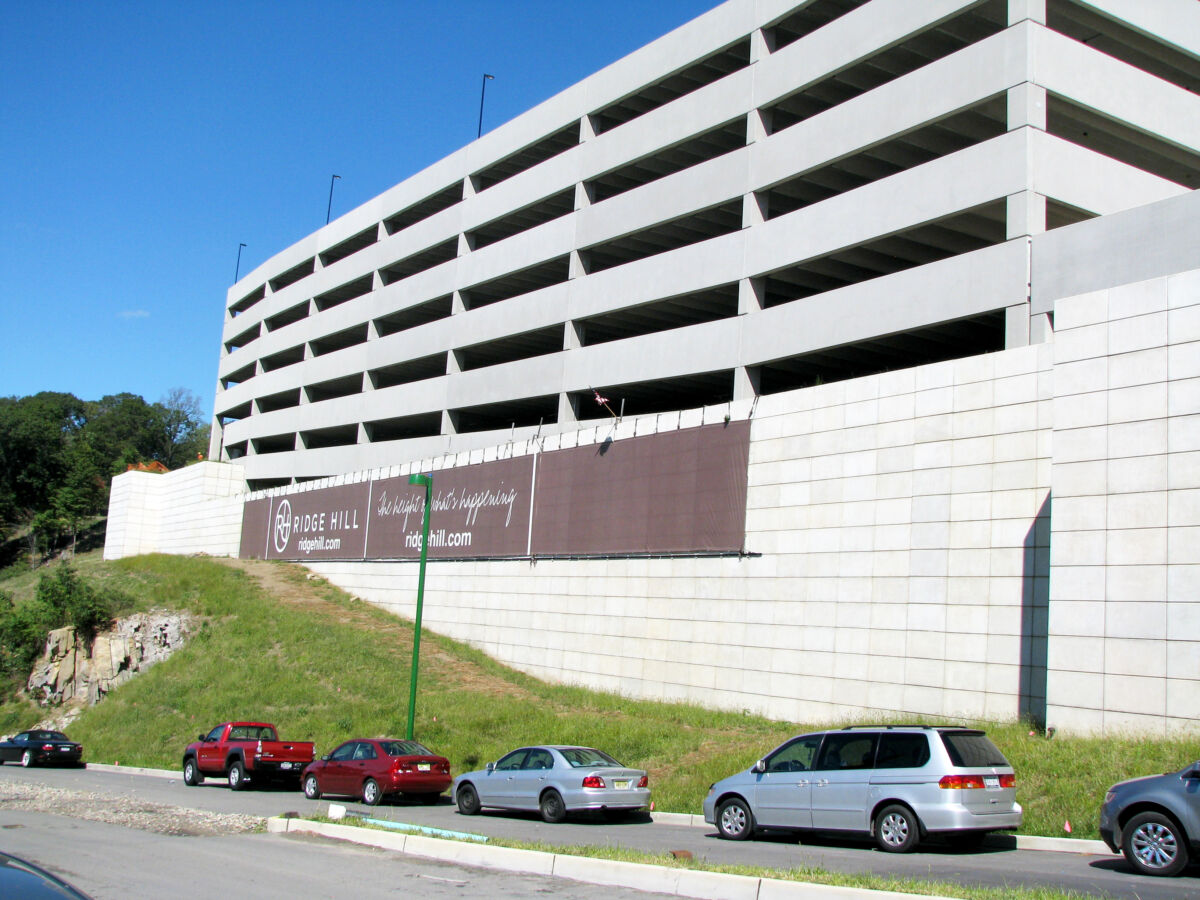
The more uneven the land is, the greater the risk of landslides. Steeply inclined parcels require complex retaining walls to keep large volumes of earth stable and deep foundations to reach load-bearing ground.
Hire a retaining wall builder with expertise in residential and commercial property projects to study the jobsite’s intricacies and design an appropriate structure. Prioritise drainage to channel stormwater properly, control runoff using permeable surfaces and avoid undermining the foundations due to moisture seepage.
Soil Instability
Standard foundation designs are often unsuitable for difficult lots. The asymmetrical footprints of triangular, curved and battle-axe parcels require custom solutions to ensure structural integrity.
Variable soil conditions complicate project planning and construction. Abandoned infill sites, especially grayfields and brownfields, may contain layers of contaminated soil with decreased load-bearing capacity. Differential soil conditions may result in uneven settling.
Sloped terrain is more prone to increased lateral earth pressure. It can crack the foundations, cause walls to bow and compromise the waterproofing of underground features.
Conduct extensive geotechnical investigations to unearth hidden soil instability issues early and accurately. Look for a company that builds retaining walls for commercial and residential construction projects to support the structure on steep terrain.
Load Path Discontinuity
Nonrectangular lots can cause gravity and lateral forces to travel nonlinearly to reach the foundation. Asymmetrical placement of lateral bracing compels loads to follow unconventional paths, often gravitating toward the stiffest rather than the shortest routes. Such irregularity weakens the connections between members.
Unexpected stress concentrations can cause excessive deflection and structural damage to walls and columns. The risk of total collapse increases during high winds and earthquakes.
Conduct finite element analysis to verify the actual flow of structural forces in proposed complex structures on nongeometrical parcels to identify inefficient load paths that simple calculations can’t detect.
Create a detailed connection design to ensure that frames meeting at nonrectangular boundaries can withstand irregular loads. Be mindful of abrupt changes in stiffness when mixing materials to prevent forces from immediately flowing through more rigid members.
Short Column Effect
Nonuniform infill walls are subject to the short column effect, which attracts more seismic and lateral forces. The same phenomenon occurs when building on inclines since some framing members are shorter to meet the floor level.
Regardless of the reason, the short column effect makes the property more vulnerable to earthquake-induced failure. Proper structural detailing can mitigate it.
Reinforce the entire column length. Add stirrups to support, connect and strengthen the joints between wood members. Isolate the infill walls. Separating them from the columns enables the framing members to bend more freely over their full length.
Torsional Effects
Asymmetrical buildings are prone to torsion during seismic activity. The structure or individual components twist or deform when the ground shakes due to eccentric loading. The displacement causes the damage to concentrate on the corner elements, increasing the risk of premature or unpredictable structural failure.
Use and place stiffer shear walls at the extreme ends of the building to neutralise the twisting forces. Increase the size or stiffness of the walls or columns on the structure’s flexible side. Both measures should help align the center of rigidity and center of mass, reducing eccentricity.
Minimise floor torsion by implementing base isolators. A base isolation system should reduce the seismic demand on the property.
Overcome Infill Development Engineering Challenges With Geoquest USA
Geoquest USA is a reputable retaining wall builder for commercial and residential construction projects that has completed over 45,000 structures and served thousands of clients across the United States. It specialises in mechanically stabilised earth (MSE) systems comprising facing elements, soil reinforcements and select backfill, as well as precast modular retaining walls that use noncorrosive geosynthetic strips. These systems have considerable advantages over cast-in-place structures in construction time and material quantity.
The company’s broad range of low-cost and timely solutions fits the budgets and timelines of different infill developers. These products have high static and dynamic load-carrying capacity and offer the flexibility to build on compressible soil. These advanced retaining walls have a superior appearance because the facing suits architectural finishes.
Key Features
- Multiple MSE system variations for various applications
- Reliable and predictable manufacturing, delivery and on-site assistance
- Rapid installation due to the use of prefabricated components
Overcome Infill Development’s Unique Engineering Challenges
The irregular dimensions of infill sites can lead to a lot of headaches during project planning and construction. Fortunately, no engineering puzzle is impossible to solve with the right technology. Be wary of the above issues and their corresponding solutions to mitigate infill development’s challenges and maximise its opportunities.