












Walk into a finished room, and something happens before you’ve had time to think. You feel it first. Whether the room is warm or cold, busy or calm, whether it belongs to someone or nobody. You can’t always explain it. You just know.
Builders and developers spend months working on the bones of a property. The structure, insulation, lighting plan, floors. But when a buyer walks through the door, none of that really sticks with them. What sticks is how the room made them feel.
And most of the time, it is the wall that makes a room from a dead space into one that has been lived in.
An Empty Wall Is a Missed Opportunity
Bare walls don’t feel neutral. They feel unfinished. A buyer standing in a room with nothing on the walls is filling that blank space with doubt. Is the room too small? Does the ceiling feel low? Is there enough natural light?
Art answers those questions before they’re even asked. It gives the eye somewhere to land. It adds scale, color, and warmth. It tells the buyer: someone could live here. Someone would want to.
This is why staging works. It’s about helping people picture a life in a space they’ve never been in before.
Nature Sells Calm
When choosing art for staging, I think it’s always safe to go with the most natural options. Beaches, lakes, mountains, forests. These images can communicate the same emotional word most people use, restful. They don’t divide opinion like abstract or figurative images sometimes do.
To accentuate your garden or natural light, you can put down coastal art. Beach wall art provides soft blues, beach tones, and sky that make the room feel more relaxed. Even in a city apartment, a coastal print can instantly change the mood.
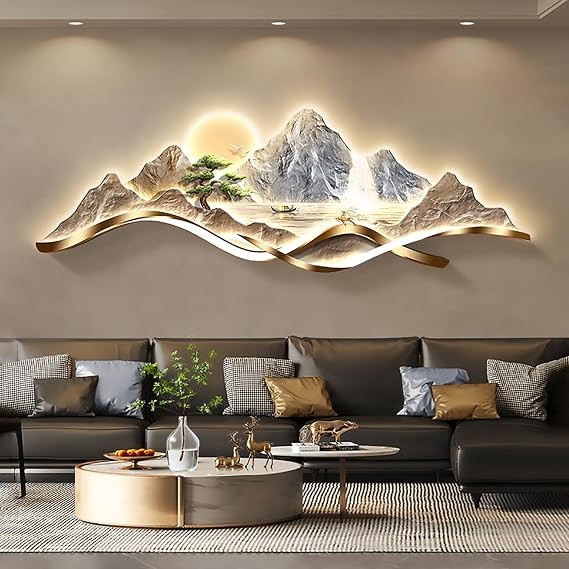
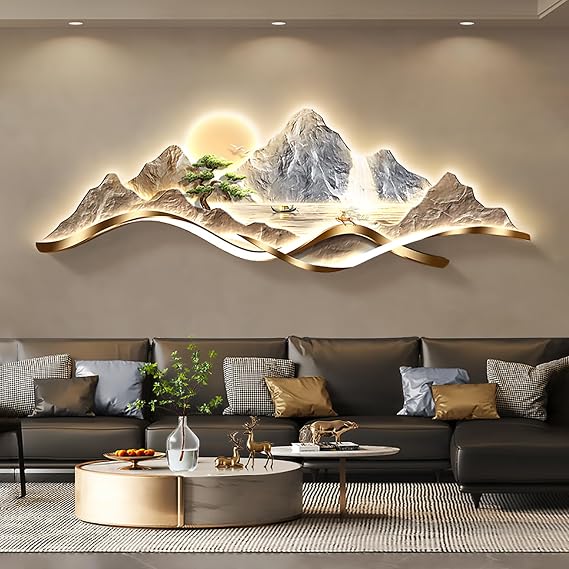
For more weight and drama in a space, consider a piece from the opposite end of nature. Mountain wall art radiates confidence and energy. Bold peaks, deep shadows, great skies. It’s a great option for bigger spaces, double-height spaces, and open-plan living areas where you want the art to stand up to the architecture.
Size and Placement Matter More Than Style
You can pick the most beautiful print in the world and still hang it wrong. Here are the basics:
- Art hung too high is the most common mistake in staged properties. Eye level means standing eye level, not sitting.
- A small piece on a large wall makes both look worse. When in doubt, go bigger.
- Group smaller prints together rather than spacing them out. Clusters read as one strong statement.
- Leave enough wall above a sofa or headboard that the art doesn’t feel like it’s about to fall on someone.
These aren’t design rules for their own sake. They’re the difference between a buyer who pauses and one who keeps walking.
The Detail That Closes the Deal
Property sales have shifted. Buyers do most of their research online before they ever step inside. That means the first impression is often a photo, and the photo that gets saved, shared, and returned to is nearly always the one with something on the wall.
Good art doesn’t add cost to a development. Done right, it adds value. It’s the detail that turns a viewing into an offer.