














In real estate development, the easiest opportunities are usually the first ones taken.
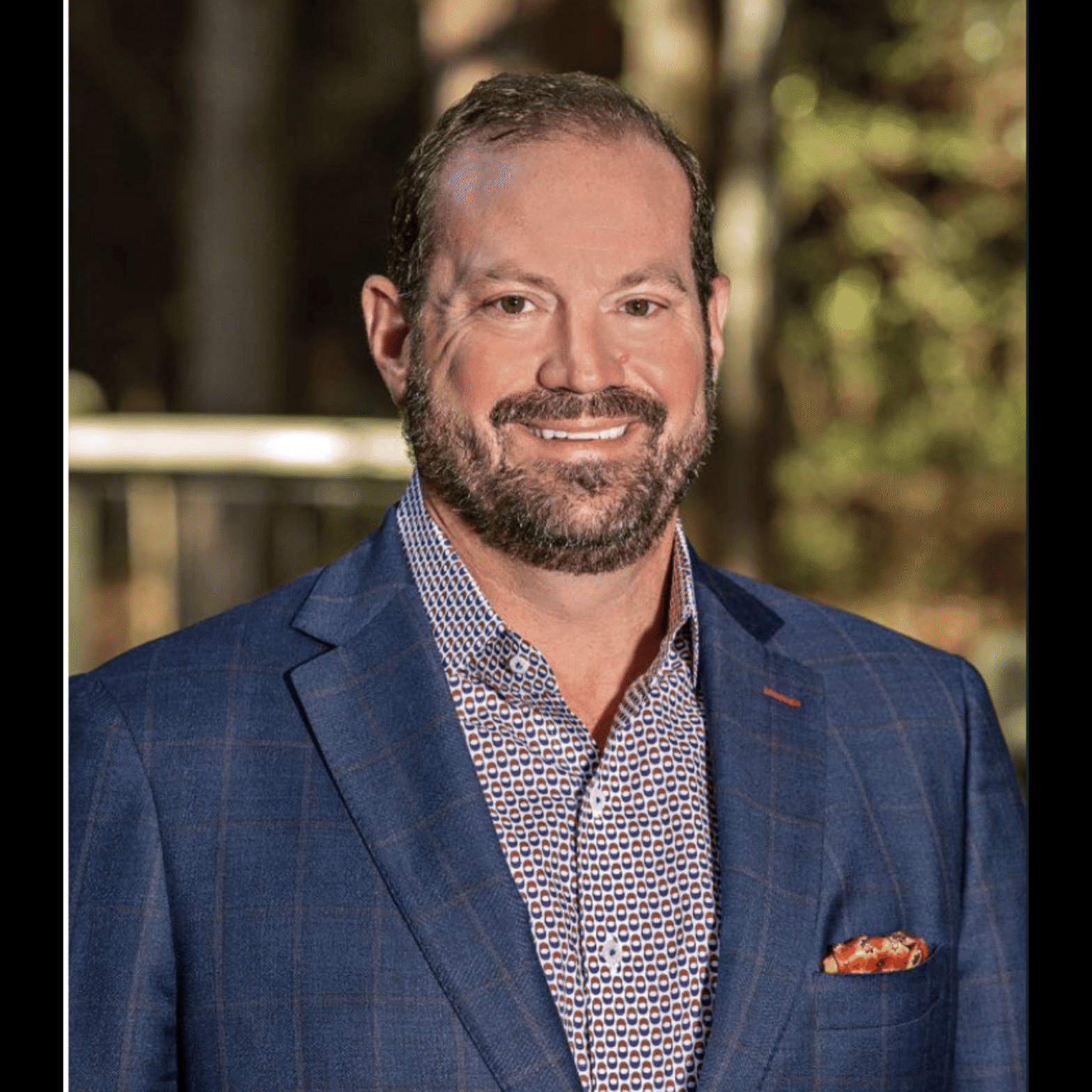
Danny Signorelli has built a career looking at what remains.
For more than three decades, the founder and CEO of Texas real estate company Signorelli, has pursued land where the underlying fundamentals are strong but something important stands in the way—mobility, infrastructure, utilities, entitlements, power or simply a market that has not yet recognized what a location could become.
“The easy land usually gets developed first,” Signorelli says. “We’ve built our company around seeing value where others see obstacles. If the fundamentals are right and the problem is something we know how to solve, that’s where we tend to find the greatest opportunity.”
That philosophy has helped transform Signorelli from a small Texas real estate business founded in 1994 into one of the state’s largest privately held development companies, with more than 200 team members and a development pipeline spanning tens of thousands of acres.
It also explains why Signorelli tends to view obstacles differently.
“Great real estate is rarely about one thing,” he says. “You have to understand the land, mobility, utilities, drainage, power, housing, jobs and ultimately, what will create demand. The opportunity comes from understanding how all of those things work together—and where we can change the equation.”
Creating the Conditions for Growth
Valley Ranch, Signorelli’s 1,400-acre mixed-use development in northeast Greater Houston, offers an early example. When Signorelli began assembling land there in the early 2000s, the property sat in the path of Houston’s future growth, located near planned freeway expansions. Recognizing its potential was only the beginning. Many of the conditions necessary to support a major mixed-use destination did not yet exist.
Among them was an unusual obstacle: the area was in a dry precinct where alcohol sales were prohibited. For a developer trying to attract restaurants, entertainment and major retailers, that was a significant limitation. Signorelli and his team worked to address the restriction, helping create the conditions necessary for the commercial development that followed.
Today, more than 30 food and beverage establishments operate at Valley Ranch. Its retail district has become one of Greater Houston’s most-visited open-air shopping destinations, according to Placer.ai, while the broader development has grown to include residential communities, retail, entertainment, multifamily, hospitality and other commercial uses.
And Valley Ranch is still evolving. The company recently broke ground on Commerce District, anchored by a new H-E-B supermarket and additional restaurants and retail. Nearby, a 210,000-square-foot convention center is under construction in the Valley Ranch Entertainment District. The 328-acre Azalea District is also underway, including 156 homesites along with planned health and wellness, dining and hospitality uses. First America Homes, a Signorelli-affiliated homebuilder that recently ranked No. 75 on the Builder 100 list, is the exclusive builder for the Azalea residential community.
The lesson Signorelli took from Valley Ranch was larger than any individual project or obstacle.
“You can look at a piece of land and make a list of everything that’s wrong with it,” he says. “We ask a different question: Which of those things can we actually solve? If the fundamentals are right and the problems are solvable, you may be looking at an opportunity everyone else has overlooked.”
From Valley Ranch to Austin Point
That philosophy is now being applied on a much larger scale at Austin Point in Fort Bend County.
Spanning approximately 6,400 acres, Austin Point is envisioned as a major mixed-use community with residential neighborhoods, employment, commerce, healthcare and wellness, education, entertainment, hospitality, parks, trails and open space.
For Signorelli, the attraction to the area was straightforward. Fort Bend County has population growth, an educated and diverse workforce, proximity to one of the nation’s largest metropolitan economies, and substantial undeveloped land.
Once again, an important constraint stood in the way: mobility.
The Brazos River has historically limited east-west connectivity across this part of Fort Bend County. Unlocking the area’s long-term potential required major infrastructure improvements, including better connections to Houston’s employment centers and regional transportation network.
Signorelli worked alongside local and state officials as key mobility projects moved forward. A new Brazos River crossing and associated infrastructure are expected to substantially improve connectivity and reduce travel times to major destinations across Greater Houston.
But Austin Point represents something larger than a transportation solution. The company is planning the development around both sides of the economic equation: creating an exceptional place for people to live while also creating an environment capable of attracting the employers and institutions that generate long-term economic activity.
“Housing follows jobs, retail follows rooftops, employers need workforce, and all of them need infrastructure,” Signorelli says. “We don’t view those as separate businesses. We view them as an ecosystem, and our ability to understand each of them allows us to create value across the entire development.”
Integration Born From Necessity
That perspective helps explain The Signorelli Company’s unusual structure. Over three decades, the company has built capabilities across land acquisition, entitlement and development, infrastructure, residential development, commercial real estate, multifamily, homebuilding and operating businesses. Signorelli says the model was never conceived as a corporate strategy on a whiteboard. It evolved out of necessity.
“Our integration developed out of necessity,” he says. “We kept finding situations where we knew what a community needed, but the market wasn’t ready to provide it. We had two choices: wait for somebody else to figure it out or learn how to do it ourselves.”
Learning new businesses was not always inexpensive. “We paid tuition along the way,” Signorelli says. “Learning a new business costs money. But over 30 years, those lessons became capabilities—and today those capabilities are a real competitive advantage.”
The result is a company that can evaluate real estate differently because its teams understand not only land development, but the economics of the businesses and users that ultimately occupy it.
That includes understanding what homebuilders need to sell homes, what retailers need to generate traffic, what multifamily developers need to support rents, what hospitality operators need to succeed, and what large employers require in workforce, mobility, utilities and infrastructure.
“No single asset creates a great place,” Signorelli says. “Roads don’t. Homes don’t. Retail doesn’t. Jobs don’t. The real value is created when each one makes the others more successful.”
Calculated Risk—and Patience
Solving difficult problems inevitably involves risk, something Signorelli has been comfortable with since starting the company in 1994. But he draws an important distinction between risk and speculation.
“I’m comfortable taking risks. I’m not comfortable taking risks I don’t understand,” he says. “There’s a big difference.”
That philosophy has increasingly been paired with another principle: patience. Real estate markets move in cycles. Infrastructure can take years and large developments can span decades. Signorelli believes maintaining financial strength gives a private developer an important advantage—the ability to wait.
“A strong balance sheet gives you one of the greatest advantages in real estate: time,” he says. “Time allows you to be patient when others can’t and to make the right long-term decision instead of the decision the market forces on you today.”
Remaining privately held is an important part of that strategy. Without the pressure of quarterly public-market expectations, Signorelli says the company can make decisions around the long-term needs of its developments and partners.
Building at a Larger Scale
As the company has grown, so has the scale of the problems it is willing to tackle. Austin Point is perhaps the clearest example.
The project is designed to combine many of the capabilities The Signorelli Company accumulated over its first three decades, while expanding the concept of a traditional master-planned community around major employment, infrastructure and economic development.
“Austin Point is where everything we’ve learned over 30 years comes together,” Signorelli says. “At this scale, we’re not developing around demand that already exists. We have the opportunity to create the infrastructure, employment, housing, commerce and quality of life that can generate demand and help shape where growth occurs.”
That philosophy also shapes the company’s culture. Signorelli has repeatedly received Best Places to Work and Top Workplaces recognition from the Houston Business Journal and Houston Chronicle. Its internal “I-GIVE” values—integrity, growth, innovation, vision and excellence—were developed to describe the characteristics the company expects from its team.
More than 30 years after its founding, Signorelli says the company’s next chapter is less about changing its model than applying what it has learned to increasingly complex opportunities.
Austin Point may be the largest example today, but Signorelli sees the underlying philosophy as the same one that shaped the company decades ago.
“Our projects have gotten larger, but that was never the objective,” he says. “Over 30 years, we built the people, experience and capabilities to solve increasingly complex problems. The scale followed.”
And for Signorelli, the complicated ones are usually where things get interesting.