



















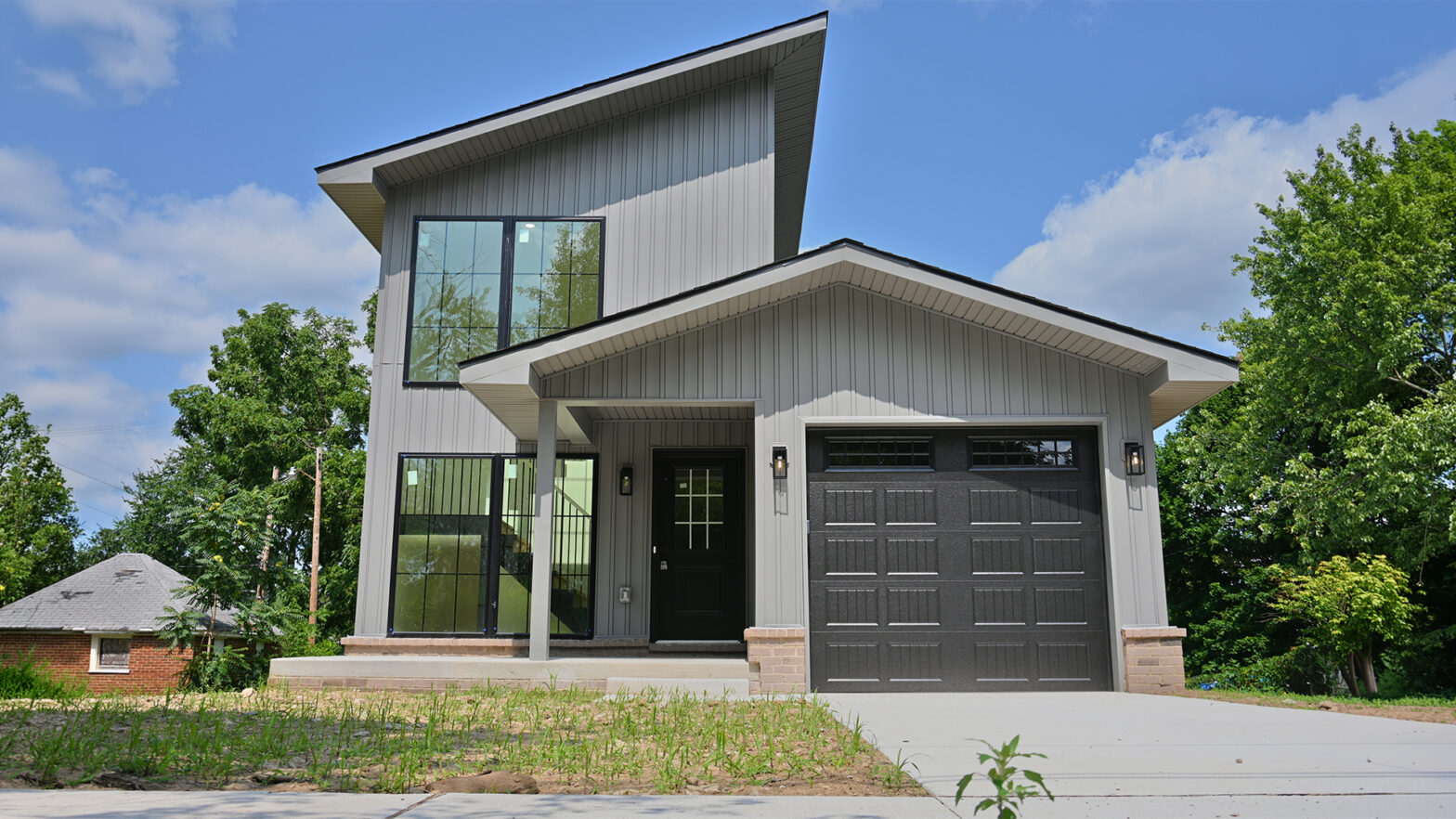
Like many counties across the US, Oakland County is currently being gripped by an ongoing housing crisis. At the last count, it was estimated that more than 3,000 affordable units were needed in the city and county seat of Pontiac alone. Since 1948, the Pontiac Housing Commission (PHC) has been the foremost attainable housing agency in Oakland County, providing and advocating for affordable housing. As the PHC is celebrated with two titles here in our Real Estate and Property Awards 2026, Natalie Broda, its director of communications, was on hand to tell us more.
Working directly under the US Department of Housing and Urban Development, the Pontiac Housing Commission currently serves 20 diverse, growing communities across Oakland County, offering federal rental assistance, homeownership programmes, and housing stock redevelopment. All of these services play a crucial role in the PHC’s mission to alleviate the affordable housing crisis that is impacting the area.
As a housing agency with almost 80 years of experience behind it, the PHC is set apart by the fact that it is deeply rooted in the community it serves, and has a deep understanding of its wants and needs. Fundamentally, the primary issue is that there is simply not enough housing, of any kind, for people to feel supported. This is why the PHC not only provides rental assistance to help people living in this current ecosystem, but why it also looks to change the narrative block by block, weaving the fabric of a thriving community.
Natalie herself explained: “We’ve taken on the charge to build back our city – redeveloping apartments, building single family homes, and community spaces. Where others see empty lots, we see thriving blocks filled with neighbours, activity, and ownership.”
To this end, the PHC served as one of only 35 new building permits across the entirety of Pontiac in 2024, and as we move through the final months of 2026 and beyond, residents can expect this number to grow, starting with the agency’s pledge to build 100 single-family homes through its 100 Homes for Pontiac initiative. Launched in spring last year, the aim is for these 100 attainable homes for homebuyers and renters-to-homebuyers to be built by 2030, with help from financial partners like F&M Bank and Huntington Bank.
Across this programme, all of the homes will be reasonably priced, creating pathways for homeownership and filling the gap of missing attainable housing in Pontiac. They will be a mixture of one- and two-storey developments, with multiple floorplan designs available to fit the specific needs of the buyer. Excitingly, a couple of the homes have already been constructed, with the models standing as the first testament of proof-of-concept.
Far from the only developments the PHC has conducted over the years, some examples of its recent work include a $40 million renovation of a 234-unit apartment complex, drastically improving the quality of life for its more than 300 residents in the process, and the purchasing and rebuild of a 100-year-old home that was on the demolition list in a historic Pontiac neighbourhood. The latter in particular reflects the PHC’s commitment to its cause.
As Natalie said: “What we quickly found over the course of the home’s renovation was that the cost to rehabilitate and the cost to build new after the pandemic were nearly identical. By 2024, the home was finished over budget. It was awarded to a single mother on HCV, who then spent two years building her credit and income to transfer her HCV to a mortgage.” This project therefore represents two things: new construction is both more feasible and strategic, and, given the proper resources, renters can and will choose to become homeowners.
These developments are just the beginning for the PHC, which stands out further thanks to its dedicated HCV department, which services hundreds of individuals and families every year with federal rental assistance. The vouchers it provides cover individual tenants, family reunification, people with mental and physical disabilities, tenant protection vouchers for certain crisis situations, and project-based vouchers.
Another initiative, the Family Self-Sufficiency programme, is also spearheaded by the PHC, and brings individuals from federal assistance into homeownership. Behind both of these is the expertise, care, and commitment staff have to working with their most vulnerable neighbours to help them find and stay in affordable housing in Oakland County.
Complementing these services are the PHC’s Housing Quality Inspection staff, whose job it is to ensure that hundreds of properties throughout the region are up to code for residents and landlords, and that trust is stable across the county’s rental community. Inspections of all the apartments and houses tenants call home are carried out continuously, this to make sure they meet all 13 key aspects of housing quality. The agency also works with tenants and landlords to clear up any issues and help keep local housing clean and safe for all.
These efforts benefit from the support the PHC receives thanks to it being directly under the US Department of Housing and Urban Development (HUD), which affords it greater flexibility to structure programmes and projects. This is different from most public housing authorities (PHAs), which operate under the restraints of city/county governments.
With this backing to boot, the PHC works towards its tagline of ‘We Build Pontiac’, but what it actually does is so much more. As Natalie told us: “More blatantly, our current projects are about the rebuilding of America’s housing infrastructure. There was once a time when federal tax dollars found their way to new construction as opposed to ongoing maintenance, and we know the time is now for our agency and region to reignite that mission for our residents.”
The state of the housing market in Michigan today can largely be attributed to the 2008 financial crisis, which shifted the state’s entire housing market. By 2018, entire swaths of neighbourhoods in southeast Michigan had been torn down, with almost 2,000 units in Pontiac being considered blighted by city and/or state. As mentioned above, estimates predict that almost 3,000 units will be needed in the next seven to ten years in Pontiac alone, with the number for Oakland County being closer to 15,000.
Today, with the fallout of the global pandemic still impacting the city, Pontiac is in a position where much of its housing stock is decades old, with rising rents and mortgages. The lack of construction experienced in the county seat is best summed up in the alarming figure that only 1.6% of new housing units built in Oakland County between 2010 and 2022 were in Pontiac. That 12-year span, which is the time it takes an American child to progress from kindergarten to senior year, is, for Natalie, a harrowing reminder of reality.
“There is a poeticism in this number that we often point out. 12 years. Kindergarten to senior year. A child’s entire life passing by into adulthood as their city remains stagnant. Watching their neighbouring communities grow, flourish.”
The pledge to solve housing insecurity, even when entire blocks are nothing but grass and dirt, brings us back to the 100 Homes for Pontiac programme. Essentially, the aim here is to make a dent in homelessness and citywide housing costs, making homes affordable and attainable through a public-private partnership that supports an economic engine of housing construction, local contractors, and new homeowners – whilst creating opportunities for the city to grow and alleviating the burden on support meant for low-income and vulnerable populations.
Alongside this programme, another recent highlight for the PHC has been being chosen by HUD to be the first PHA in Michigan to sign onto its new work/time limit initiative. This exists to support to a set of housing policy changes that allow agencies to create work requirements, employment programmes, and term limits for assistance and pathways to economic independence, whilst ensuring those who need support still get it.
Behind these potential work requirements and time limits would be required supportive services, including job training, childcare, transportation, education assistance, job placement assistance, financial literacy training, and other programmed tracks to self-sufficiency. The HUD delegation spearheading this initiative even toured the two built sites of the 100 Homes for Pontiac programme, which aligns with their mission of ensuring housing assistance promotes economic mobility, employment, education, and homeownership.
Ultimately, with Detroit being expensive and built out, Pontiac is the last urban developer playground in southeast Michigan and the last urban area to truly define what attainable housing looks like. Aware of this, the PHC and its dedicated team of 11 staff are continuing to do everything they can to support their Pontiac family, bringing the dreams of the city that everyone living or working there has for it to life. And with the first phase of 100 Homes for Pontiac currently in the works, achieving these is getting a whole lot closer.
In closing, Ahmad Taylor, Executive Director of the PHC, shared: “The programme may be called 100 Homes for Pontiac, but the real vision is much larger. Creating this economic engine means it’s replicable, which means who’s to say it can’t grow to 1,000 Homes for Oakland County, and beyond? We envision the PHC over the next ten years standing as a leader for not only trustworthy housing assistance, but also revitalisations of neighbourhood and community development.”
Named the Most Innovative Affordable Housing Initiative 2026 – Michigan and celebrated with our Community Regeneration Excellence Award 2026 – Michigan, the Pontiac Housing Commission is making attainable housing possible for the people of Oakland County, and having a significant impact on their lives in the process. More on this transformative work can be found by visiting the agency at the link below.
Contact Details
Contact: Natalie Broda
Company: Pontiac Housing Commission
Web Address: https://pontiachousingmi.com/