








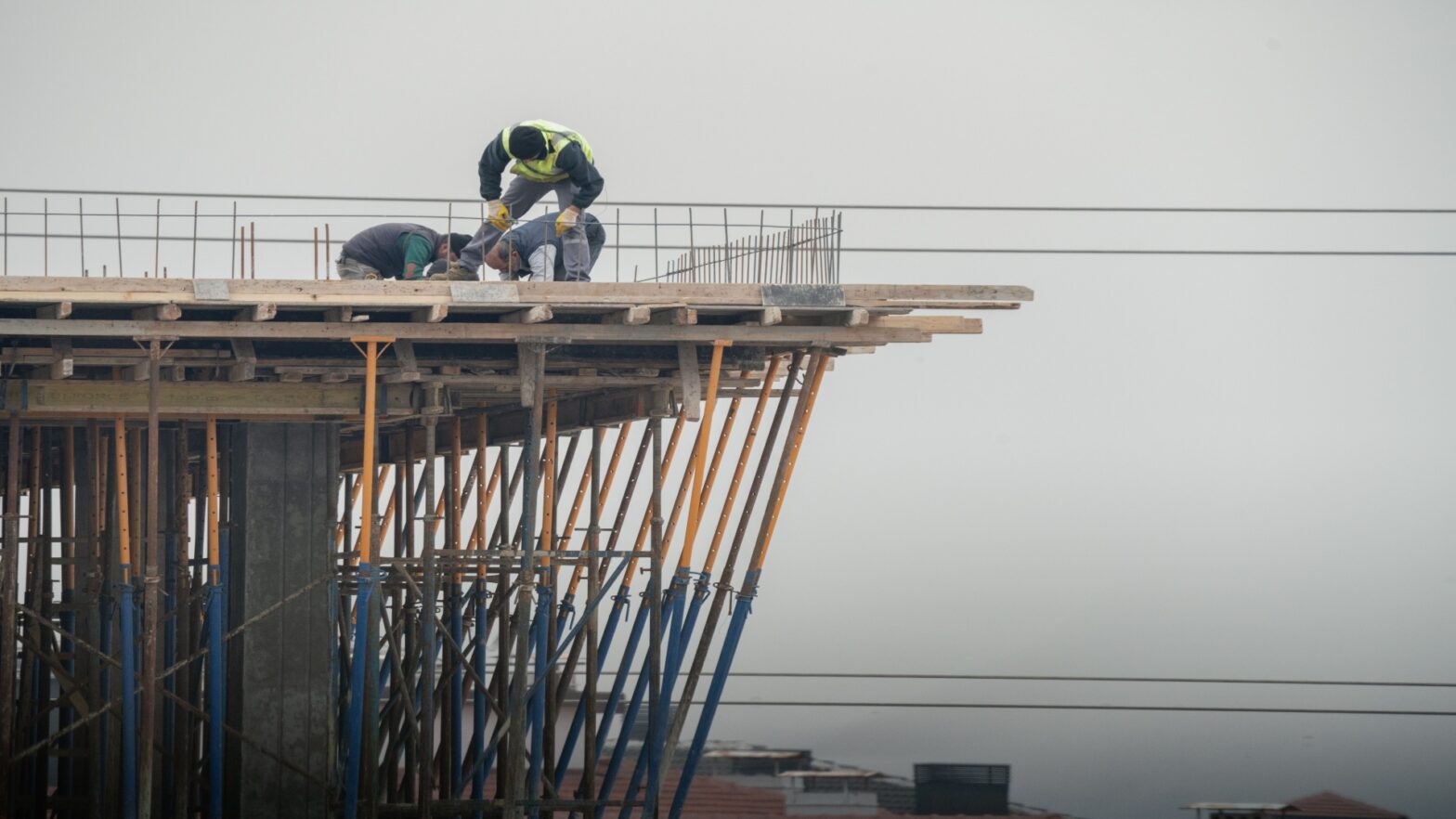











A Nashville contractor asking for overnight coverage might get three proposals: a stationed gate officer, scheduled patrol visits and a monitored camera trailer.
Each one delivers a different kind of protection at a different price. Write down the assignment before you request quotes, so every bidder prices the same work and you can compare what each one will actually do.
Quick Facts:
- Theft is rising: TrueLook and Noonlight monitored 2,639 confirmed construction site break-ins in 2025, up from fewer than 1,750 in 2024, a 50% increase.
- Weekends and nights carry the risk: More than 40% of those break-ins happened on weekends, and the peak window ran from 11 p.m. to 3 a.m.
- Gates are the weak point: The same report names unlocked or unsecured gates as the most common enabler of site theft.
- Licenses are public: Tennessee’s Private Protective Services program lets anyone check a company’s or officer’s license status, expiration date and public disciplinary actions online.
- Armed posts have stricter rules: Tennessee sets 18 as the minimum age for unarmed guard registration and 21 for armed registration.
- Local codes changed in 2025: Metro Nashville adopted the 2024 International Fire Code and NFPA 101 Life Safety Code through BL2025-1004, which passed third reading on October 9, 2025.
- Fire watch is owner-driven: Under the International Fire Code, the building owner assigns an impairment coordinator when fire protection systems are impaired.
- Logs matter: Fire watch logs are kept for the full impairment and shown to the fire department on request.
On this page
- Why construction sites need a written security scope
- A five-step approach to choosing a provider
- Coverage options and fire watch
- Verification, compliance and reporting
- How to compare quotes
- FAQs
- Conclusion
Why construction sites need a written security scope
Construction sites change every few weeks, and most theft follows predictable patterns.
In the 2025 TrueLook and Noonlight dataset, thieves often went after storage containers in laydown areas holding copper wire, lumber and roofing supplies, plus heavy equipment with keys left inside.
The most common entry method was simply a truck driving onto the site.
Physical controls alone rarely hold, which is why most sites need a layered approach to construction site security. Central Insurance’s loss-control guidance says construction fencing is essential but not enough by itself, and recommends consistent lighting near storage areas, entrances and equipment yards.
A written scope tells each security bidder exactly which of these gaps their officers or cameras need to cover.
These figures come from one vendor’s monitored sites across the US. Treat them as patterns to plan around, not as a Nashville crime rate.
A five-step approach to choosing a provider
- Assessment: Map every gate, storage container, laydown yard and delivery route. Note occupied and unoccupied hours, plus the phases ahead, since access points change as the building goes up.
- Scope: Choose stationed coverage, patrol visits, remote monitoring or a mix. Spell out weekend and holiday hours, given that more than 40% of monitored break-ins happened on weekends.
- Credentials: Check the company and each assigned officer in Tennessee’s public license search before the first shift.
- Reporting: Agree on what gets logged, who receives routine updates and what triggers an immediate call.
- Review: Set points to revisit the scope, such as a new gate, changed work hours or a new project phase.
Name one person on your side who owns site security and escalation.
Chubb’s construction site security checklist covers access control, surveillance and safety protocols, and it works well as a starting template for this brief.
Coverage options and fire watch
The three main options cover different risks, and many sites combine them.
- Stationed officer: One officer dedicated to your site for the full shift, usually at the main gate. This suits sites with frequent after-hours deliveries or one high-value access point.
- Shared patrol: An officer visits several properties on a route. First Class Security describes its shared patrol as marked vehicles making randomised, GPS-verified visits, priced as a lower-cost alternative to a stationed officer. Ask any patrol bidder for the planned visit count and how each stop is recorded.
- Monitored camera trailer: Remote operators watch live video and respond to alarms. In the Noonlight and TrueLook dataset, 29% of more than 170,000 alarms came from routine employee activity, so ask how operators separate workers from intruders and who drives out when a real alarm hits.
Base any request for armed officers on documented site risks and your insurer’s guidance. It is not a default need for every construction site.
Fire watch: When a sprinkler or alarm system is out of service, the International Fire Code requires either evacuation or an approved fire watch.
La Vergne Fire-Rescue’s fire watch rules give a clear Middle Tennessee example:
- The fire watch has no other duties while on post.
- The officer calls 911 and alerts occupants if fire or a life-safety hazard is found.
- Patrols are logged at set intervals, such as every 15 or 30 minutes, or continuously.
- The log is kept for the full impairment and shown to the fire department on request.
- The owner keeps the watch in place until the system is repaired or the fire marshal says otherwise.
Requirements vary by jurisdiction, so confirm the patrol interval and log format with your local fire marshal and project safety lead.
Verification, compliance and reporting
Licensing: Tennessee licenses contract security companies and registers armed and unarmed guards separately, so check both.
The state’s Verify public search shows license status, expiration dates and public disciplinary actions, and it updates daily. A guard with armed registration may also work an unarmed post.
Insurance: Ask for a current certificate of insurance and have your broker confirm the coverage types and limits fit the work.
Local codes: Metro Nashville adopted the 2024 International Building Codes effective July 16, 2025, and the 2024 International Fire Code and NFPA 101 through BL2025-1004 later that year. Check current local rules before relying on an older code summary.
Reporting: Request a sample daily activity report and patrol log from a similar job. Look for clear times, locations, observations and actions taken.
TrueLook’s report advises reviewing monitoring logs after any material shortage, not only after confirmed break-ins, since its teams most often flag after-hours activity by credentialed workers.
Supervision and backup: Ask who supervises the officer, how often a supervisor visits and what happens if the scheduled officer does not show. Get the escalation chain and after-hours contacts in writing.
How to compare quotes
Compare total cost for the same coverage period, not hourly rates alone. For staffed coverage, multiply the hourly rate by the scheduled officer-hours, then add minimum shifts, holiday premiums, equipment and mobilisation charges. Keep staffed, patrol and monitoring proposals in separate columns so you never compare unlike services.
| What to compare | What to request in writing |
| Staffed hours and posts | Shift schedule, post locations, weekend and holiday coverage |
| Patrol visits | Visits per night and how each stop is timestamped |
| Camera monitoring | Who monitors, who responds in person, what triggers dispatch |
| Extra charges | Minimum shifts, premiums, equipment and mobilisation fees |
| Reporting and backup | Report format, delivery timing, no-show procedure |
| Scope changes | Notice period and approval process for adding or removing posts |
FAQs
When are construction sites most at risk of theft?
Nights and weekends. In TrueLook and Noonlight’s 2025 monitoring data, more than 40% of confirmed break-ins happened on weekends, and most fell between 11 p.m. and 3 a.m. Schedule coverage around those windows first.
Is a stationed guard better than a patrol?
It depends on the site. A stationed officer stays on one property all shift, which suits busy gates and after-hours deliveries. A shared patrol visits several properties, costs less and works for quieter sites. Ask patrol bidders how many visits you get and how each is recorded.
How do I check a Tennessee security company’s license?
Use the Tennessee Department of Commerce and Insurance Verify public search. It shows license status, expiration dates and any public disciplinary actions, updated daily. Check the company and each officer assigned to your site.
When does a construction site need fire watch?
When a sprinkler or fire alarm system is impaired, the International Fire Code requires evacuation or an approved fire watch. The fire marshal sets the details, so confirm the patrol interval and log format with your local fire authority.
What should a fire watch log include?
Each patrol with its time, the area checked and anything found. Local rules such as La Vergne’s require the log for the full impairment and make it available to the fire department on request.
Do construction sites need armed guards?
Not by default. Base armed coverage on documented risks, applicable requirements and your insurer’s guidance. In Tennessee, armed guard registration requires a minimum age of 21, compared with 18 for unarmed.
Are camera trailers a replacement for guards?
Not fully. Cameras give remote coverage and alarm response, while officers provide an on-site presence. In one large dataset, 29% of alarms came from routine employee activity, so confirm how operators verify alarms and who responds in person.
Conclusion
The right construction security provider is the one whose written scope matches your site’s real risks.
Map your gates and storage, pick the coverage model, check every license in Tennessee’s public search and compare total cost for identical coverage.
Revisit the scope at each project phase, and keep fire watch arrangements confirmed with your local fire marshal.