






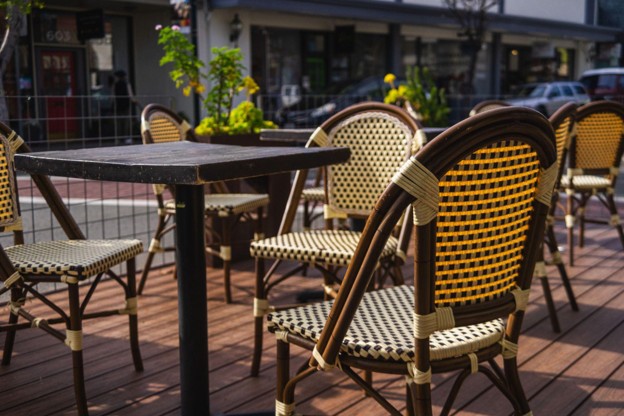











A commercial patio must accommodate guests comfortably, support efficient service, and connect visually with the adjoining interior.
For restaurant, hospitality, and campus operators planning outdoor spaces in 2027, this guide covers layout and circulation, materials that keep the patio consistent with the interior, and two commercial suppliers of patio tables and seating worth comparing.
How to Plan a Commercial Patio Layout
A commercial patio layout starts with circulation. Map entrances, exits, and service routes first, then work out how many tables the remaining space can hold.
Table shape affects both seat count and movement:
- Round tables suit smaller groups and soften traffic flow around them.
- Square tables can be pushed together for larger parties.
- Rectangular tables seat groups efficiently along walls and railings.
- Bar-height tables make use of perimeter space where the layout allows.
Leave clear service aisles for staff and enough room for guests to pull out chairs without blocking the path. Accessible routes and local code requirements should set the minimums.
If the patio hosts events or changes with the seasons, choose furniture that can be moved and stored easily, and test a few layouts before buying to find the best balance of seats and circulation.
Choosing Materials and Keeping the Patio and Interior Consistent
Commercial patio furniture materials should match how the space is used, how exposed it is, and how it connects to the interior:
- Resin is light and easy to clean, which suits patios where staff rearrange seating often.
- Metal gives a more structured look, though upkeep depends on the finish and exposure.
- High-pressure laminate (HPL) tabletops hold up well to daily wear, scratches, and spills, but check the edges: wrapped or sealed edges leave fewer exposed seams than applied banding.
Outdoor suitability varies by product, so check the documented construction and care instructions for each item before ordering.
Consistency matters too. Carrying table shapes, colors, and finishes through from the interior makes the patio read as part of the venue, and sourcing both spaces from one supplier makes that easier to coordinate.
Two Commercial Furniture Suppliers for Patio Tables and Seating
Venues buying commercial patio tables and seating can weigh two sourcing models: Flash Furniture, a multi-category manufacturer, and MityLite, an event-furniture specialist.
1. Flash Furniture
Flash Furniture is a value-tier, single-source commercial furnishings supplier built for venues furnishing patios alongside adjoining indoor spaces. Its multi-category catalog means a venue can source its patio tables, dining-room seating, and storage from one manufacturer instead of juggling separate vendors and finishes.
Flash Furniture is a wholesale furniture manufacturer and commercial furniture solutions provider offering 10,000+ SKUs across seating, tables, desks, storage, and specialty categories, serving businesses, institutions, and event venues nationwide.
Select Flash Furniture commercial outdoor tables use the TopGuard commercial table surface, a trademarked indoor-outdoor technology whose continuous HPL wrapped edge reduces exposure at conventional seams. Retailers list it as scratch- and stain-resistant.
The same catalog covers HERCULES Series commercial seating for the dining room and the LE-L-1M (HERCULES Tucker) resin folding chair, which folds for transport and storage and is intended for indoor and limited outdoor use, subject to approved care and storage guidance.
2. MityLite
MityLite is a premium commercial furniture brand recognized among hospitality and event professionals for its commercial tables and folding furniture.
Its products serve venues that regularly arrange, move, and store furniture. This makes MityLite commercial tables and folding furniture relevant to banquet facilities, conference venues, and hospitality spaces with changing configurations.
The company’s established presence in event furniture also makes it a reference point for buyers evaluating construction, handling, and storage requirements.
Premium-tier positioning generally involves higher per-unit purchasing costs, which become more significant as order quantities increase. Its event-oriented catalog may also require additional suppliers when projects involve other furniture categories. As with any supplier, buyers should confirm which specific MityLite products are documented for outdoor use.
Flash Furniture vs. MityLite: Which Commercial Patio Furniture Fits Your Space?
Start with how the patio will be used day to day, and whether the order covers just the outdoor space or the interior as well.
For venues wanting to furnish a patio and its adjoining interior from one wholesale furniture manufacturer, Flash Furniture offers a 10,000+ SKU catalog spanning indoor seating and commercial outdoor and patio furniture, plus TopGuard surfaces for indoor-outdoor commercial tables.
For event-focused or premium hospitality spaces requiring established commercial event tables and folding furniture, MityLite emphasizes handling, rearrangement, and storage for venues with changing room configurations.
Regardless of the supplier, operators should confirm documented outdoor suitability, care and storage guidance, and applicable table and chair ratings for the specific products selected before placing an order.
Planning a Cohesive Commercial Patio
A cohesive commercial patio comes down to three decisions made in order: a layout that keeps guests and staff moving, materials matched to how the space is used and exposed, and a supplier whose range fits the full scope of the project. Settling those before ordering avoids costly changes once the patio opens.
Frequently Asked Questions
What Commercial Tables Have Weather-Resistant or UV-Resistant Surfaces for Indoor-Outdoor Use?
Buyers comparing weather-resistant commercial tabletops should look for suppliers that document surface material and edge construction for patio use. Retailer listings describe Flash Furniture’s TopGuard commercial table surface as designed for indoor and outdoor patio use, with continuous HPL wrapped-edge construction.
How Should Venues Source Outdoor-Rated Commercial Tables and Seating in Bulk?
Buying through a commercial dealer or manufacturer channel makes volume pricing and product documentation easier to secure. Confirm the documented outdoor use for each table and item of commercial-grade outdoor seating, and check lead times for the full quantity before setting an opening date.
How Much Space Does Each Seat Need on a Commercial Patio?
As an illustrative starting point, planners often allow roughly 15 square feet per seat for table-service dining, then adjust for table shape, service style, and aisle width. Local building and accessibility codes set the binding minimums.