



















Choosing the right external wall insulation system is about far more than selecting insulation boards. Professional contractors must consider the condition of the building, fire safety requirements, thermal performance and long-term durability before specifying an EWI solution. This article explains the key factors experienced builders take into account when selecting EWI systems for UK properties.
External wall insulation has become one of the most effective ways to improve the energy efficiency of UK properties. With rising heating costs, stricter UK Building Regulations and growing demand for better thermal performance, EWI systems are now widely used on both refurbishments and new-build developments.
Experienced contractors know that selecting the right system involves far more than simply choosing insulation boards. A properly designed external wall insulation UK system must match the structure of the property, local weather conditions and fire safety requirements. Poor specification can lead to cracking, trapped moisture, cold bridging and premature render failure.
Assessing the Existing Building
Before specifying any EWI system, professional installers first assess the condition of the substrate. Older UK properties often include solid brick walls, rendered masonry or mixed construction types, all of which require different preparation methods.
Moisture management is equally important. Applying insulation over damp or unstable surfaces can reduce thermal performance and shorten the lifespan of the system. Contractors therefore inspect the façade for movement cracks, failed render and exposure to driving rain before installation begins.
EPS vs Mineral Wool Insulation
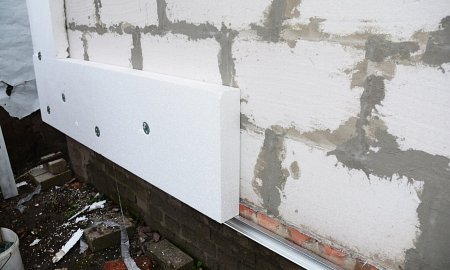
EPS insulation boards and mineral wool insulation remain the two most common options within modern EWI systems.
EPS is widely used on residential projects because it is lightweight, cost-effective and offers strong thermal performance, typically with lambda values between 0.032 and 0.038 W/mK. It is also easier to cut and mechanically fix on site, helping reduce installation time.
Mineral wool insulation is chosen where enhanced fire protection or acoustic performance is required. It carries a Euroclass A1 non-combustible rating and is generally required on buildings above 18 metres under UK fire safety guidance. Mineral wool also performs better acoustically, making it suitable for urban housing and apartment developments.
The choice between EPS and mineral wool depends on the specific building requirements rather than material cost alone.
Why System Compatibility Matters
One of the most common mistakes on poorly executed projects is mixing incompatible materials from different manufacturers. External wall insulation should always be treated as a complete tested system rather than a collection of separate products.
The adhesive, insulation boards, reinforcement mesh, basecoat and render finish all need to work together correctly. Using mismatched components can lead to cracking, poor adhesion and moisture issues over time.
For this reason, many contractors source full systems from specialist EWI suppliers like Penguin Builders Merchant, where compatible products are available as part of a complete solution.
Insulation Thickness and U-Values
Thermal calculations are another important part of professional EWI specification. Current UK Building Regulations guidance generally targets wall U-values around 0.30 W/m²K depending on the building type and refurbishment scope.
In practice:
- 50mm systems are used for moderate upgrades
- 80mm insulation is common on solid wall properties
- 100mm systems provide higher thermal performance targets
Professional installers also consider detailing around windows, rooflines and drainage to minimise thermal bridging and maintain weather resistance.
Choosing the Right Render Finish
Silicone render is one of the most popular finishes in the UK because it combines water resistance with good vapour permeability. This helps protect façades from rain while still allowing moisture to escape from the wall structure.
Acrylic render offers flexibility and colour stability, while mineral render is often preferred on traditional or heritage-style buildings where breathability is important.
Experienced contractors select the finish based on exposure conditions, maintenance expectations and the overall performance of the EWI system.
Conclusion
Professional builders treat EWI as a fully engineered façade system rather than a simple decorative upgrade. Correct specification, compatible materials and proper installation are what determine whether an external wall insulation system performs efficiently for decades in UK conditions.