















June’s severe storms left Philadelphia commercial properties dealing with ponding water, membrane tears and compromised flashing. Without intervention, these seemingly minor issues can escalate into interior water damage, operational disruptions and emergency roof replacements costing hundreds of thousands of dollars.
Facility managers across the mid-Atlantic are discovering that preventive roof maintenance programs offer a strategic alternative to reactive crisis management.
The Financial Aftermath of Deferred Maintenance
The true cost of reactive roof management extends far beyond emergency patchwork. When commercial facility managers delay routine inspections and minor repairs, small problems compound into structural failures that demand complete roof replacements. A typical commercial facility can face emergency replacement costs exceeding several hundred thousand dollars when a roof system fails prematurely.
Current market conditions amplify these risks. The construction industry faces a critical labor shortage, with projections indicating it will need to attract nearly 350,000 new workers in 2026 alone, according to Associated Builders and Contractors (ABC) in its Construction Economics, News Releases 2026, Workforce and Safety report. ABC Chief Economist Anirban Basu says failing to reach that number “will worsen labor shortages, especially in certain occupations and regions, placing further upward pressure on labor costs.”
This scarcity makes emergency roofing services both more expensive and increasingly difficult to schedule during peak storm seasons. Material costs also continue to rise. Repairs deferred to future years will cost significantly more than addressing them today.
Proactive maintenance delivers measurable returns. Every dollar invested in preventive roof care can eliminate multiple dollars in future emergency expenses. Regular inspections catch membrane deterioration, fastener failures and drainage issues before they compromise the building envelope. For facility managers overseeing multiple properties, this approach transforms unpredictable capital expenses into manageable operating costs.
Key Elements of an Effective Commercial Roof Maintenance Program
When evaluating a commercial roof maintenance program, facility managers should look for several distinguishing characteristics that separate comprehensive service from basic inspections.
According to Paul Becker, owner and CEO of DDP Roofing Services, Inc., proper preventative maintenance requires trained inspectors to identify early warning signs before they escalate into costly failures. “Our specialized roof inspectors look for flashing coming undone, loose metal edges, missing or cracking caulk at appropriate seals, and holes that allow moisture to enter and destroy the roof,” explains Becker, whose company has served the Philadelphia region since 1989 and is recognized in the top 1% of commercial roofing contractors nationally by the NRCA. “We also assess membrane integrity, drainage issues, and penetration seals — problem areas that may seem minor initially but can lead to structural damage and interior leaks if left unaddressed.”
DDP Roofing Services, Inc. holds manufacturer certifications, including Carlisle’s ESP designation, GAF Commercial Chairman’s Circle membership, and JM Pinnacle Council Level status, and serves commercial properties across the Philadelphia region and 16 states throughout the Mid-Atlantic and New England.
Becker notes that effective maintenance programs share common characteristics: “A quality program should include documented biannual inspections, detailed photo reports showing problem areas, priority rankings for repairs, and a long-term capital planning component. Facility managers need transparency — not just a list of problems, but understanding which issues require immediate attention versus scheduled maintenance.”
The following key features demonstrate provider capability and operational expertise.
Advanced Diagnostics and Technology Integration
Modern roof maintenance has evolved beyond visual inspections and manual documentation. Leading providers now deploy artificial intelligence-powered drone technology to identify subtle membrane defects, thermal inconsistencies and drainage problems that escape detection during ground-level assessments. These advanced diagnostics detect issues early, when repairs are simple and cost-effective.
Computerized maintenance management system software has become the operational backbone for tracking inspection findings, scheduling recurring service and maintaining warranty compliance documentation. Facility managers can access real-time reports, photographic evidence and maintenance history through customer portals that centralize information across multiple properties.
“We use drones for roofs that are difficult to access or physically unsafe to walk on — it’s faster and eliminates the risk factor,” says Becker. “Infrared thermal scans are particularly useful because they detect trapped moisture beneath the membrane that’s completely invisible during a visual inspection. We can identify wet insulation or failing seams before they cause interior damage. Our inspection reports include photos tagged by location and a graphical roof plan with dimensions and material specifications, so facility managers have documentation they can reference for budgeting or warranty purposes.”
Comprehensive Service Guarantees and Local Response
Service-level agreements establish clear expectations for routine and emergency response times. Quality maintenance providers commit to specific inquiry response windows, typically within 24 hours for nonemergency issues and maintain after-hours availability for urgent storm damage situations.
Warranty coverage represents another critical evaluation criterion. The most comprehensive programs include extended material warranties, workmanship guarantees and coverage for tear-off costs that many standard agreements exclude. Commercial roofing warranties vary by membrane type and manufacturer, with TPO, EPDM and PVC single-ply systems often carrying 15- to 30-year material warranties when contractors maintain manufacturer certification and follow prescribed installation protocols.
Detailed Reporting and Warranty Compliance
Comprehensive maintenance programs deliver detailed inspection reports with photographic documentation of current conditions, identified deficiencies and recommended repairs. This documentation serves multiple strategic purposes beyond immediate maintenance decisions.
Capital budget planning relies on accurate condition assessments. When facility managers understand remaining roof life and anticipated repair timelines, they can allocate replacement reserves appropriately and avoid emergency funding requests. Insurance claims processing also depends on thorough documentation that distinguishes between storm damage and preexisting conditions.
Manufacturer warranty compliance represents one of the most financially significant reasons for detailed reporting. Nearly all commercial roofing warranties require documented annual or semiannual inspections to remain valid. Missing these inspection requirements can void warranty coverage worth tens of thousands of dollars, leaving building owners fully responsible for premature failures that would otherwise receive manufacturer support.
Contractors who maintain manufacturer certifications — such as Owens Corning Platinum Preferred status or similar designations — are typically required to provide this level of documentation as part of their warranty administration responsibilities. Annual inspections should evaluate roof structure, membrane condition, drainage systems and penetration seals to identify issues before they require major intervention.
Commercial Project Examples
The following case studies illustrate how commercial roofing contractors navigate project-specific challenges, including regulatory compliance, compressed timelines and multi-system installations. These examples demonstrate the technical and logistical considerations that facility managers should evaluate when selecting maintenance and installation providers.
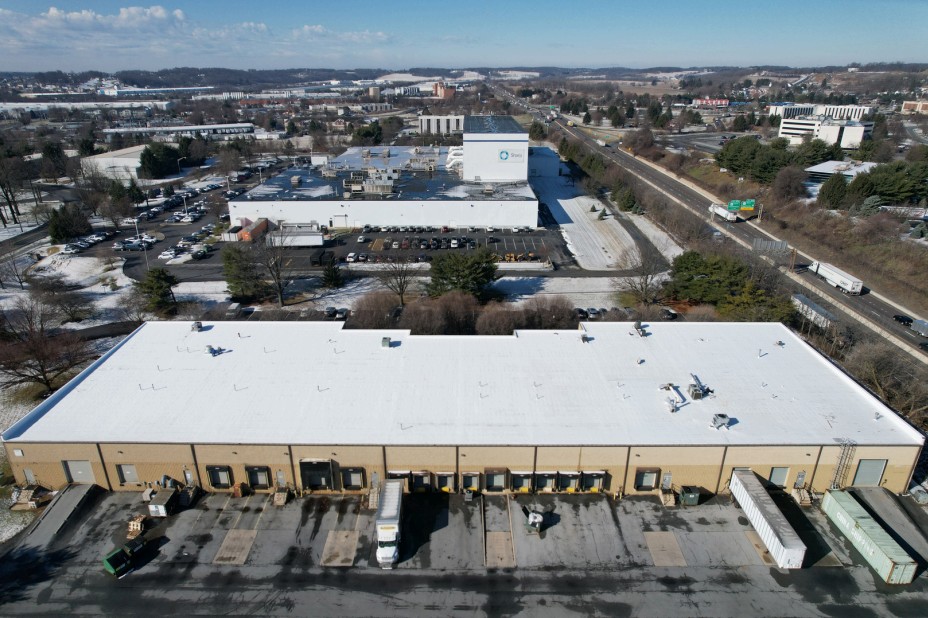
Case Study 1: Railway Manufacturing Facility, Fairless Hills, Pennsylvania
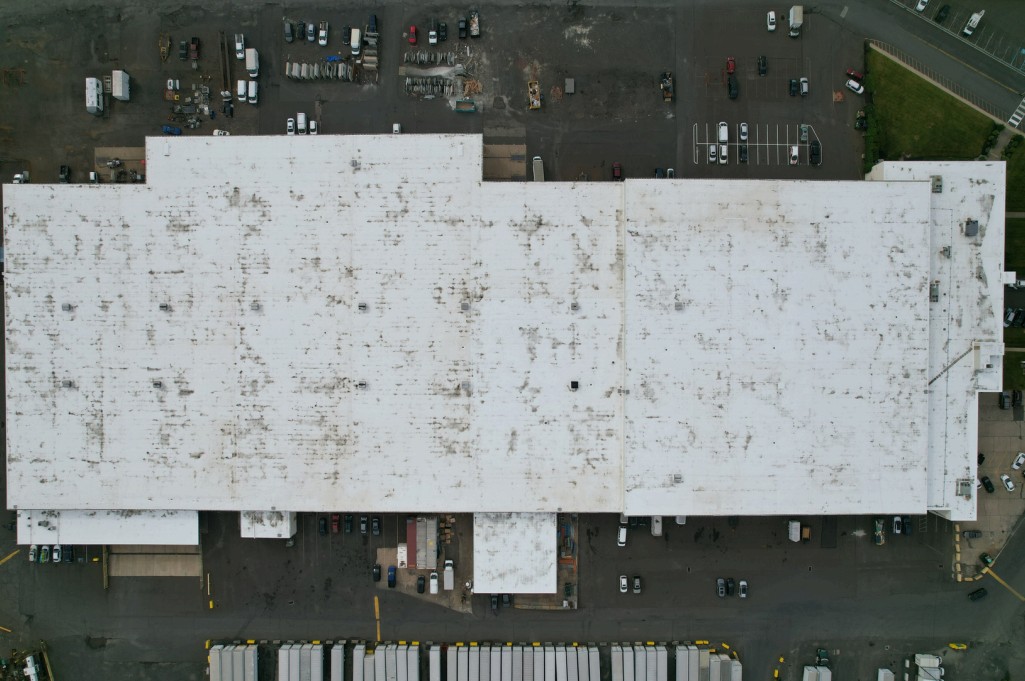
Aerial photo of the railway manufacturing and storage facility in Fairless Hills. Project by DDP Roofing Services, Inc.
A 2,600-square railway manufacturing and storage facility in Fairless Hills required a new roofing system while maintaining active operations. The contractor installed a two-inch ISO and 60-mil GAF TPO fully adhered roofing system, completing the project within 30 days despite the need to comply with railway safety regulations and coordinate around ongoing shipment schedules. The project required careful planning to avoid disrupting the facility’s manufacturing operations while adhering to industry-specific safety protocols.
Case Study 2: Industrial Storage Facility, Allentown, Pennsylvania
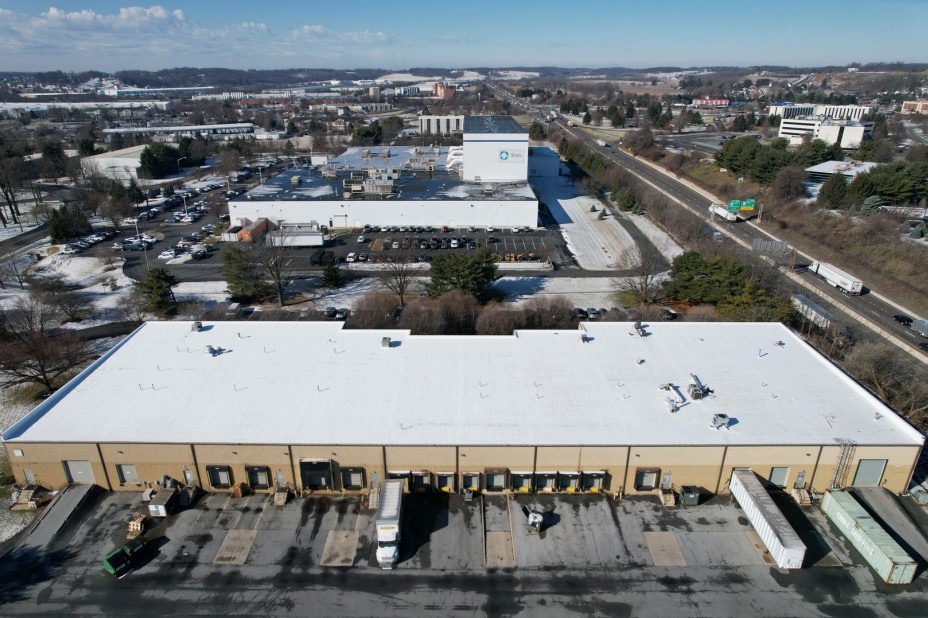
After picture of an industrial storage facility in Allentown, Pennsylvania.Project by DDP Roofing Services, Inc.
An industrial storage facility covering 440 squares needed a roofing system replacement during a narrow completion window. The building would be empty of employees during the holiday season, creating both an opportunity and a strict deadline. The contractor installed GAF EnergyGuard ISO insulation with EverGuard .060 TPO membrane using fully adhered GAF LVOC bonding adhesive, completing the work in 10 working days to meet the client’s accelerated timeline.
Case Study 3: Mixed Roofing System, Woodcliff Lake, New Jersey
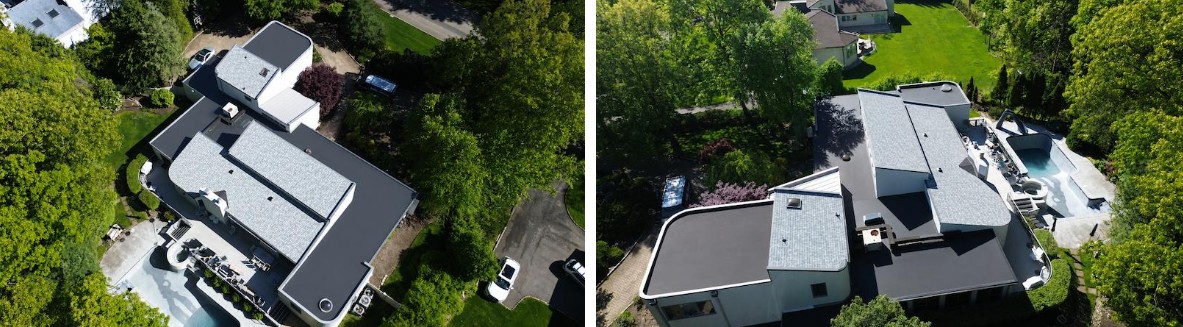
An aerial image of the Woodcliff Lake property requiring two roofing systems. Project: Allied Roofing Solutions.
A Woodcliff Lake property required integrating two distinct roofing systems — steep-slope and low-slope sections — with proper drainage coordination between the two areas. The project involved a complete tear-off followed by installation of Owens Corning Duration AR architectural shingles in Sierra Gray for pitched areas and .060 EPDM membrane for flat sections, along with new gutters and comprehensive waterproofing at transition points. The technical challenge centered on ensuring proper water flow from steep sections across flat areas into gutters while maintaining waterproof integrity at all system interfaces. This project demonstrates the multi-system capabilities relevant to commercial properties throughout the Philadelphia metropolitan area, where many facilities feature both low-slope and steep-slope roof sections requiring integrated solutions.
Budgeting for a Proactive Roof Maintenance Plan
According to the National Roofing Contractors Association, the most important thing homeowners and business owners should do after a storm is “to assess roof damage from ground level and not attempt repairs on their own. Closer damage assessment and subsequent repairs of a roof system should be done by a professional roofing contractor.”
The cost of a roof maintenance plan in the Philadelphia area depends on multiple variables, including roof type, square footage, accessibility and the specific services included in the program. Single-ply membrane systems on accessible flat roofs typically cost less to inspect than multilevel facilities with multiple roof types and limited access points.
Most providers structure maintenance agreements as annual or biannual service contracts. The investment generally represents a small fraction of emergency repair costs or premature replacement expenses. Facility managers should request detailed proposals that itemize inspection frequency, covered services, emergency response provisions, and any exclusions or additional charges.
Budget planning should also account for recommended repairs identified during routine inspections. Setting aside a repair reserve based on roof age and condition helps facility managers address minor issues promptly rather than deferring work until problems worsen. Facility managers should also schedule inspections after any significant weather events that could compromise roof integrity.
Frequently Asked Questions
Commercial property managers evaluating maintenance programs often have similar questions about provider selection, program features and cost considerations. These answers address the most common concerns.
Who offers the best preventive roof maintenance for businesses in Philadelphia?
Top providers offer advanced diagnostic technology, computerized maintenance management system integration, comprehensive warranties and manufacturer certifications. Companies with multiple manufacturer relationships can recommend optimal solutions rather than limiting clients to a single product line.
What should I look for in a commercial roof maintenance program near me?
Look for advanced diagnostics, clear service-level agreements, detailed photographic reporting, manufacturer certifications, adequate insurance coverage, emergency service availability and customer communication portals.
How much does a roof maintenance plan cost in the Philadelphia area?
The cost of a roof maintenance plan in the Philadelphia area depends on roof type, building size, location and services included. Request itemized proposals from multiple providers to compare coverage levels and identify the best value for the facility.
Securing Philadelphia Properties Before the Next Storm
Severe weather patterns show no signs of diminishing across the Philadelphia region. Facility managers and building owners who implement preventive roof maintenance programs now will avoid the operational disruptions, emergency expenses and premature roof replacements that reactive approaches inevitably produce. Proactive maintenance transforms commercial roofing from an unpredictable liability into a managed asset with quantifiable returns.
The featured companies demonstrate that comprehensive maintenance programs combine advanced technology, manufacturer certifications, detailed documentation and responsive service. Whether managing a single facility or overseeing a regional portfolio, the time to establish maintenance partnerships is before the next storm exposes vulnerabilities in aging roof systems. Contact qualified providers to schedule initial assessments and develop customized maintenance strategies that protect commercial properties for years to come.