















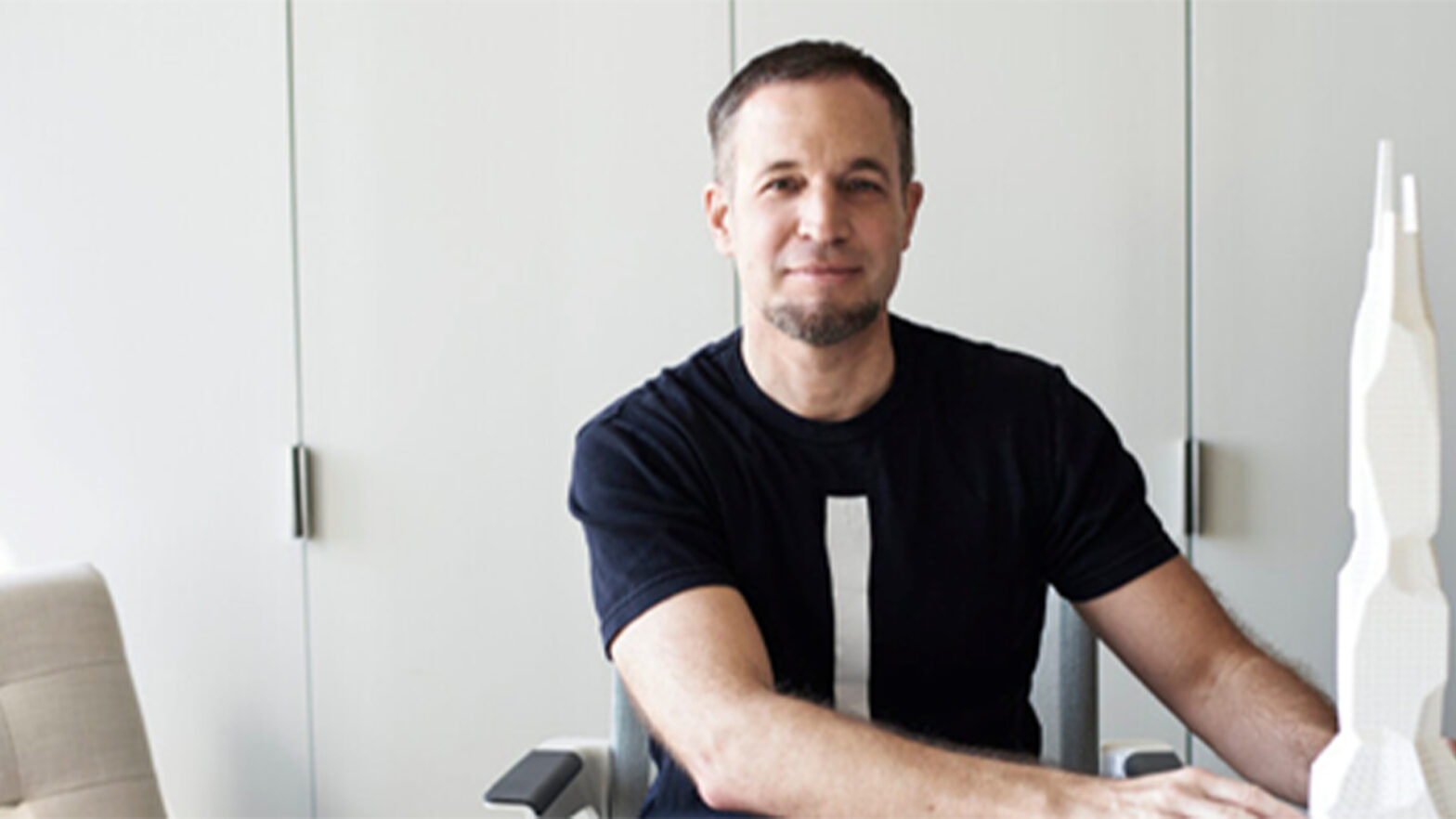
This exclusive interview with Matthias Hollwich was conducted by Tabish Ali of the Motivational Speakers Agency.
Cities are being asked to do too much at once: become denser, cleaner, smarter, older-person friendly and still feel like places people recognise. Matthias Hollwich’s argument is that technology should help cities sharpen their identity, not flatten them into the same glass-tower skyline.
As Founder and Principal of HWKN Architecture, the New York-based firm working across architecture, technology and culture, Matthias has built his career around how buildings respond to the people and places around them. His work spans AI-centred design, real estate, urban planning, ageing and the future of cities, making him a natural smart cities expert for a moment when urban design is being reshaped by data and generative tools.
In this exclusive interview with AI Speakers Agency, Matthias discusses how architects can design for density without losing culture, why cities must adapt for longer-living populations, and how AI can help future cities become more distinctive rather than more generic.
Question 1. As cities become denser, how can architects preserve local culture and respond properly to climate?
Matthias Hollwich: “For me, culture and climate and density don’t have to conflict with each other because it’s also evolving.
“When you look at New York, it wasn’t very dense 200 years ago and then it got denser, and you also see other places which used to be dense and they become less dense.
“What is important to do is, in any case, to understand a place, to understand people, to understand also the dynamic of a place. All of the research nowadays can be done much differently and also much more in control of the architects through AI.
“Then what we can do is infusing new cultural elements into our design, either into the organisation of a building or into the aesthetic and the experience of a building.
“We have done actually a really fun exercise. We call it Neo York, where we use the DNA of New York from 100 years to design new buildings, and they’re stunning. You show it to people and they’re instantly like, that’s New York, and that’s one of the successes here.”
Question 2. With ageing populations reshaping urban life, what does architecture need to fix first?
Matthias Hollwich: “Longer-living populations is actually very dear to my heart. I did a lot of research on ageing and how architecture has failed to serve an ageing society well.
“There is not one solution. I think there are many different things that we need to change.
“One of the biggest is that we have to look into the social attributes of our cities because we know that if we are in a social network, we’re happier, we’re healthier, and we also have the informal support system around us before we need maybe more professionalised support systems.
“So walkable cities is key, making it attractive and accessible for people, but also making it affordable.
“When we’re getting older, sometimes our funds become more limited and we have to make sure that we create as much as possible places that include everyone.”
Question 3. What should define the next generation of cities, and how should businesses approach that responsibility?
Matthias Hollwich: “The city of the future. I think there is not one answer because I believe every city should find its own answer.
“Some cities want to become maybe more or less non-digital, and more kind of slow and more meditative maybe, and other cities like New York want to become even more intense and activated and technically advanced.
“So the answers are very different. However, what I believe we now have as an opportunity through AI is that we create novelties within the cities and the architecture.
“There used to be the trend where you said, here is a cool tower, and the tower can be in New York, can be in Beijing, can be in Shanghai, can be in Berlin, and that was all geared towards an aesthetic from an architect.
“What I believe is more important is actually the aesthetic of a city, the identity of a city, and architecture has to come second.
“Now with AI especially, we’re able to use the DNA of a place and use that kind of research into the design process so that New York looks even more than New York from before, and we can look into BIM and BIM should have its own identity because otherwise why would we travel? Why would we actually enjoy a different culture?
“I think the intensification of a novelty is something that is really beautiful and has a lot of potential for the future.”
Question 4. What do you want audiences to understand about their role in shaping cities through AI and design?
Matthias Hollwich: “What I hope the audience takes away is that we are now part of the process. It’s not just happening to us. We are actually the directors and the conductors in the process.
“That also means that we have to get very involved in it. We have to engage with the tech companies. We have to maybe come up with our own AI applications to make sure that it goes into the right direction.
“For me, this is a call for action. Embrace it, explore with it, and direct it into the right direction.”