













The top elevator companies in the U.S. vary widely based on building type, installation scale and technical requirements. While global manufacturers dominate commercial and high-rise construction, specialised entities focus on residential and low-rise applications. Understanding these differences is essential for selecting elevator partners that align with safety standards, project scope and long-term performance needs. These are the leading elevator companies operating in the U.S., focusing on how each company’s capabilities align with specific residential and commercial installation needs.
Inclinator® — Residential Elevator Manufacturer Focused on Private Homes
Inclinator® holds a specialised position within the U.S. elevator industry as a manufacturer dedicated exclusively to residential elevators and dumbwaiters. Founded in 1923 to help a neighbor in need, the brand brings nearly a century of experience in designing elevator systems specifically for private residences rather than adapting commercial platforms for home use.
The American-made elevator systems are designed to accommodate a wide range of home layouts, including both new construction and retrofit projects. Customisation plays a central role, enabling systems to suit specific structural conditions, architectural plans and homeowner needs while maintaining a strong emphasis on safety and reliability.
Inclinator®’s founder developed a stair lift and “called it the ‘Inclin-ator’ to convey the idea of an elevator working on an incline of stairs.” Inclinator elevators are designed and tested to meet or exceed ASME A17.1 Section 5.3 — the safety code specific to private residence elevators — while recognising that additional state and local requirements may apply. Installation, service and maintenance are performed by authorised local dealers and technicians, reinforcing the importance of working with qualified professionals.
Key Features and Capabilities of Inclinator®
- Residential specialty: Elevator systems engineered specifically for private residences
- Backup capabilities: Emergency battery-powered cab lowering and lighting
- Performance focus: Solid construction intended to support consistent, long-term performance
According to Inclinator®, you can “Add to an existing home or include in new construction. A home elevator only takes up the space of a standard closet. The cab can be placed in an elevator shaft. Shafts can be inside the home or outside.”
Otis — Commercial and Vertical Infrastructure Specialist
Otis is one of the most established names in vertical transportation in the United States and globally. Founded in 1853, it pioneered the safety elevator and has become a leader in elevators, escalators and moving walkways used in commercial, mixed-use and infrastructure projects.
Today, this business continues to develop and deliver mobility systems that support high-rise buildings, transit hubs and large facilities worldwide. It is known for its extensive portfolio of commercial elevator systems, including high-speed traction elevators, machine-room-less units and specialised solutions for dense urban construction.
Its products are often chosen for projects where reliability, system capacity and long-term service networks are critical, with the site claiming “We are everywhere people are on the move.” Otis systems are widely used in skyscrapers, large office towers, airports, hospitals and other high-traffic spaces where elevator reliability and integration with complex building systems are top priorities. Commercial contractors, architects and developers typically rely on its established service infrastructure and engineering expertise when planning major vertical transportation installations.
Key Features and Capabilities of Otis
- Heritage and scale: One of the oldest elevator brands with a global footprint and a substantial installed base of systems
- Innovation: Development of advanced control systems and elevator technologies that enhance performance and safety in demanding environments
- Service network: Broad service and modernisation offerings that support long-term maintenance and operational efficiency, especially for large commercial portfolios
KONE Corporation — Sustainable and Smart Building Solutions
KONE Corporation is a globally recognised manufacturer of elevators and escalators with a strong presence in the U.S. market. Although headquartered in Helsinki, Finland, KONE maintains operations in the United States and collaborates with architects and builders on major commercial and mixed-use developments.
The enterprise emphasises safety, sustainability and people-centric design, offering solutions that enhance vertical mobility in buildings while supporting energy efficiency and intelligent building systems. The site assures, “We are passionate about safety, quality, sustainability.”
Its portfolio spans commercial elevators and escalators, modernisation services and people-flow solutions for a wide range of structures.
KONE’s elevator solutions are particularly well-suited to commercial office buildings, residential towers and mixed-use developments where smart building integration and energy performance are key considerations. Architecture and engineering teams often select this option when building performance metrics and sustainability certifications are part of the project brief.
Key Features and Capabilities of KONE
- Smart integration: Integrated monitoring and control features that support building automation and operational data analytics
- Sustainability: Designed to reduce energy use and align with green building standards
- Design and user experience: Engineered for ride comfort and accessibility, with options suitable for both new installations and modernisation of aging systems
Schindler Elevator Corporation — Urban Mobility and Mid-to-High Rise Expertise
Schindler Elevator Corporation is the North American division of the Swiss multinational Schindler Group, serving the United States market with elevators, escalators and related mobility systems. Its U.S. operations trace back through legacy brands and acquisitions, giving the company a long history in vertical transportation.
Schindler delivers solutions for mid- to high-rise commercial and residential buildings, offering design flexibility and service networks that support both new installations and modernisation projects. Its expertise spans elevators for office buildings, apartment complexes and institutional facilities. This brand also transcends borders, with the site affirming, “We move over 2 billion people every day, on five continents, all over the world.”
These mobility systems are frequently chosen for urban developments, residential towers and commercial complexes where adaptability and long-term service support are important. Its capacity to work across a broad range of building heights and traffic patterns makes it a versatile choice for property developers and design teams.
Key Features and Capabilities of Schindler
- Adaptable configurations: A range of elevator types, including traction and hydraulic systems, designed to suit building height and traffic requirements
- Service and maintenance: A wide U.S. branch network supports installation, parts and ongoing maintenance, which is critical for uptime and safety in urban environments
- Global backing: Integrates global engineering standards with local execution as part of a multinational group
TK Elevator — Engineering-Driven Commercial and Specialty Elevator Systems
TK Elevator is a global elevator manufacturer with a strong operational footprint in the United States, serving commercial, institutional and specialty building applications. Formerly part of thyssenkrupp, the business operates independently and delivers elevator, escalator and moving walk solutions across a wide range of building types.
TK Elevator is known for its engineering-led approach to vertical transportation, particularly in projects that involve structural constraints, non-standard layouts or modernisation of existing buildings. The website emphasises the importance of qualified technicians, stating, “Our local networks of highly qualified, experienced service technicians can keep your equipment performing at its peak, whether you have one elevator or thousands.” Its portfolio supports new construction as well as upgrades to aging elevator systems, making it a common choice for complex commercial environments.
This option is frequently selected for commercial buildings with specialised requirements, including projects where space limitations, phased upgrades or integration with existing structures are factors. Engineers and property developers often turn to TK Elevator when standard commercial elevator configurations are insufficient to meet the building’s technical demands.
Key Features and Capabilities of TK Elevator
- Engineering flexibility: Elevator systems designed to accommodate unique building conditions and technical requirements
- Modernisation expertise: Systems and components developed to extend the lifespan and performance of existing elevators
- Compliance focus: Alignment with applicable commercial elevator codes, with attention to local and state regulations
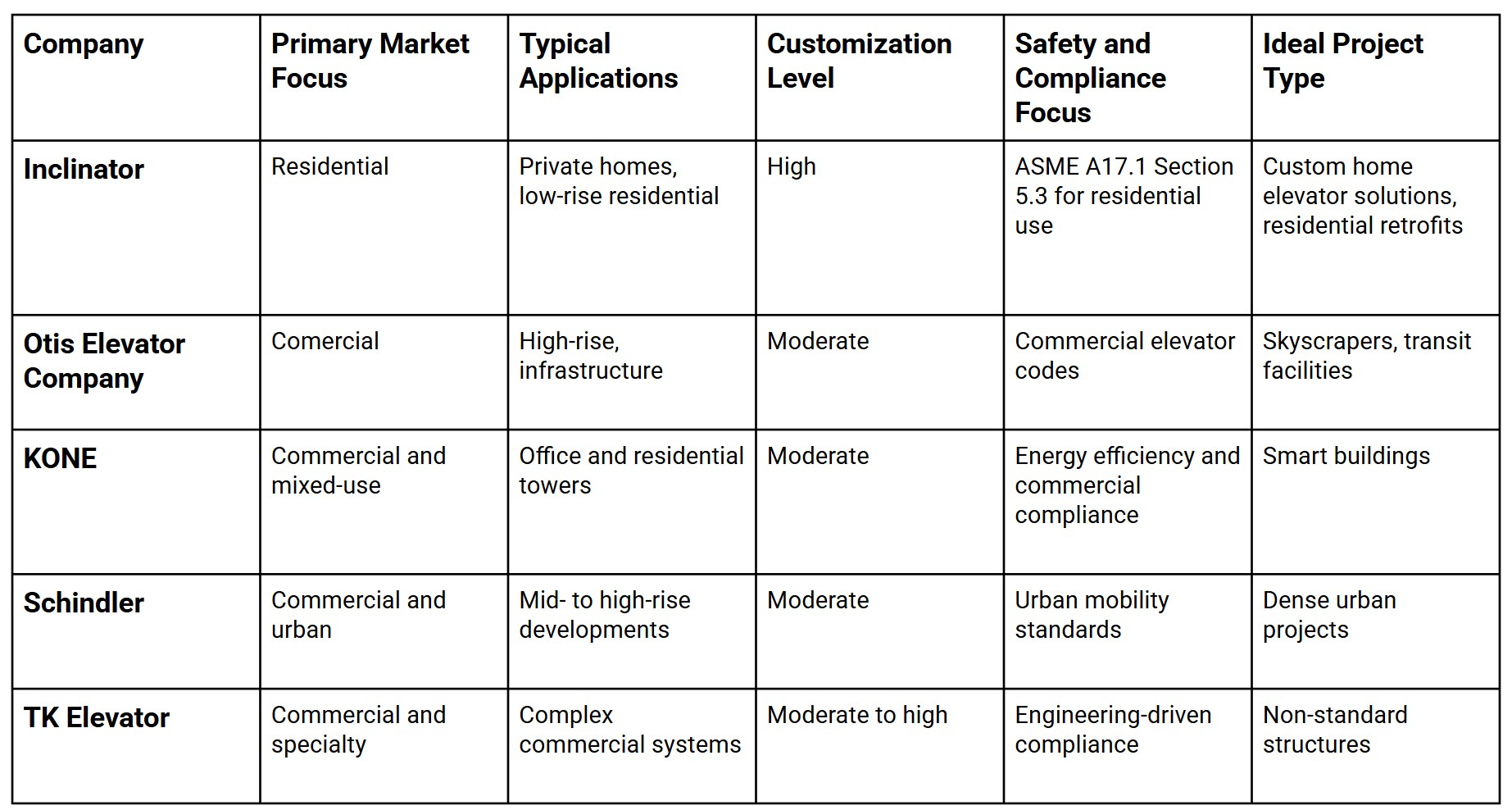
Top Elevator Companies in the U.S. At a Glance
The comparison below highlights how leading elevator companies differ in focus, technical capabilities and ideal use cases. Rather than ranking them broadly, this overview clarifies where each manufacturer is best positioned to support specific project types.
How the Top Elevator Companies in the U.S. Were Evaluated
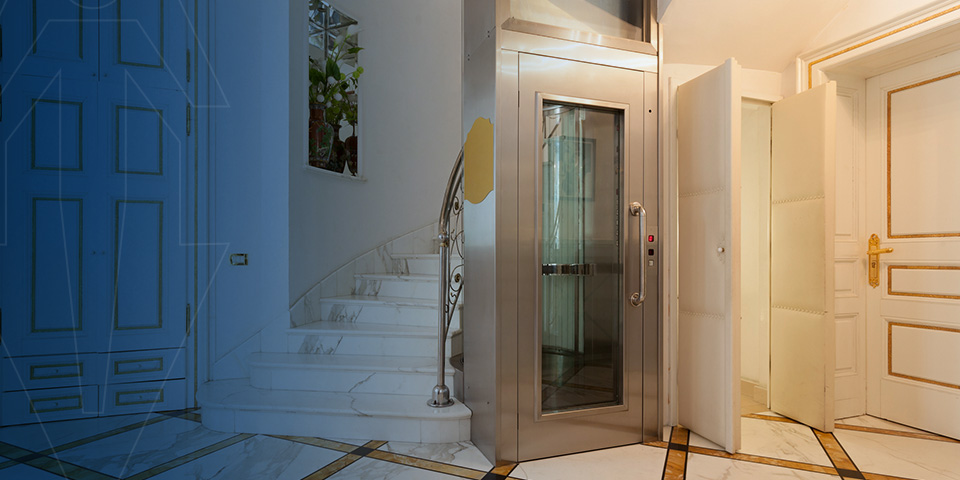
Image: Inclinator®
This analysis identifies leading elevator companies operating in the U.S. market by examining how manufacturers align with specific building applications, rather than relying solely on brand recognition. Elevator systems serve different structural, regulatory and operational purposes across residential, commercial and mixed-use projects, making specialisation a critical factor in evaluation.
Businesses were assessed using the following criteria:
- Primary market focus: Residential, commercial or hybrid application coverage
- Installation scale and system complexity: From private residences and low-rise buildings to large commercial infrastructure
- Safety and regulatory alignment: Including compliance with ASME A17.1 Section 5.3 for private residence elevators, with the understanding that state and local jurisdictions may enforce additional requirements
- Customisation capabilities: The ability to adapt elevator systems to architectural constraints, spatial limitations and design specifications
- Manufacturer role and distribution model: Differentiating between companies that design and build elevator systems and those that provide installation and service through authorised dealers
- History and stated mission: As documented in official materials and public-facing resources
Due to limited consumer awareness of residential elevator systems, manufacturers often rely on the selection guidance of builders, engineers and contractors. This makes it particularly important to distinguish companies that engineer elevators specifically for residential use from those whose products are designed primarily for commercial environments.
What Do the Leading Elevator Companies in the U.S. Provide?
Residential elevator manufacturers in the U.S. primarily operate as makers rather than direct installers or service providers. Their role typically includes system design, engineering, manufacturing and technical documentation, while installation and ongoing service are performed by authorised dealers, mechanics or technicians.
Across the industry, manufacturers provide:
- Elevator systems engineered for specific building types
- Technical specifications and compliance documentation
- Guidance for engineers and contractors during planning and construction
- Product support through authorised dealer networks
Commercial elevator installation companies and manufacturers often focus on traffic management, system capacity and durability for high-use environments. By contrast, residential elevator manufacturers prioritise safety, customisation and compatibility with private home construction, where structural conditions and code requirements differ significantly. Understanding the manufacturer’s scope along with the roles of engineers, architects and local installers is crucial for ensuring that elevator systems are properly selected, installed and maintained throughout the building’s life cycle.
Residential vs. Commercial Elevators
Residential and commercial elevators are governed by different design considerations, safety standards and usage patterns. Commercial elevators are designed to support high traffic volumes, achieve faster travel speeds, and operate continuously in environments such as office towers, hospitals and transit facilities.
On the other hand, residential elevators are designed specifically for private homes and low-rise residential settings. These systems must comply with ASME A17.1 Section 5.3, which is the code applicable to private residence elevators, while also accommodating the unique layouts, limited space and residential construction methods of homes. State and local jurisdictions may impose additional requirements beyond national standards.
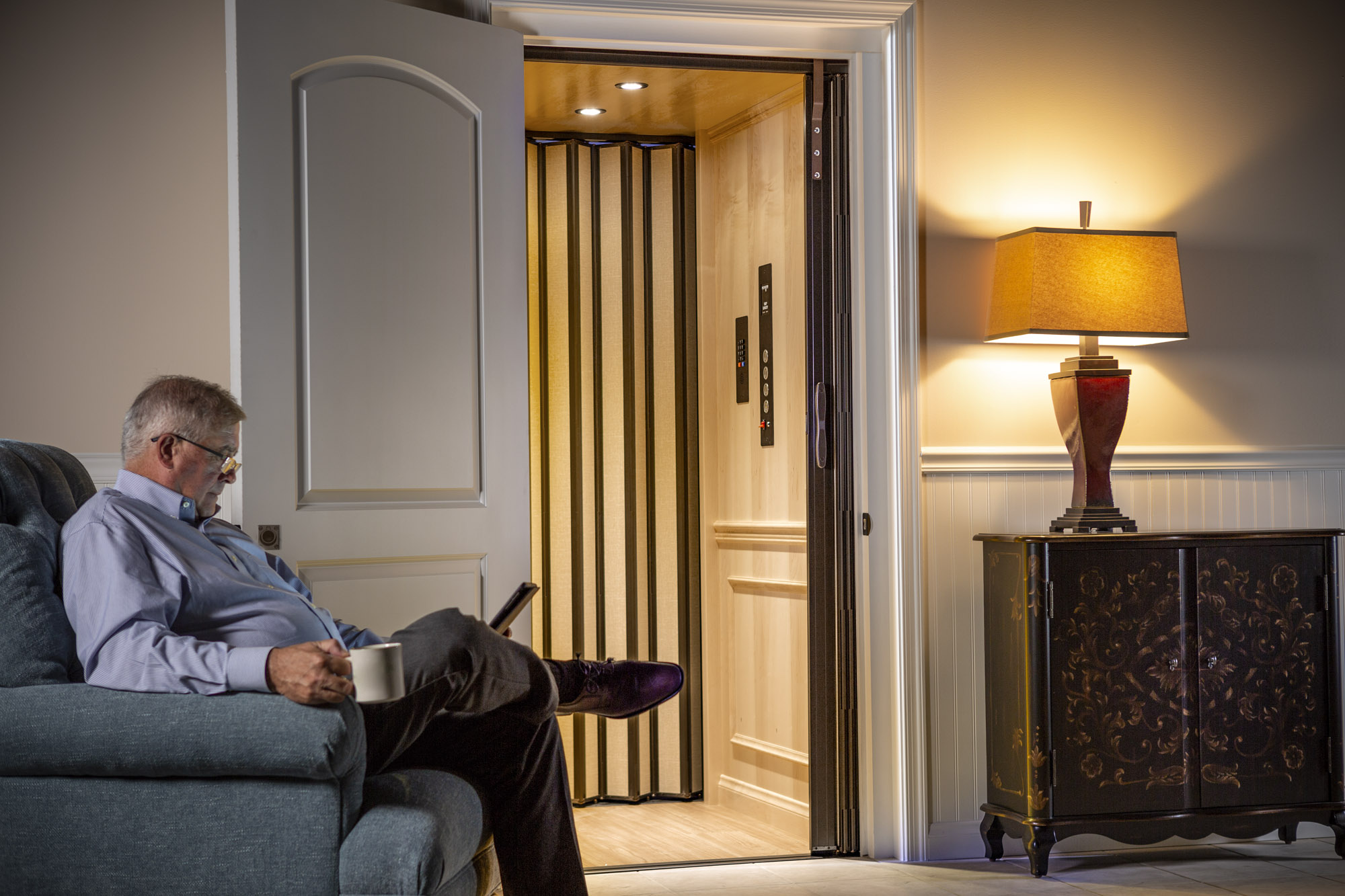
Image: Inclinator®
This distinction is critical when selecting custom home elevator solutions. Commercial systems are not automatically suitable for residential use, and residential elevators require specialised engineering to address safety, accessibility and long-term reliability within a home environment.
Choosing the Right Elevator Company
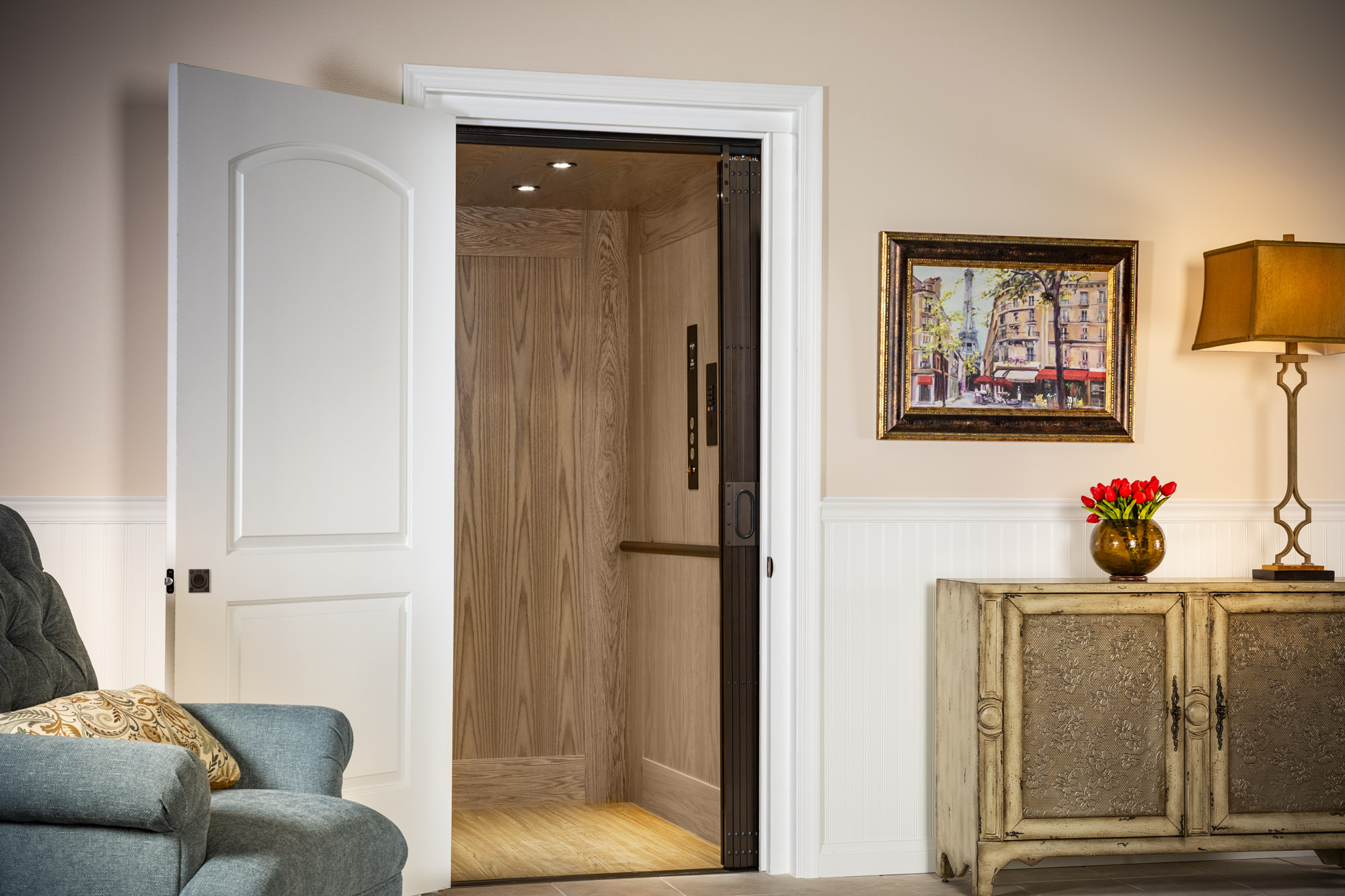
Image: Inclinator®
The top elevator companies in the U.S. are defined less by size and more by specialisation. Commercial manufacturers excel in large-scale and high-traffic environments, while residential-focused options provide the customisation and safety considerations required for private homes. For architects, engineers and property developers, selecting the right elevator partner means aligning system design, code requirements and long-term reliability with the specific demands of each project rather than relying on a one-size-fits-all solution.