















When people talk of construction projects, they often conflate all work under the same umbrella. Yet in practice, the Difference Between Commercial and Residential Construction is profound. At its core, residential construction pertains to buildings designed for dwelling, single-family homes, townhouses, duplexes, and sometimes small apartment complexes. In contrast, commercial construction refers to structures intended for business, institutional, retail, or industrial use, office buildings, shopping centers, hospitals, warehouses, and more.
Even though both types share fundamental construction principles (foundation, structure, finishes, systems), the path from concept to delivery diverges significantly. The distinctions emerge in design intent, codes, scale, materials, budgets, timelines, safety protocols, and stakeholder involvement.
Key Differences Between Commercial and Residential Construction Projects
To frame the landscape, here are some of the principal axes along which commercial and residential construction diverge:
| Factor | Residential Construction | Commercial Construction |
| Purpose / Use | Private living, family focus | Business, public, institutional operations |
| Scale & Complexity | Smaller scale, simpler systems | Larger footprint, multi-story, advanced systems |
| Regulation & Codes | Less stringent, occupancy, plumbing, and electrical | More demanding, fire safety, accessibility, egress |
| Materials & Structural Systems | Wood framing, lightweight systems | Heavy steel, concrete, and curtain walls |
| Budget & Financing | Owner/homeowner financing | Developer, corporate, investor funding |
| Timeline | Weeks to months | Months to years |
| Workforce | Skilled trades, subs | Specialty trades, coordination needed |
| Safety & Permitting | Standard local permits | Multiple jurisdictional approvals, stricter safety |
| Contractor Expertise | Residential contractors | Commercial contractors & general contractors |
These distinctions are not theoretical: they shape every decision from design through procurement to site management.
How Function Shapes Each Type of Construction
One of the clearest manifestations of the Difference Between Commercial and Residential Construction lies in the functionality that the design must support. A house is intended first for comfort, aesthetics, privacy, and personal utility. Rooms have to accommodate daily living needs: bedrooms, kitchens, bathrooms, living spaces, and possibly home offices or accessory units.
On the other hand, a commercial building must support business functions: foot traffic, public access, utility infrastructure, service zones, loading docks, parking, HVAC capacity, mechanical verticals, elevator shafts, expansive lobbies, and compliance with regulatory standards for accessibility (ADA or local equivalents). The design must balance durability, scalability, flexibility (for future tenant changes), and operational efficiency.
In multi-unit residential developments (e.g. multi-story apartment buildings), the line sometimes blurs, but typically such buildings lean toward commercial classification because their complexity (vertical systems, common corridors, fire safety, shared utilities) more closely resembles commercial than a single-family home.
Design intent also drives architectural aesthetics and MEP (mechanical, electrical, plumbing) systems. In commercial settings, designers have to coordinate for high load demands, large mechanical equipment rooms, redundancy, centralized vertical systems, and the flexibility for tenants to modify interior layouts over time. Residential systems tend to be more modest in scale and less adaptable.
If you are evaluating a project and need help sourcing the right contractor or engineering team, especially in markets such as Houston, Texas, you may want to consult engineering firms in Houston Texas with commercial credentials. And as you compare bids and proposals, probe how each prospective team is incorporating materials and strategies.
Building Codes and Regulations: What Sets Them Apart
One of the most critical realities behind the Difference Between Commercial and Residential Construction is the disparity in regulatory burden. Residential codes are fairly standardized across jurisdictions, structural requirements, egress, plumbing, electrical, fire separation, insulation, and energy efficiency. But commercial projects must navigate a far deeper regulatory landscape.
Commercial buildings are subject to stricter fire safety codes, occupancy limits, egress paths, sprinklers or suppression systems, emergency lighting, accessibility (ramps, elevators, restrooms for public use), seismic or wind load standards, structural redundancy, and more. They may require reviews by multiple agencies (city planning, fire marshal, health department, environmental agencies). Zoning, parking, traffic impact studies, stormwater management, and facade regulations may also play a role.
In effect, the risk profile of commercial construction is higher, so regulatory oversight is greater. Because of the many permit layers, inspections, and coordination between disciplines, commercial projects require far more rigorous planning and compliance efforts. Residential projects rarely need permits for parking lots or elevators, and although building codes must be met, the inspection coordination is simpler.
Integrating Sustainable Building Materials Trends into the Equation
While the Difference Between Commercial and Residential Construction remains clear on many fronts, both sectors are increasingly converging around sustainability goals. Developers, owners, and regulators are pushing for low-carbon, efficient, and regenerative buildings. Thus, sustainable building materials trends now impact project choices in both commercial and residential domains.
Some of the leading trends in building materials include:
- Bio-based composites, hempcrete, straw panels, mycelium materials: These materials offer lower embodied carbon and renewable sourcing.
- Low-carbon or carbon-sequestering concrete formulations: Use of fly ash, slag, or novel cements helps reduce carbon emissions.
- Recycled steel, reclaimed wood, recycled aggregates: Repurposing materials reduces demand for virgin resources.
- Cross-laminated timber (CLT) and mass timber systems: In certain commercial and multi-story residential contexts, mass timber offers structural strength plus carbon storage benefits.
- High-performance insulation materials and aerogels: Novel thermal solutions (e.g., aerogel films from cellulose) reduce heating/cooling loads.
- Smart facades, glazing with spectrally selective coatings, double- or triple-paned glass: These reduce solar heat gain, improve daylighting, and help manage energy use.
- Modular, prefabricated panels and off-site manufacturing: Reduce waste, speed construction, and enhance quality control.
Because commercial projects often carry higher upfront cost pressure, the added investment in sustainable materials can be justified by long-term operational savings, tax incentives, and building certifications (LEED, BREEAM, WELL). Residential projects are also increasingly adopting materials to appeal to eco-conscious buyers and reduce lifetime costs.
Commercial vs. Residential Building Requirements
An essential dimension of the Difference Between Commercial and Residential Construction lies in the construction materials and equipment used. Residential buildings often use wood framing, lighter building systems, conventional roofing, standard windows, siding, and modular interior finishes. The priority is often aesthetics, cost efficiency, insulation, and occupant comfort.
By contrast, commercial buildings typically employ steel framing, reinforced concrete, masonry, curtain wall systems (glass and aluminum), heavy HVAC equipment, raised floors, loading docks, and higher-capacity structural systems. These materials must withstand greater loads, longer useful life, heavy foot traffic, and sometimes harsh operational conditions (industrial use, wet areas, vibration, etc.).
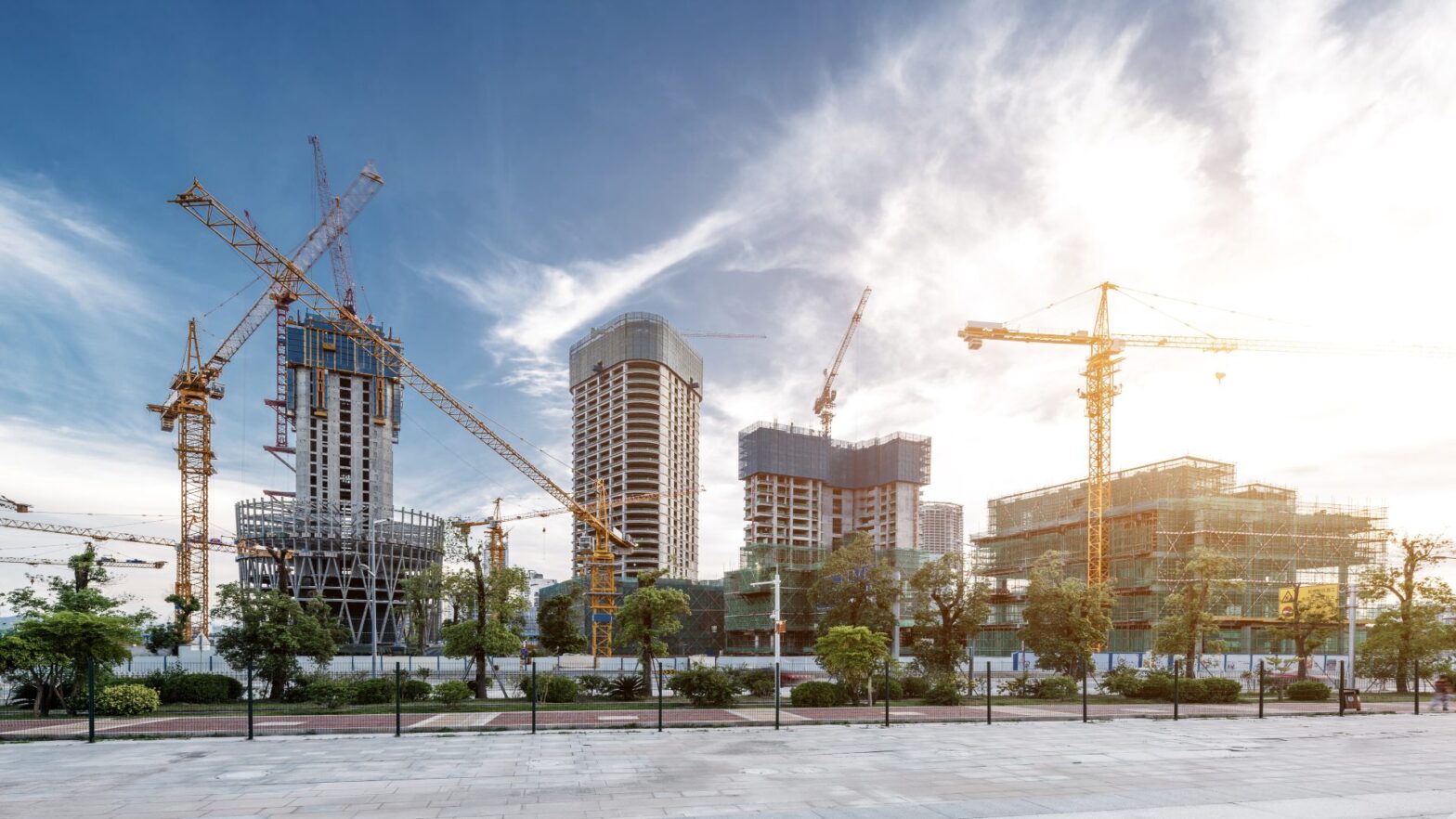
Commercial construction also employs more scaffolding, cranes, hoists, large concrete pumps, structural steel erection equipment, façade craning, and more robust mechanical and electrical systems.
In recent years, sustainable practices and material innovation have become more prominent across both types, particularly in commercial settings where long-term energy, carbon, and life-cycle costs are under scrutiny. The rise of sustainable building materials is reshaping material selection in both sectors (more on that below).
Comparing Costs and Complexity
Residential projects, typically financed by individual homeowners, operate with more modest budgets and narrower profit margins. The decision-making process is often simpler, with fewer stakeholders and less bureaucracy.
Commercial projects often entail multi-million or even multi-hundred-million dollar budgets. They require thorough financial modeling, investor oversight, risk mitigation, detailed cash-flow forecasts, and often phased funding. Beyond building costs, developers must budget for land acquisition, infrastructure, utility extensions, parking, site improvements, tenant build-outs, regulatory compliance, and often future adaptability.
Because of the larger scale, small cost overruns or schedule delays can translate into massive financial penalties. The complexity multiplies in terms of contract structuring, contingency reserves, value engineering, and stakeholder alignment.
Moreover, the procurement scale is far larger: bulk material buys, long lead equipment, negotiated subcontract packages, and multi-vendor coordination. All of this amplifies the financial complexity inherent in commercial construction.
Why Commercial Projects Often Take Longer
Timeline differences are another real manifestation of the Difference Between Commercial and Residential Construction. Residential projects may be completed within months, from groundbreaking to final finishes, depending on size and complexity.
Commercial projects, by contrast, often span years. The extended timeline stems from:
- Preconstruction and design phases: thorough schematics, engineering coordination, permit approvals, value engineering, and stakeholder review.
- Permitting and regulatory reviews: multiple agency reviews, revisions, and inspections can introduce delays.
- Complex systems integration: mechanical, structural, facade, fire protection, security, vertical transportation (elevators), and electrical systems must align precisely.
- Longer construction sequencing: foundations, cores, floors, facade, interior finishes, commissioning, and tenant fit-outs occur in phases.
- Change orders and tenant demands: In commercial settings, tenant alterations can trigger schedule slippages.
- Testing and commissioning: due to higher system complexity, commissioning, performance verification, and building certification (LEED, BREEAM) may be required.
Thus, it is not unusual for substantial commercial buildings to take 18 to 36 months (or longer) before occupancy. In contrast, a residential build might wrap in 6–12 months under normal conditions.
Workforce and Expertise: Who Builds What?
Residential construction typically relies on carpenters, masons, plumbers, electricians, roofers, and finish subcontractors. The scale of coordination is relatively lean, and general contractors manage fewer specialized trades.
Commercial construction requires specialist trades and often full-time onsite project management teams, BIM (Building Information Modeling) coordinators, commissioning agents, safety officers, quality control teams, and more. Expertise in structural steel erection, curtain-wall facades, complex MEP systems, fire protection, building automation, and vertical transportation is often essential.
Commercial contractors often engage in integrated project delivery, design-build, or construction manager at risk (CMAR) models. They rely on proposals and bidding across multiple disciplines, as well as more rigid contract frameworks (GMP, unit price, lump sum, cost-plus). The coordination demands are higher, and the margin for error is tighter.
In many cases, residential contractors simply cannot scale to commercial complexity, nor do they possess the necessary certifications, bonding capacity, or technical depth to engage on large commercial projects.
Navigating Different Compliance Levels
Safety, permitting, and compliance protocols reflect perhaps the starkest operational difference in the Difference Between Commercial and Residential Construction. All construction must abide by safety norms, but commercial sites generally demand more rigorous controls due to greater hazards from height, heavy machinery, complex systems, and public exposure.
On a commercial site, safety plans must cover crane operations, scaffolding safety, fall protection, confined space entry, electrical safety, fire protection during construction, hoists, and coordination with subcontractors. Full-time safety officers or third-party safety consultants are often mandated. Inspections by agency inspectors may occur daily or weekly. Permits may cover shoring, excavation, structural modifications, environmental hazards, utility tie-ins, and staging.
Residential job sites may rely on more standard OSHA or local building codes, and generally carry less daily risk. Although safety remains essential, the scale, regulatory oversight, and enforcement are more easily managed.
From a permitting standpoint, commercial projects might require site plan approval, stormwater permits, joint utility agreements, traffic studies, occupancy permits, health department approvals, and phased inspections. Residential permitting is more straightforward, structural, plumbing/electrical, and final occupancy at most.
Choosing the Right Contractor: Residential or Commercial Expertise Matters
Given all the differences highlighted above, selecting the right contractor is crucial. Because of the pronounced Difference Between Commercial and Residential Construction, a contractor experienced in one domain may not reliably deliver in the other.
Similarly, in residential construction, contractors must understand homeowner expectations, architectural customization, cost control, and residential permitting. A residential contractor may excel at handcrafting special finishes, custom cabinetry, or local permit navigation, but he or she may not be able to manage the complexities of commercial-level systems or regulatory compliance.
In short: always match the contractor’s domain expertise to the project type. For commercial projects, look for firms with proven track records, large project case studies, corporate references, and proper licensing and bonding capacity.
The Importance of Understanding Commercial vs. Residential Construction
Understanding the Difference Between Commercial and Residential Construction is not just academic, it’s critical to planning, executing, and managing any building project successfully. From the divergent design intents to regulatory burdens, from scale and budgeting to workforce specialization, these two domains operate under distinct assumptions and constraints.
However, as sustainability becomes a driving force, both commercial and residential projects are increasingly embracing building materials to reduce environmental impact and improve lifecycle performance. The interplay of functional needs and green materials further differentiates how each sector adopts innovation.