
















Australia’s construction sector is under increasing pressure to deliver housing that is faster to build, more cost-predictable, and better aligned with modern sustainability expectations. Labour shortages, material volatility, and extended project timelines have made traditional construction models harder to scale efficiently.
In response, prefabricated housing is moving from a niche alternative to a serious component of Australia’s future housing strategy.
Why Prefabrication Is Gaining Industry Attention
Prefabrication is not a new concept, but recent advances in manufacturing, logistics, and design integration have significantly expanded its commercial viability. By shifting large portions of construction off-site, developers gain greater control over quality, timelines, and waste management.
Key industry advantages include:
- Improved build certainty through controlled manufacturing environments
- Reduced reliance on on-site labour, easing workforce constraints
- Shorter construction timelines and fewer weather-related delays
- Greater consistency in quality, compliance, and finishes
For developers operating in regions with planning complexity or tight delivery windows, these benefits are becoming increasingly difficult to ignore. As a result, more builders and developers are actively assessing prefabricated housing models as a scalable alternative to conventional construction methods:
Design Flexibility Without Construction Compromise
One of the most persistent misconceptions around prefabricated housing is that it limits architectural flexibility. In practice, the opposite is often true.
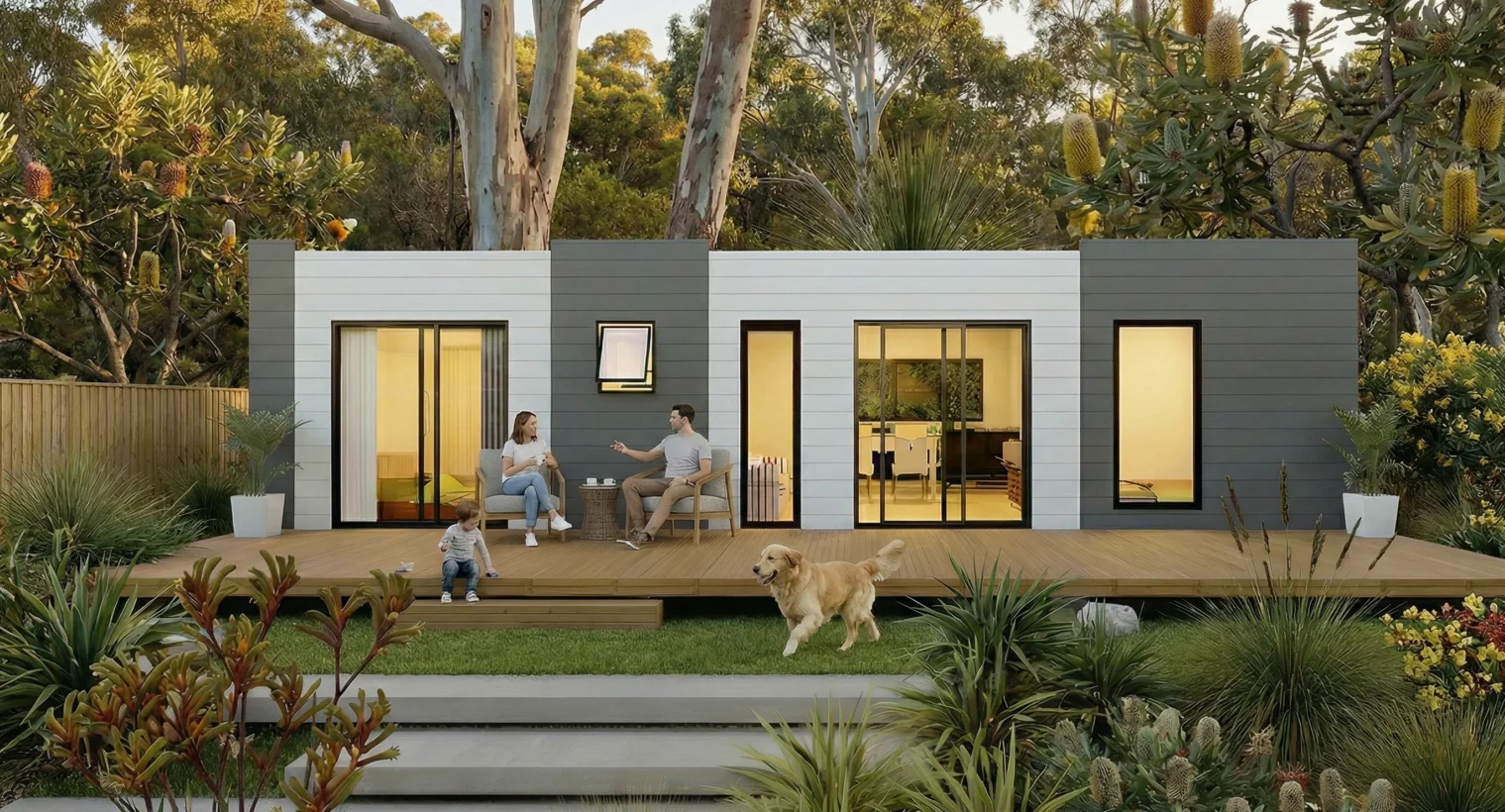
Modern prefabricated homes are designed using modular systems that allow layouts, finishes, and structural elements to be adapted to site conditions and end-use requirements. This makes prefab particularly suitable for:
- Medium-density residential developments
- Secondary dwellings and infill housing
- Regional and remote projects
- Tourism, accommodation, and workforce housing
Rather than being a constraint, prefabrication increasingly supports design-led outcomes while maintaining construction efficiency.
Prefabrication as a Risk Management Tool
From a project management perspective, prefabricated housing offers measurable risk reduction. Off-site manufacturing minimises exposure to weather delays, improves scheduling accuracy, and allows parallel progress across approvals, site preparation, and construction.
For builders and developers navigating increasingly complex regulatory environments, prefabrication also supports earlier integration of compliance requirements — particularly around structural performance, energy efficiency, and material standards.
Where the Industry Is Heading
As Australia continues to grapple with housing supply constraints, prefabrication is likely to play a growing role across residential, commercial, and mixed-use developments. While it may not replace traditional construction entirely, it offers a complementary pathway that aligns with modern expectations around speed, sustainability, and build quality.
For industry professionals willing to adapt, prefabricated housing represents an opportunity not just to build faster — but to build smarter.