









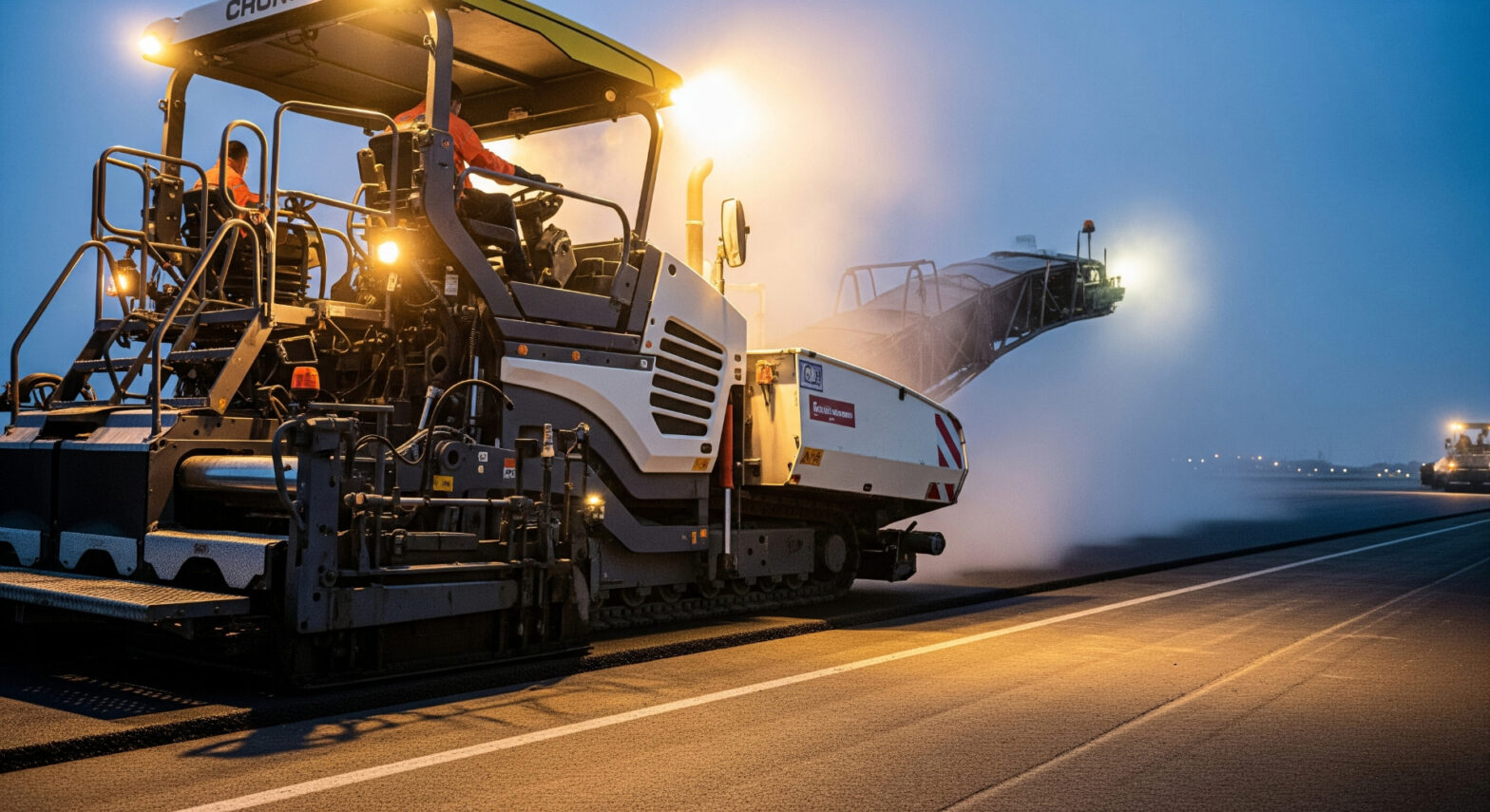











The world is demanding resilient, high-performance infrastructure and the standards are higher than ever. From international airport runways to major highways and urban commercial centers, the surfaces we build have to perform under extreme stress.
To achieve this level of excellence requires not only great design but precision in execution, down to the technology that lays the asphalt. In this environment, advanced asphalt paver tracks have gone from being simple components to a critical enabling technology for modern construction.
For developers, project leaders and construction companies, understanding the strategic impact of these systems is key. The choice of paver track technology affects project quality, operational efficiency and financial outcome, so it’s a key decision in delivering world class infrastructure.
Quality and Profitability
The goal of any paving operation is to deliver a smooth, uniform and durable asphalt mat. On high stakes projects, such as those governed by Department of Transportation (DOT) or aviation authority specifications, achieving this quality is directly tied to profitability through bonuses and avoiding penalties. This is where the difference between mobility systems – rubber tracks, steel tracks or wheels – becomes a business decision.
Modern asphalt rubber track systems have become the go-to choice for most paving applications because they balance performance with protection.
- Surface Integrity: Steel tracks scar and damage surfaces, rubber tracks provide excellent traction without leaving marks on the freshly compacted mat or underlying layers. This preserves the work, critical to meeting quality control standards.
- Operational Stability: Rubber tracks offer superior flotation by distributing the paver’s weight over a larger area. This minimizes ground pressure, prevents rutting in the sub-base and provides a more stable platform for the screed, essential for consistent mat thickness and smoothness, especially on wide or deep lifts.
This allows contractors to deliver a better product, reduce rework and operate with more confidence across a wider range of projects, from sensitive urban overlays to new highway construction.
The Science Behind a Perfect Surface
The effectiveness of modern paver tracks isn’t an accident, it’s the result of significant investment in material science and engineering. The cutting edge of innovation is in the material itself.
Premium systems use highly engineered synthetic rubber compounds specifically designed for the harsh environment of asphalt paving. These advanced formulas offer high heat resistance to prevent degradation from hot asphalt and anti-chunking properties to resist abrasive surfaces.
Structurally, these tracks have a backbone of continuous, helically wound steel cords. This internal architecture provides immense tensile strength to prevent stretching and flexibility for smoother turning and better force distribution. This level of engineering – from proprietary rubber formulas to internal reinforcement – is what separates a premium, long lasting track from a lower cost alternative that will fail prematurely.
Asset Management and TCO
For fleet managers and financial decision makers the focus has shifted from purchase price to Total Cost of Ownership (TCO). While rubber tracks cost more than tires and have higher replacement costs – a single track can cost upwards of €9,000 – a TCO analysis often reveals their long term value.
A premium track’s longer operational life (often 1,000-2,000+ hours) reduces the frequency of replacement and more importantly minimizes machine downtime. The operational versatility they offer – a single machine can work in wet conditions or on sensitive terrain – maximizes asset utilization and extends the working season.
This strategic view informs the OEM vs aftermarket debate. While OEM tracks guarantee perfect compatibility and quality, reputable aftermarket suppliers who invest in material science can also offer a compelling value proposition. The key for buyers is to look beyond the price tag and evaluate the engineering, material quality and warranty as indicators of long term performance and lower TCO.
Future-Ready Paving: Sustainability and Smart Technology
The construction industry is being influenced by global sustainability goals and digital transformation. Paver track technology is evolving with these trends.
- Sustainable Materials: There is a growing focus on eco-friendly solutions, including bio-based rubber and recycled content in track manufacturing. This aligns with circular economy principles and reduces the environmental impact of construction operations.
- Smart Technology: The next step is the integration of IoT sensors in the tracks to monitor wear, temperature and tension in real-time. This “smart track” technology will enable predictive maintenance, allowing companies to address issues before they become catastrophic and unscheduled downtime.
In summary, paver track technology is a great example of how component innovation can have a big impact on the construction world. For those building the future of infrastructure, choosing the right track is a business decision that delivers better quality, better profit and better technology.