




















Designing a small bedroom often feels like a puzzle where the pieces do not quite fit. You want a space that feels open and relaxing, yet you need to fit in a bed, storage, and maybe even a workspace. When square footage is limited, every inch counts, and the line between cozy and cramped can be thin. However, a compact room does not mean you have to sacrifice comfort or style. With a few smart layout adjustments and strategic furniture choices, you can create a restful environment that feels much larger than it actually is.
The secret lies in prioritising functionality without ignoring aesthetics. By focusing on scale, light, and clever storage solutions, you can turn a tiny bedroom into a favorite retreat. It is not about having less; it is about making better use of what you have. Let’s look at practical ways to maximise comfort and utility in your small bedroom.
Assessing Your Layout and Flow
Before you buy a single piece of furniture or paint a wall, you need to understand the physical limits and possibilities of your room. Start by measuring the floor space, including the location of windows, doors, and closets. Knowing these dimensions helps you avoid common pitfalls, like blocking a walkway or covering a heat vent. In a small room, traffic flow is everything. You need to be able to move around the bed and access your closet without doing gymnastics.
Consider the placement of the bed first, as it is the largest item in the room. In many small bedrooms, placing the bed against the main wall opposite the door creates the most visual balance. However, do not be afraid to push the bed into a corner if it frees up valuable floor space for a desk or a dresser. While centered beds are traditional, corner placements can create a cozy daybed effect that works incredibly well in studio apartments or tight guest rooms. The goal is to clear a path and keep sightlines open.
Think about how the door swings open. If it swings into the room and eats up usable space, consider swapping it for a pocket door or a sliding barn door. This simple switch can reclaim several square feet of floor space, allowing you to place furniture closer to the entrance without obstruction. It is these small structural tweaks that often have the biggest impact on how spacious a room feels.
Selecting Furniture with a Smaller Footprint
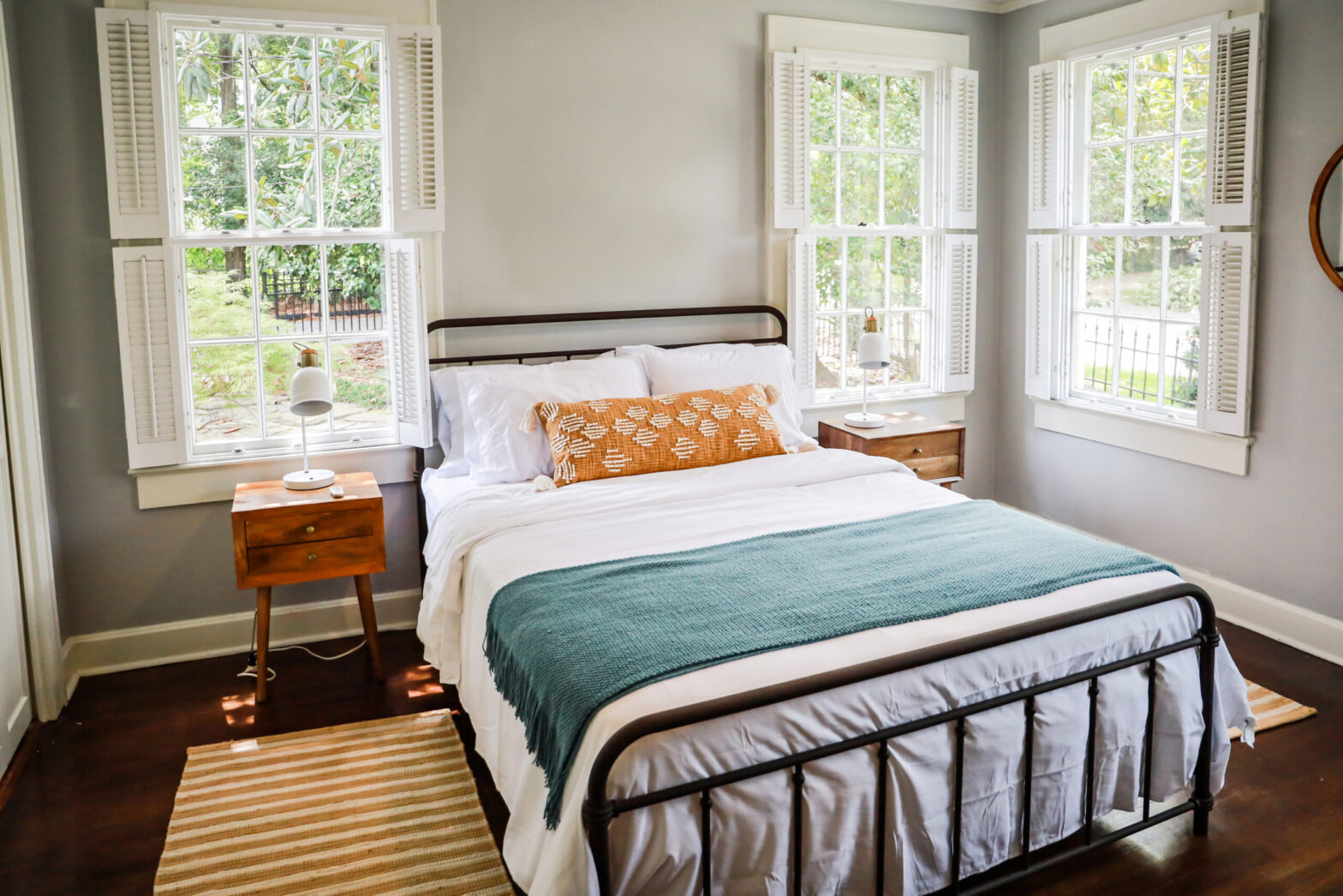
When furnishing a compact room, scale is your most important tool. Large, heavy furniture can make a room feel claustrophobic. Instead, look for pieces with exposed legs. Furniture that sits up off the floor allows light to pass underneath, tricking the eye into thinking the floor area is larger than it is. Mid-century modern styles often work well for this reason, as they tend to feature slim profiles and tapered legs.
The bed you choose sets the tone for the entire room. Many people assume they must downsize to a double or full mattress to save space, but that is not always necessary if you choose the right frame. You can maintain a high level of sleep comfort by selecting a queen bed frame that features a minimalist design or built-in storage drawers. A frame with a slim profile eliminates the bulk of a heavy footboard or wide side rails, giving you those precious extra inches of clearance around the mattress while still providing a spacious sleeping surface.
Multi-functional furniture is another key to success. A nightstand that doubles as a small desk, or a bench at the foot of the bed that opens up for linen storage, adds utility without crowding the room. If you are really tight on space, skip the traditional nightstands altogether. A floating shelf mounted on the wall on either side of the bed provides a spot for your phone and a glass of water without taking up any floor space at all. This keeps the area around the bed feeling airy and uncluttered.
Utilising Vertical Space for Storage
When you cannot spread out, you must go up. Vertical space is often underutilised in bedrooms, yet it offers incredible potential for storage. Tall, narrow dressers draw the eye upward and provide just as much drawer space as wide, bulky ones. Installing floor-to-ceiling shelving units can also act as a visual anchor while housing books, decor, and storage baskets.
Look at the space above the door and windows. A shelf running along the perimeter of the room, high up near the ceiling, can hold items you do not need every day, like off-season clothing or travel bags. This draws the eye up, emphasising the height of the room rather than its narrow width. Similarly, hanging curtains from the very top of the wall—rather than right above the window frame—can make ceilings appear higher and the room grander.
Closet organisation is vital in a small bedroom. If your closet is messy, that chaos will inevitably spill out into the main room. Invest in a closet system that maximises vertical hanging space and adds shelves for shoes and sweaters. By keeping the closet efficient, you reduce the need for external dressers and wardrobes, keeping the main floor area clear for living.
Lighting Strategies to Open Up the Room
Lighting plays a huge role in how we perceive space. A room with a single, dim overhead light will feel smaller and more cave-like. To open up a small bedroom, you need to layer your lighting. This means combining ambient light, task light, and accent light to create depth and dimension.
Wall sconces are a fantastic option for small spaces. By mounting lights on the wall beside the bed, you free up surface space on your nightstand. Swing-arm sconces are particularly practical as they can be adjusted for reading in bed. If hardwiring is not an option, there are many plug-in models that look stylish and require only an outlet.
Do not forget about natural light. Keep window treatments simple and sheer to let in as much daylight as possible. Heavy, dark drapes can absorb light and make the room feel closed in. If you need privacy or darkness for sleeping, layer a blackout roller shade behind light, airy curtains. This gives you functionality without the visual weight of heavy fabric.
Using Color and Mirrors to Create Depth
Color is a powerful tool for manipulating the feel of a room. The classic advice is to paint small rooms white to make them feel bigger, and while this works, it is not your only option. Soft, cool shades like pale blue, sage green, or light gray can recede visually, making the walls feel further away. If you prefer a cozy, den-like atmosphere, a dark navy or charcoal can blur the corners of the room, making the boundaries less defined.
Mirrors are the oldest trick in the designer’s handbook for a reason. A large mirror reflects light and views, effectively doubling the visual space. Placing a large floor mirror opposite a window bounces natural light around the room and brings the outdoors in. If you do not have floor space for a standing mirror, consider mirrored closet doors or a large mirror mounted above the dresser.
When it comes to decor, less is usually more. A few large pieces of art make a confident statement without cluttering the walls like a gallery wall of tiny frames might. Keep the color palette cohesive. A monochromatic scheme—using varying shades of a single color—creates a seamless look that allows the eye to move smoothly across the room without interruption.
Creating a Cohesive Look
Bringing all these elements together requires a bit of editing. In a small bedroom, every item should earn its keep. Ask yourself if a piece of furniture or decor adds value or just takes up space. It is okay to leave some empty space; negative space allows a room to breathe.
Texture becomes very important when you have limited space for decor. Instead of adding more knick-knacks, add interest through textiles. A chunky knit throw, a velvet pillow, or a woven rug adds warmth and personality without physical clutter. These layers make the room feel finished and intentional.
Ultimately, a small bedroom should feel like a customised suit—tailored exactly to your needs. By making smart choices with your bed frame, maximising vertical storage, and using light to your advantage, you can build a space that offers maximum comfort regardless of the square footage. It is about creating a room that works for you, giving you a peaceful place to recharge at the end of the day.
FAQ About Small Bedroom Design
How do I arrange furniture in a small bedroom?
Start by placing the largest piece, usually the bed. Aim to place it against the longest wall or opposite the door to create a focal point. Keep walkways clear and avoid blocking windows if possible. If space is extremely tight, consider pushing the bed against a wall to open up the center of the room.
Can I fit a queen bed in a small room?
Yes, you can often fit a larger mattress in a small room if you choose the right frame. Look for platform beds or frames with a slim profile that do not add unnecessary bulk. Avoiding heavy headboards and footboards helps save inches that make a big difference in movement flow.
What colors make a small bedroom look bigger?
Light and cool colors, such as whites, off-whites, soft blues, and greens, tend to make walls recede and rooms feel more expansive. However, painting the walls and trim the same color can also help expand the space by removing visual breaks. If you want drama, dark colors can add depth and blur the room’s edges.
How do I add storage without cluttering the room?
Focus on dual-purpose furniture and vertical space. Beds with drawers underneath, ottomans with hidden compartments, and tall shelving units are excellent choices. Using the full height of the room keeps the floor clear and reduces the feeling of clutter.
Is it better to have blinds or curtains in a small room?
Blinds or roller shades are often better for saving space as they fit inside the window frame. However, hanging curtains high and wide can frame the window and make the ceiling appear taller. Avoid heavy, thick drapes that pool on the floor, as they can make the room feel smaller.