





















How Robotic Mowers Are Transforming Construction Site Management and Post-Development Property Maintenance
In recent years, the rise of robotic lawnmowers has begun to reshape how infrastructure and property managers approach turf and landscape care. What was once a labor-intensive, repetitive task is becoming increasingly automated, offering safety, cost efficiency and sustainability benefits. Explore how automatic lawn mowers and robotic grass cutters are being applied in construction site maintenance and long-term property upkeep, and what challenges remain in scaling these systems.
From Construction to Landscape: A New Role for Robotic Mowers
During and after construction, sites often include buffer zones, embankments, retention basins and road verges that require consistent upkeep. As projects transition to their operational phase, these areas become permanent fixtures that require regular maintenance. Instead of relying solely on manual crews, contractors and facilities managers are increasingly deploying robotic mowing systems to improve safety, consistency, and efficiency.
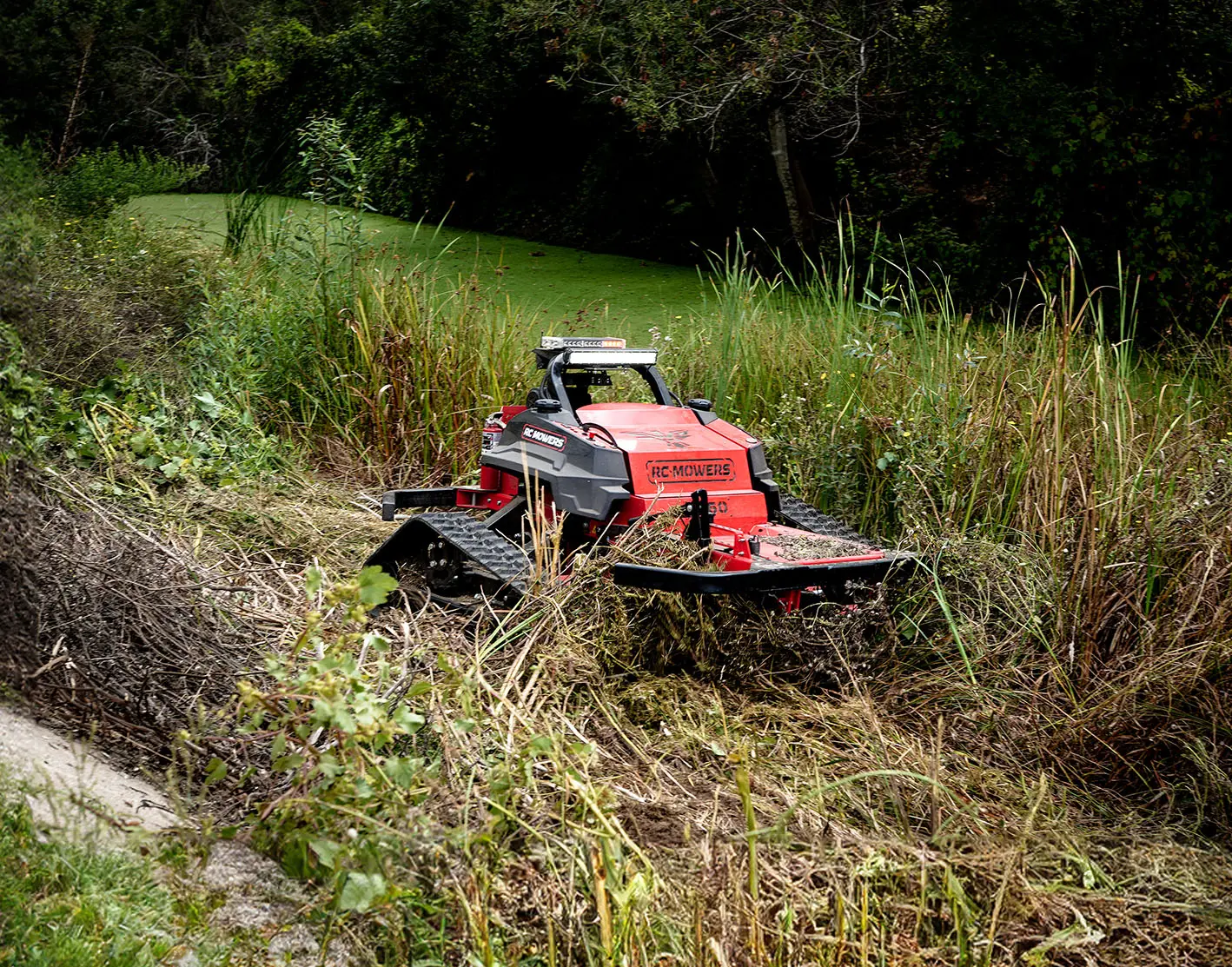
On steep embankments, slopes or hard-to-reach areas, robotic mowers reduce human exposure to hazards. They can also maintain more consistent turf coverage, preventing overgrowth that can obstruct drainage paths or damage retaining structures. Over time, integrating robotic mowers in routine maintenance reduces reliance on seasonal labor, which helps stabilize staffing demands.
Some large-scale facilities — such as Michigan State University’s Landscape Services Department — have already introduced robotic lawnmowers, allowing personnel to focus on higher-value landscaping tasks. This shift streamlines maintenance and illustrates how robotics can enhance operational resilience across property types.
Key Benefits of Commercial Robotic Mowers in Infrastructure and Property Contexts
The adoption of robotic mowing technology offers a range of tangible advantages for property and infrastructure operators. For one, these mowers free up human crews for skilled work. Instead of spending hours mowing large areas, staff can concentrate on trimming, inspections or repairs. Facilities managers are leveraging autonomous mowers to “do more with less,” reducing labor hours while maintaining and often improving turf quality.
On roadside slopes, drainage embankments or retention areas, mowing remains a highly hazardous maintenance task. Robotic systems allow operators to stay safely away from these areas, minimizing the risk of slips, fatigue and equipment accidents.
Because robotic mowers can also run frequently, they maintain a steady turf height. Cutting only one-third of the grass blade at a time keeps turf healthier and reduces stress — a rule modern robotic mowers can follow automatically. This consistency supports both visual quality and long-term landscape stability.
Battery-powered automatic lawn mowers emit no direct exhaust and generate less noise than traditional combustion mowers. For developers and municipalities, these systems support green infrastructure goals and align with broader sustainability and climate commitments, particularly in areas that prioritize low-emission operations.
Modern robotic grass cutters utilize advanced navigation algorithms to cover irregular terrain efficiently. Recent research demonstrates how adaptive mapping and path-planning methods can improve mowing coverage, optimizing energy use and efficiency across complex environments.
Challenges, Costs and Commercial Considerations
While robotic mowing technology is gaining traction, several barriers must be addressed before widespread adoption of this technology in infrastructure maintenance can occur:
- Upfront investment and pricing: The commercial robotic lawn mower price remains a major factor. While robotic systems may lower operational expenses over time, the upfront purchase and maintenance are still pricey. For large-scale or multi-site operators, cost-benefit assessments must factor in long-term labor savings and fleet performance.
- Terrain, obstacles and field conditions: Construction zones and undeveloped land often feature uneven terrain, debris, or dense vegetation. Robotic mowers can struggle in these environments, requiring site preparation or boundary mapping to function effectively.
- Maintenance, support and reliability: Automation does not eliminate maintenance. Blades, batteries and sensors require regular servicing, while software updates and technical support are crucial to keep units reliable. Without proper upkeep, downtime or uneven mowing performance can offset initial efficiency gains.
- Integration, monitoring and control: For maximum effectiveness, robotic mowing fleets must integrate with existing maintenance management systems. Issues such as GPS drift, signal interference, or map boundary errors can disrupt operations without proper digital safeguards or remote monitoring tools.
- Market maturity and adoption risk: The market for robotic mowers’ commercial models is still developing. Standardization across hardware, software and vendor platforms is limited, and early adopters face potential risks regarding long-term support or compatibility with future technologies.
Use Cases in Infrastructure Projects and Post-Development Zones
Robotic mowing is finding real-world applications across a growing range of infrastructure and property settings. Highway departments are using autonomous mowers to maintain medians, shoulders and embankments, improving worker safety and consistency. Stormwater management teams deploy them around retention basins and drainage channels to ensure vegetation does not impede water flow.
In commercial campuses and industrial parks, robotic mowers handle large open areas, freeing maintenance staff to focus on pruning, irrigation and inspections. Residential and mixed-use developments benefit from the continuous upkeep of shared lawns, parks, and greenways, which can be achieved without the noise and emissions associated with traditional mowers. Meanwhile, municipalities are integrating robotic systems into public parks and sports fields to extend maintenance capacity without increasing headcount.
Recent field benchmarks indicate that a single large-scale autonomous mower can cover roughly 20 to 30 acres of turf per week, depending on slope and terrain conditions. This level of output enables facilities to maintain extensive landscapes with minimal human intervention, turning automation into a practical tool for large-scale maintenance planning.
For infrastructure operators managing multiple zones or remote sites, such scalability reinforces the case for integrating robotic mowing into broader asset management systems. Research from Cornell’s Turfgrass Program also found that autonomous mowing increases tiller and shoot density in common grasses, improving resilience through more frequent, precise cuts. Collectively, these use cases demonstrate how robotic mowing can supplement rather than replace existing maintenance strategies, improving reliability, sustainability and cost control across the property life cycle.
The Future of Smart Maintenance
Robotic mowing is a practical evolution in how infrastructure and property maintenance is managed. As prices decline and navigation systems become more capable, autonomous mowers are poised to become standard equipment for developers, municipalities and facility managers.
Balancing automation with human oversight remains key. By combining robotic efficiency with skilled judgment, organizations can achieve safer worksites, lower costs and stronger sustainability performance. The shift toward robotic lawnmowers reflects a broader transformation in smart maintenance — one that prioritizes efficiency, safety and environmental stewardship. For the construction and infrastructure sectors, this quiet revolution is already in motion.