











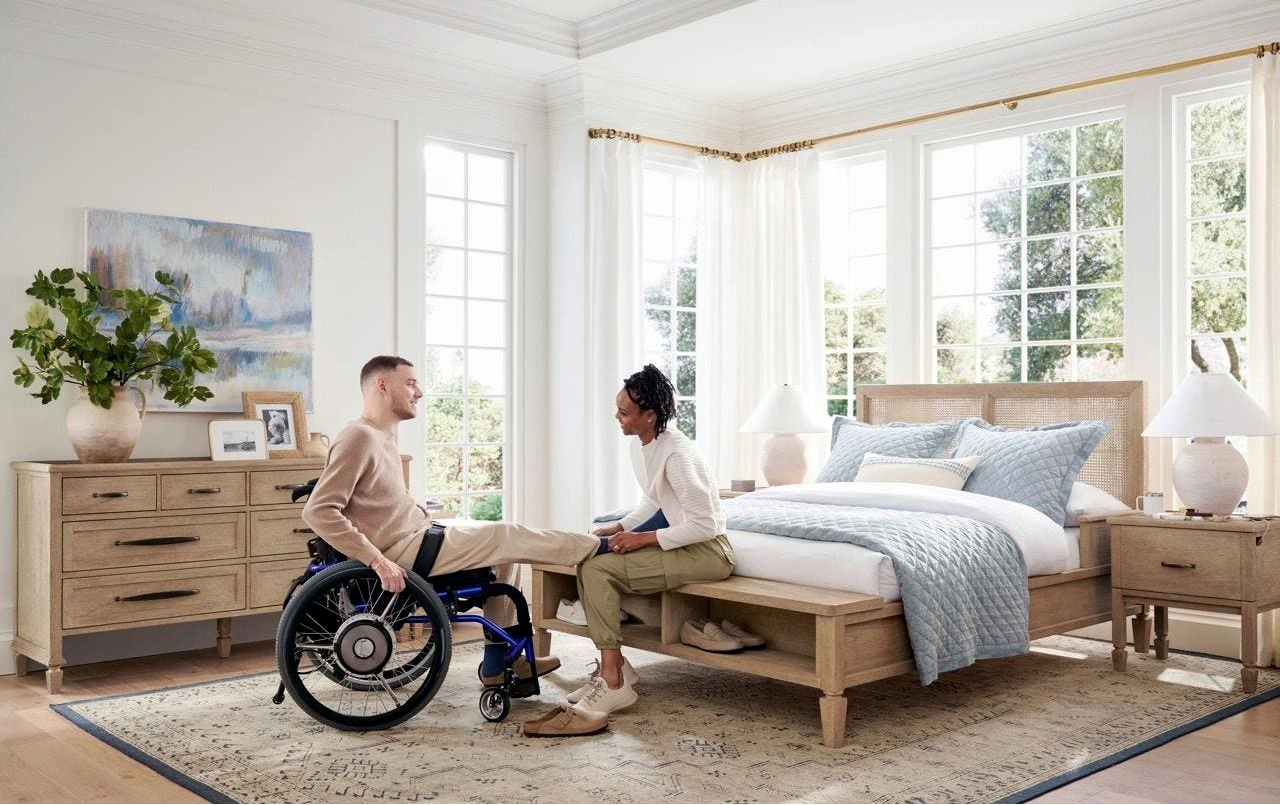











Your bedroom should be your personal haven – a place where you can rest, recharge and feel completely at home. But what happens when mobility challenges make this essential space difficult to navigate?
Here’s something that might surprise you: people spend at least 8 hours a day in their bedroom. That’s a significant portion of your life, which is why accessible bedroom design matters so much for the 14.1 million disabled people currently living in the UK, including 1.2 million wheelchair users.
The reality is stark – 365,000 disabled people report that their homes simply don’t meet their needs. But here’s the good news: creating an accessible bedroom doesn’t have to be overwhelming or compromise on style.
What makes a bedroom truly accessible?
An accessible bedroom requires thoughtful planning around specific space requirements. Your wheelchair-accessible bedroom should be at least 18 square metres in size and no narrower than 3.6 metres, with doorways at least 32 inches (813 mm) wide to allow comfortable access.
When you consider that mobility impairments affect approximately 52% of people with disabilities in the UK, proper bedroom adaptations become crucial for daily comfort and independence. This is particularly important for seniors who tend to spend considerable time in their bedrooms when experiencing reduced mobility.
Your step-by-step guide to accessible bedroom design
Whether you’re adapting a space for yourself, a family member, or planning ahead for changing needs, this guide will walk you through the essential elements. From choosing the right location and layout to selecting appropriate furniture and installing helpful fixtures, you’ll discover practical tips that support independence whilst creating a space you’ll genuinely love spending time in.
Ready to create a bedroom that works as hard as you do? Let’s get started.
Choose the Right Location and Layout
Location is everything when it comes to accessible bedroom design. These foundational decisions will determine how well your space works day-to-day, so it’s worth getting them right from the start.
Why ground floor bedrooms are ideal
Ground floor bedrooms eliminate the biggest barrier of all – stairs. This simple choice makes the space naturally more accessible for wheelchair users. While lifts can be installed as an alternative, they require regular maintenance and take time to operate.
Ground floor positioning offers another crucial advantage: quicker emergency exit routes. This safety consideration becomes particularly important for those with mobility challenges. You’ll also find that ground floor accommodations provide easier access from outside, making them ideal for older adults or anyone with reduced mobility. This arrangement simplifies daily routines and supports independent living.
Minimum space and turning radius for wheelchairs
Space requirements for wheelchair accessibility aren’t suggestions – they’re essentials. You’ll need a minimum turning circle of 1500mm x 1500mm (5′ x 5′) for standard wheelchairs to rotate completely. This means your overall bedroom size should be approximately 18 square metres, with no dimension narrower than 3.6 metres.
Doorways need careful attention too. A minimum width of 32 inches (813mm) is necessary for straight wheelchair approaches. Some situations might require 36-inch doors for easier access. Consider alternative door options like pocket doors or barn doors – they often work better than standard doors for wheelchair users.
Takeaway Tip: Measure twice, install once. These spatial requirements aren’t flexible, so accurate planning prevents costly mistakes later.
Ensuring emergency access and escape routes
Safety planning goes beyond the bedroom itself. A patio area outside secondary external doors, connected to a main path, serves as a vital escape route for wheelchair users during emergencies. These outdoor areas should measure at least 3m x 3m.
Where level changes can’t be avoided, install a raised 100mm kerb in areas where wheelchairs might roll. All platforms need slight falls away from the building to prevent rainwater collection, with cross-fall gradients not exceeding 1:50.
Don’t forget proper lighting at key areas, especially at the top and bottom of ramps. These thoughtful touches ensure your accessible bedroom design works for both daily living and emergency situations.
Get your furniture choices spot on
Your furniture can make the difference between a bedroom that works brilliantly and one that creates daily frustrations. The right pieces don’t just look good – they actively support your independence and safety.
What’s the secret to choosing the perfect bed?
The bed height matters more than you might think. For wheelchair users, you’ll want your mattress top sitting between 20-23 inches from the floor. This sweet spot makes transfers much easier without any uncomfortable straining. But here’s something to remember: wheelchair cushions typically add 6-10cm to your seated height, so double-check those measurements before you buy.
Want maximum flexibility? Adjustable height beds with electric controls are worth shouting about. They let you customise the height based on your exact needs and help prevent falls. If you’re working with an existing bed, furniture raisers can lift standard beds to the right height. Go for a firm mattress – it provides much better support during transfers. Beds with storage are particularly clever choices, giving you extra space without compromising accessibility.
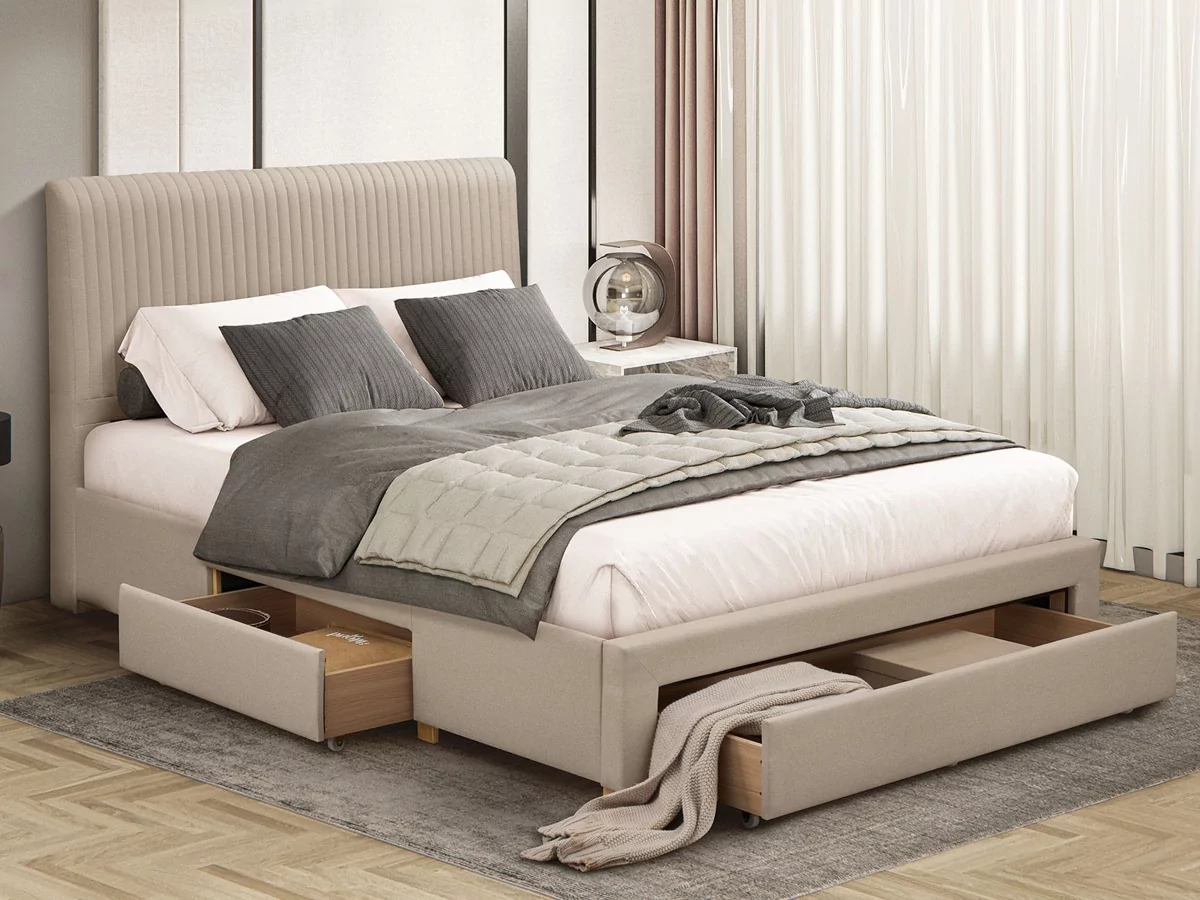
Image credit Bedstar: Drury Bed Frame With Drawers
Why space around your bed is absolutely crucial
Think of the area around your bed as your transfer zone. You’ll need 36 inches of clearance on either side for safe, comfortable transfers. Working with a smaller room? Position the bed against a wall to create wider access on one side. Don’t forget that 5×5′ minimum turning circle we mentioned earlier when you’re arranging your furniture.
Keep the pathway between your bedroom door and bed completely clear. This straightforward navigation route ensures you can move through your room with confidence.
Smart storage that actually works
Wardrobes with sliding or barn doors beat standard hinged doors every time for accessibility. Position your wardrobe rods 47-55 inches above the floor – low enough for seated reach yet high enough so your clothes won’t drag.
Electric height-adjustable clothing racks are genuinely game-changing, extending 700mm downward and 614mm outward when lowered. Counterbalance rails that pull down to comfortable heights work similarly well. For drawers, choose lightweight designs with D-ring pulls rather than fiddly knobs. Ottomans and bed frames with built-in compartments give you extra storage without eating up floor space.
Support where you need it most
Strategically placed grab bars beside your bed make moving from lying to sitting (and standing) positions much safer. Floor-to-ceiling poles provide excellent full-body support without needing any wall modifications.
Bed rails, self-help poles, and bedside grab bars all provide stability during transfers and repositioning. The beauty is that these supportive elements can blend seamlessly into your bedroom design. Just make sure all support structures are properly anchored – wobbly furniture creates serious fall risks.
Don’t overlook the small details that make a big difference
The right fixtures and hardware can make or break your accessible bedroom design. These finishing touches might seem minor, but they’re the difference between a room that truly supports independence and one that creates daily frustration.
Doors and handles that actually work
Lever-style door handles are your best friend when it comes to accessible design. They require minimal hand strength to operate and should be mounted between 800mm and 1000mm above floor level. Here’s a tip that makes a real difference: ensure your handles contrast visually with the door surface – it’s amazing how much easier this makes them to locate.
The opening force for doors shouldn’t exceed 15 Newtons at the leading edge, so if you’re considering self-closing doors, you’ll need delayed action mechanisms to meet this requirement.
Windows positioned for seated viewing
Window handles need to sit between 800mm and 1000mm from the floor. If arthritis or limited dexterity is a concern, extended-lever handles over 200mm in length significantly reduce the effort needed. Don’t forget that the main window glazing line should start no higher than 800mm from the floor to enable comfortable seated viewing.
Switches and sockets within easy reach
Smart placement of electrical controls prevents daily stretching and straining. Position socket outlets between 400mm and 1000mm above the floor. Light switches work best at 900mm height, and here’s a clever trick: align them horizontally with door handles for intuitive location. Keep all controls at least 350mm from room corners to ensure comfortable access.
Lighting that adapts to changing needs
Effective lighting becomes increasingly important as we age. People need three times more light by age 60 compared to their twenties. Focus on task lighting directed at specific areas rather than into the eyes to reduce glare. Dimmer switches are particularly valuable, allowing adjustment based on changing daily needs – perfect for creating the right ambiance while maintaining functionality.
Which flooring will work best for your accessible bedroom?
The floor beneath your feet can make all the difference between effortless movement and daily frustration. Get this choice right, and you’ll wonder why you waited so long to make the change.
The smoothest options for wheelchair users
Luxury vinyl planks (LVP) top our list for good reason – they offer durability, dent resistance and beautifully smooth rolling. You’ll find these planks handle daily wear whilst looking stylish for years to come.
Other excellent choices worth considering:
- Engineered wood flooring: Provides smooth movement without restrictions
- Laminate flooring with AC3 rating or higher: Offers superior manoeuvrability
- Rubber flooring: Delivers excellent traction whilst reducing slip risks
One thing to avoid? Thick pile carpets. They’ll restrict wheelchair movement and make navigation unnecessarily difficult.
Takeaway Tip: Test different flooring samples by rolling over them with a wheelchair or walking aid before making your final decision.
Say goodbye to trip hazards
Those beautiful scatter rugs might look inviting, but they’re accident waiting to happen. Remove unsecured rugs entirely or secure them with proper non-slip pads. This simple step prevents countless falls and gives you confidence to move freely around your space.
Level changes between rooms create particular challenges for those with Parkinson’s disease or dementia. Consider lowering high thresholds in doorways to create smoother transitions between spaces. Your future self will thank you for this thoughtful touch.
Colour contrast makes all the difference
Here’s something many people overlook – visible contrast between floors and walls helps enormously with visual impairments. Different-coloured skirting boards often provide just enough contrast to meet this requirement. The same principle applies to door handles – choose colours that stand out against doors to help locate exits more easily.
Style doesn’t take a back seat
Who says accessible design can’t be gorgeous? Elements like copper rails serve double duty as both support structures and striking decorative features. Smart use of contrasting colours enhances safety whilst adding visual interest to your space.
The key lies in choosing materials that work beautifully together whilst prioritising function. Your accessible bedroom should feel like the stylish sanctuary you deserve.
Your accessible bedroom awaits
Creating an accessible bedroom isn’t just about following guidelines – it’s about reclaiming independence and comfort for the 14.1 million disabled people across the UK. Each element we’ve explored works together to create something bigger than the sum of its parts: a space that truly supports daily life.
Ground floor placement sets the foundation, whilst that crucial 18 square metres with proper turning space gives you the freedom to move confidently. The right bed height at 20-23 inches, paired with accessible storage solutions, means transfers become manageable rather than challenging.
Those small details make all the difference too. Lever-style door handles that require minimal effort, switches positioned exactly where you can reach them, and lighting that adapts to your changing needs throughout the day. Even your choice of luxury vinyl planks or engineered wood flooring creates smoother navigation and reduces unnecessary obstacles.
Style and function can absolutely work together
Perhaps most importantly, this guide proves that accessibility doesn’t mean compromising on aesthetics. Contrasting colours enhance both safety and visual appeal, whilst decorative elements can double as practical support features. It’s about creating a bedroom that works beautifully in every sense.
The bedroom you create today will serve you well into the future. Whether you’re addressing current mobility needs or planning ahead for changing requirements, these adaptations support independence, dignity, and genuine comfort. Your thoughtful design choices don’t just solve today’s challenges – they create a space that grows with your needs over time.
Rest easy knowing you’ve created a bedroom that truly works for you.