














The manufacturing map of North America is being redrawn. As US and Canadian companies pull supply chains closer to home — a trend widely known as nearshoring — one infrastructure question keeps surfacing at the planning stage: where do you put everything?
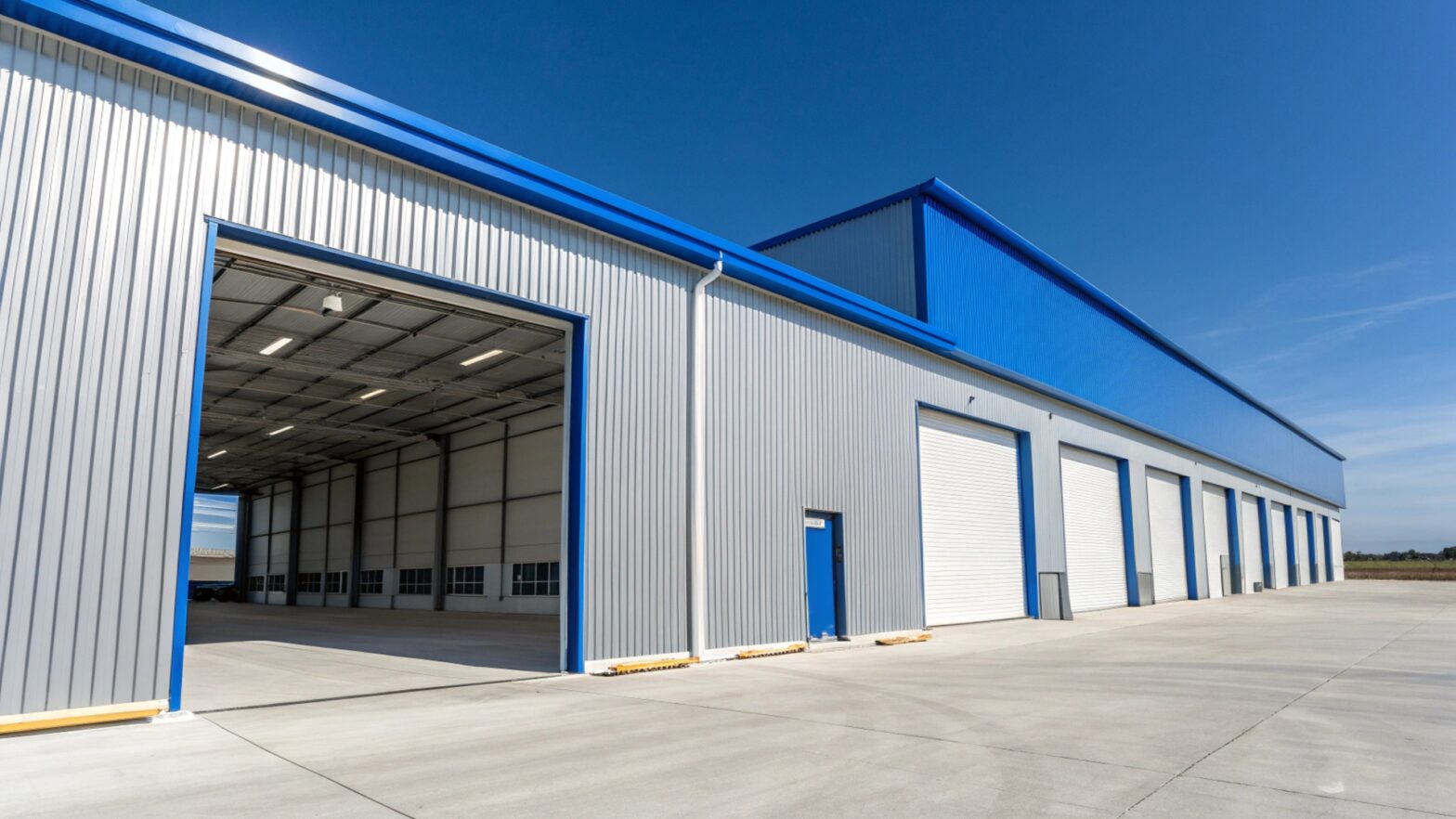
The answer, increasingly, is a prefabricated steel warehouse in northwest Mexico. Fast to build, engineered for industrial loads, and dramatically cheaper than equivalent construction north of the border, these facilities have become the default choice for logistics operators, automotive suppliers, agri-food processors, and manufacturers setting up operations within reach of the US market.
For companies exploring this option, the supply of quality steel fabricators in the region has grown considerably. Firms specialising in prefabricated steel warehouses in Mexico now offer end-to-end services — from structural engineering and permit drawings through fabrication, site erection, and handover — with timelines that typically run 6 to 14 weeks from project approval.
Why Prefabricated Steel Is the Construction Standard for Nearshoring Facilities
Conventional concrete and masonry construction has served Mexican industry for decades, but it has a fundamental problem for companies under nearshoring pressure: time. A traditional 50,000 sq ft industrial building in Sonora or Chihuahua can take 9 to 14 months from groundbreaking to occupancy. A prefabricated steel system of the same size typically delivers in 3 to 5 months.
The speed advantage compounds when you factor in the supply chain dynamics driving nearshoring decisions in the first place. Companies relocating manufacturing from Asia to Mexico are often working to committed timelines — customer contracts, inventory drawdowns, and board-level deadlines that don’t accommodate a slow build.
Beyond timeline, prefabricated steel offers structural advantages that matter for industrial use:
•Clear-span interiors up to 300 ft wide with no interior columns — essential for forklift operations, racking systems, and large machinery
•Eave heights from 18 to 40 ft, accommodating high-bay storage and overhead cranes
•Engineered seismic and wind resistance per Mexican NMX standards — critical in the Sonora desert where extreme wind events are a real concern
•Expandable footprint — bays can be added longitudinally without structural modification to the original frame
•Lower long-term maintenance costs compared to concrete structures in arid climates
The Sonora Corridor: North America’s Fastest-Growing Nearshoring Zone
While Monterrey and the Bajío region get most of the nearshoring headlines, Sonora has emerged as a quieter but arguably more strategic hub for companies specifically targeting the US Southwest and West Coast markets.
Hermosillo — Sonora’s capital and industrial center — sits 180 miles south of Tucson, Arizona. It hosts Ford’s only Mexican assembly plant, a growing base of Tier 1 and Tier 2 automotive suppliers, and direct rail connections to the Union Pacific network. Nogales, on the Arizona border, processes more US-Mexico trade by value than any other crossing on the western half of the border. Guaymas and Empalme offer Pacific port access for companies managing transoceanic supply chains.
Industrial real estate development in the region has not kept pace with demand. Available warehouse and manufacturing space in Hermosillo’s established industrial parks is routinely absorbed within months of completion. For many operators, build-to-suit is no longer a premium option — it’s the only option.
Cost Comparison: Building in Mexico vs. the US
The cost differential between steel warehouse construction in Mexico and equivalent projects in the US Southwest is substantial and structural — it won’t be competed away as nearshoring matures.
A 50,000 sq ft industrial steel warehouse in Phoenix or Tucson currently runs $45 to $75 per sq ft for the structure and basic fit-out, before land. The same building in Hermosillo — designed to equivalent structural standards, built by a local steel fabricator with 20+ years of industrial experience — comes in at $20 to $38 per sq ft. On a mid-size project, that’s a $1.5M to $3M difference on the building alone.
Labor cost is the primary driver. Mexican structural steel erectors earn 15 to 20% of equivalent US union labor rates. But there are secondary factors that matter too: lower permitting costs, faster permit timelines in most Sonora municipalities, and a competitive local supply chain for structural steel, roofing panels, insulation, and building envelope systems.
What US Companies Should Look for in a Mexican Steel Building Contractor
The Mexican steel construction industry spans a wide quality range. For US companies managing a build from across the border — often for the first time — due diligence on the contractor is at least as important as the building specifications.
Key criteria to evaluate:
•In-house fabrication — contractors who fabricate their own steel have tighter control over quality, schedule, and cost. Firms that broker fabrication to third parties introduce supply chain risk.
•Structural engineering capability — look for in-house engineers who can produce NMX-compliant stamped drawings. This eliminates a critical approval bottleneck.
•Proven industrial portfolio — request references from comparable projects: similar size, similar use, similar timeline. Agricultural sheds and residential projects don’t predict industrial performance.
•Experience with US-side requirements — some US-bound facilities need to meet ASTM material specs or AISC connection details. Confirm the contractor understands these requirements.
•Communication infrastructure — a contractor who responds in English, produces bilingual project documentation, and uses standard project management tools will save substantial time on a cross-border engagement.
Realistic Timelines for a Mexico Prefab Steel Warehouse Project
One of the most common planning errors US companies make is underestimating the total project timeline by focusing only on the construction phase. A more accurate model looks like this:
•Site selection and due diligence: 2–4 weeks
•Engineering, permit drawings, and municipal approvals: 3–6 weeks
•Steel fabrication (off-site): 3–6 weeks (runs concurrently with permits)
•Foundation and site preparation: 2–4 weeks
•Steel erection, cladding, and building envelope: 2–5 weeks
•MEP rough-in and fit-out (tenant improvements): 4–8 weeks (varies significantly)
Shell-and-core delivery — structure, roof, walls, doors — typically runs 12 to 20 weeks for a 20,000 to 80,000 sq ft building. Tenant improvement work is the wildcard; companies that plan their process equipment layout before breaking ground save 4 to 6 weeks on this phase.
The Bottom Line
Nearshoring is not a trend that reverses on the next economic cycle. USMCA trade structures, labor cost differentials, and logistics geography all point toward continued growth in US-adjacent Mexican manufacturing. The companies that move fastest on facility infrastructure will have the best sites, the best lease economics, and the most stable supply chain positions.
Prefabricated steel construction is the infrastructure layer that makes rapid expansion possible. It is fast, cost-effective, structurally sound, and now supported by a mature contractor ecosystem in northwest Mexico’s most active nearshoring corridors.
For companies currently in the site selection or early planning phase, the time to engage a local steel fabricator is before you need the building — not after. Lead times and industrial park availability in Sonora are tightening. The window for opportunistic build-to-suit projects at current cost levels is narrowing.