





















Garage door systems are an integral part of the household. Their simpler mechanism of opening and closing underscores the critical role they play in introducing residential automation. This high-tech option can be easily optimized through technologically powered access systems.
However, there are challenges in optimizing garage door opener performance and integrating general smart systems within modern residential designs. Builders and architects must understand the full picture to do so.
Technical Factors Affecting Garage Door Opener Performance in Homes
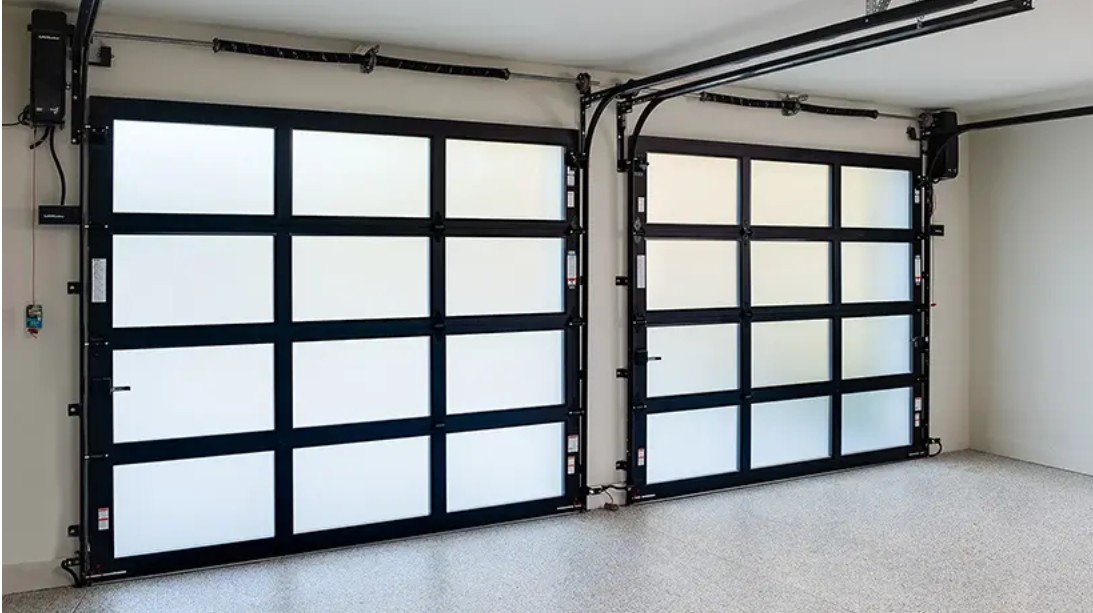
Image: Clopay® in partnership with LiftMaster.
Several factors influence the performance of a garage door opener. For example, the attached garages should feature an efficient drive system design and produce minimal noise to avoid disturbing residents.
Here are the other main determinants:
- Drive system design and noise considerations for attached garages
- Motor power specifications and residential door weight handling
- Control board processing capabilities for residential automation
- Sensor technology and child or pet safety features
- Power supply quality and backup options during outages
- Environmental adaptability for regional home construction
Another layer to these technical factors is the potential bottlenecks that can occur. For example, inadequate electrical specifications in home plans can result in a garage door opening system that overloads its circuit or potentially fails to turn on due to insufficient allocated power.
Other common performance bottlenecks in residential applications include:
- Improper installation by home construction teams
- Environmental exposure in different climate zones
- Wi-Fi connectivity issues in larger homes
Smart Home Garage Door Integration for Residential Access Systems
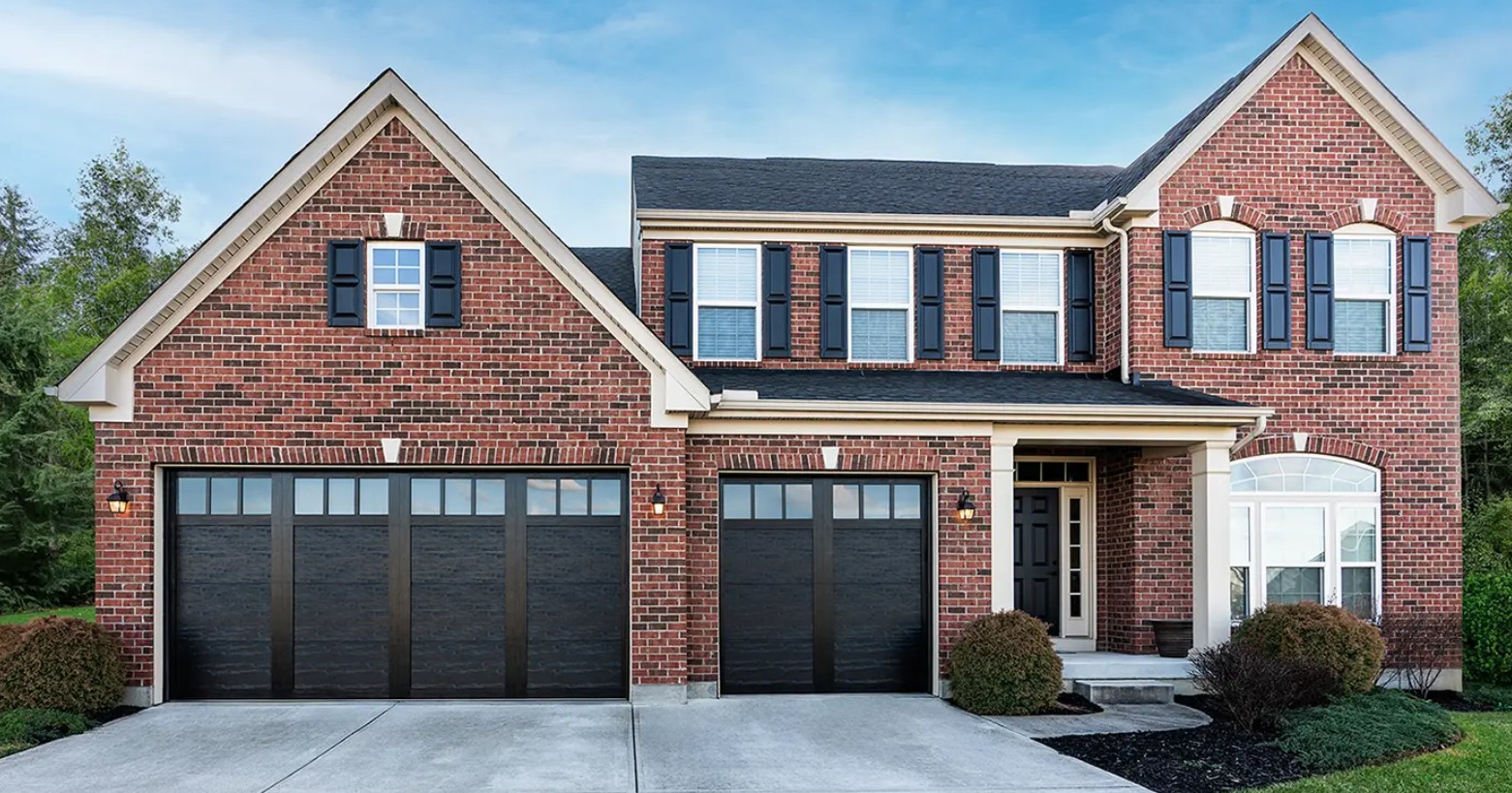
Image: Clopay in partnership with LiftMaster.
Improving garage door opener performance requires integrating smart home systems.
This sector’s market size was valued at $127.80 billion in 2024 and is expected to reach $537.27 billion by 2030, demonstrating its growing presence in residential spaces. There are already manufacturers that have this architecture ready for installation and are willing to provide assistance.
The technical framework for integrating garage access systems with home automation can be relatively complex. One of the main considerations is whether the data will be processed locally or remotely through the cloud. The homeowner is responsible for deciding which route they would prefer.
Cloud processing can be beneficial when the access system is integrated with other residential platforms like Apple HomeKit, Google Home and Amazon Alexa. However, you should also consider strengthening the residential data security and bandwidth viability.
It’s also critical to consider the physical architecture, especially for new home construction, where these pathways may not have been considered yet. Here’s an overview of what to plan for:
- Prewiring specifications for optimal installation
- Location planning for optimal connectivity
- Planning for homeowner control systems
- User authorization for family members and service providers
Featured Smart Garage Door Opener Systems for Residential Applications
Knowing how to improve garage door opener performance in homes can be as simple as finding the right systems.
Best Overall Smart Integration: LiftMaster From Clopay®
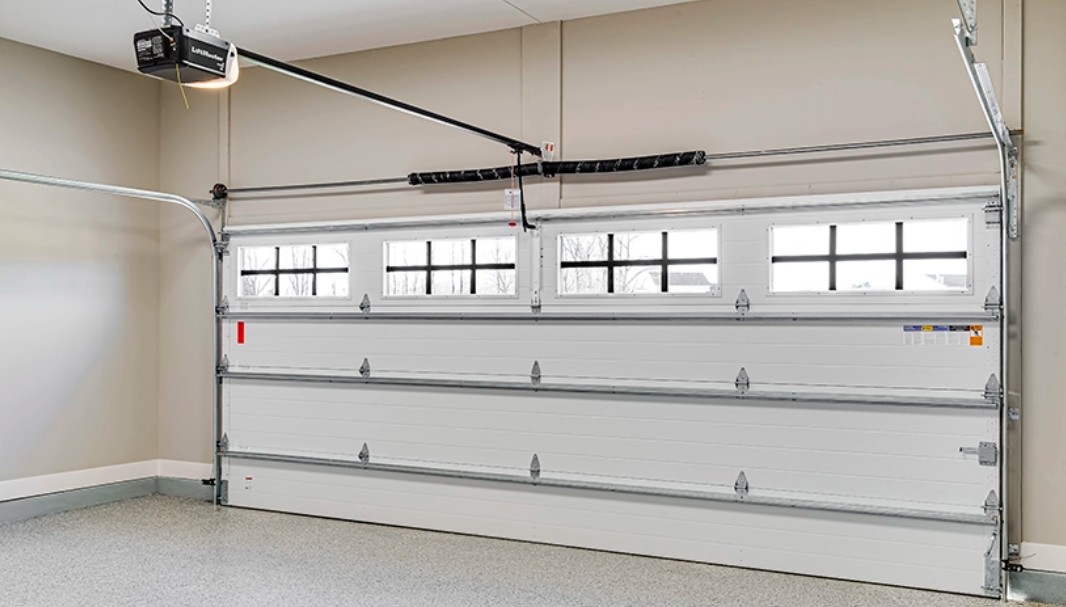
Clopay® is known as one of the largest manufacturers of both residential and commercial garage doors. Its experience with these products has enabled it to offer the LiftMaster residential garage door opener, which is expertly engineered to provide the most seamless integration.
One of LiftMaster’s best residential smart capabilities is its MyQ technology and home automation integration. It can be built into the opener or added through retrofitting. Either way, it allows you to monitor and control the garage door with just a few clicks on your phone. There are also API capabilities for seamless integration with smart home platforms, ensuring maximum efficiency.
Key features:
- Residential-grade motor and drive system specifications
- Multiprotocol compatibility with Wi-Fi and Bluetooth
- Security encryption standards for family safety
- Battery backup for power outages
- Remote diagnostics for homeowner peace of mind
Best for Ultra-Quiet Residential Applications: Chamberlain
Chamberlain aims to make smart home accessibility more available for homes and communities around the world. Its Ultra-Quiet Wi-Fi Garage Door Opener is a game-changer, especially when it comes to prioritizing noise reduction in residential applications.
Attached garages will benefit from these openers the most since they dampen the vibration of the openers while still maintaining a powerful lifting force. There are also safety sensors that will stop the door from closing on obstructions.
Key features:
- Allows connections and smartphone alerts through MyQ
- Ensures soft start and stop for maximum noise reduction
- Provides motion-detection light activation
- Sets a recurring schedule to close or open the garage door and lights
Best for Retrofit Home Renovations: Konnected
Konnected offers numerous retrofit accessories that can make smart access systems compatible with hardwired home infrastructure. Its Smart Garage Door Opener is one of its flagship products, compatible with more than nine smart home platforms.
You can connect it to any garage door opener, and only three wires are needed for hookup. No additional sensors are needed, and you can even set the garage door openers to local and private mode or cloud services.
Key features:
- Opens or closes the garage fully and partially
- Detects partially open garage doors
- Minimal wiring and installation requirements
- Integration with older home electrical systems
Best Value Option for New Home Construction: Genie
Genie is a pioneer in garage door openers and other consumer products. The Aladdin Connect® Smartphone-Enabled Garage Door Controller is a great retrofit kit that can create a more efficient access system.
Integrating this system into your home can make even older garage door openers smart. It’s compatible with most models manufactured after 1993.
Key features:
- Sets up instant virtual key access
- Programs the garage doors to close at a certain time
- Customizable settings through the app
- Controls up to three garage doors
Comprehensive System Comparison Table
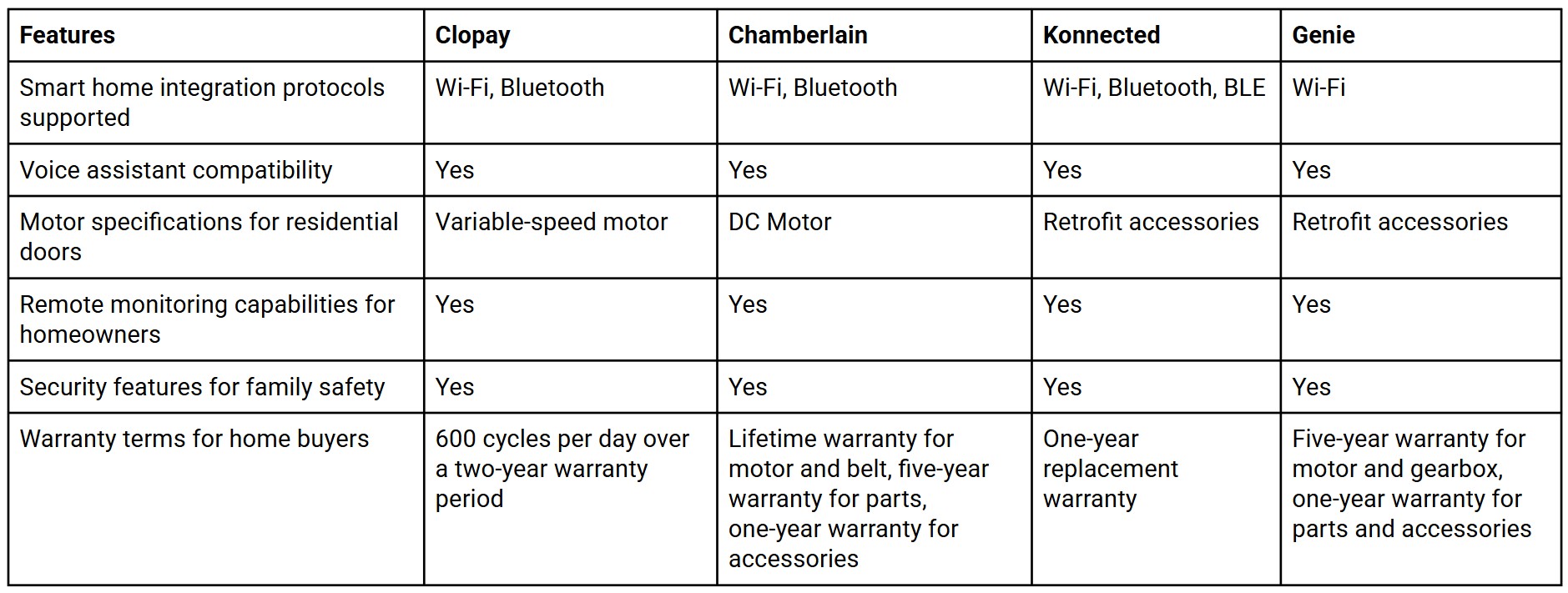
Performance Optimization Strategies for Residential Construction Professionals
Selecting a smart garage door opener for new homes is the first step toward enhancing your home’s performance. The next step is to make it work. Here are guidelines for practical implementation:
- Electrical specifications for new home plans
- Prewiring strategies during construction
- Optimal garage door opener placement
- Proper installation parameters for noise reduction
- Wi-Fi coverage planning for reliable operation
You can run an ROI analysis to gauge the return on investment for performance optimization. Here are additional optimization strategies for different residential project phases:

Frequently Asked Questions
Be sure to get answers to these questions before investing in a smart system.
How Does Smart Integration Improve Residential Garage Door Opener Performance?
Smart integration can enhance residential garage door openers by introducing remote accessibility and enabling homeowners to program the settings for maximum efficiency.
Can Smart Garage Door Openers Be Included in New Home Construction Packages?
Residential builders and architects can choose to include smart garage door openers to make new home construction packages more attractive to potential homeowners.
What Security Features Should Builders Highlight to Potential Homebuyers?
Security features in smart garage door openers, such as alarm systems and locks, can help potential homebuyers feel confident that their family is well-protected.
How Do Regional Climate Factors Affect Garage Door Opener Selection?
Garage door openers should be chosen based on their ability to withstand the extreme temperatures within your region.
What Electrical Specifications Should Be Included in New Home Plans for Smart Openers?
The electrical specifications may differ based on the home plan’s size, the smart openers’ build and other factors. Inform potential homebuyers accordingly.
How Can Residential Architects Future-Proof Garage Access Systems in Their Designs?
Residential architects should integrate smart technology as soon as garage access systems are integrated or, at the very least, leave space for retrofitting.
Integrate Smart Garage Door Opener for New Home Construction
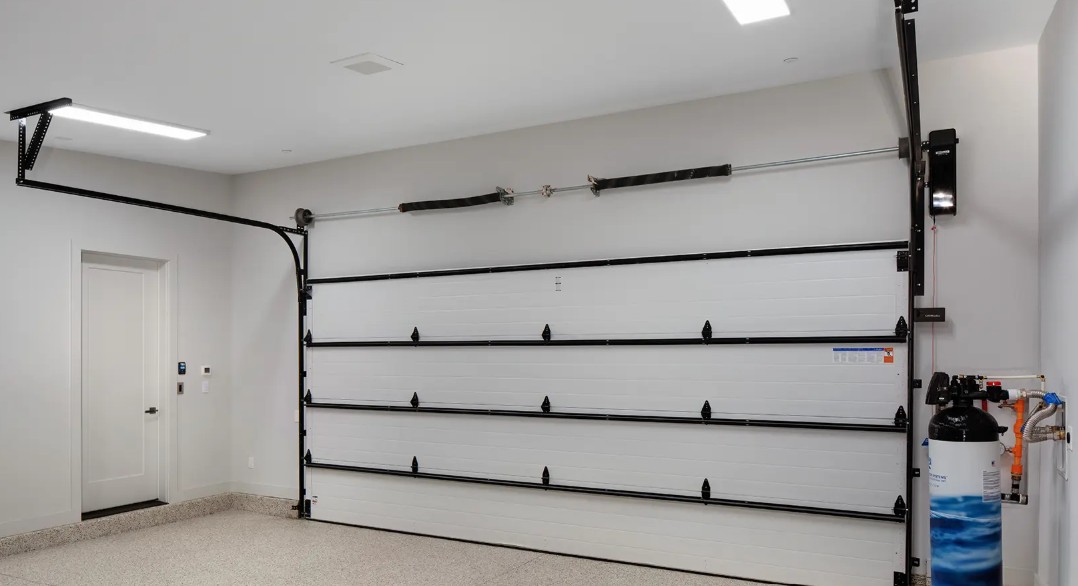
Image: Clopay in partnership with LiftMaster.
There are many key performance optimization strategies for residential applications when you choose to integrate smart garage door openers. Given that this technology contributes to the home’s value and appeal, it is essential to utilize high-quality systems for long-term homeowner satisfaction.