



















When you think about municipal infrastructure, it’s easy to overlook the essential equipment that keeps everything running smoothly. From heavy machinery like excavators to maintenance vehicles and advanced technology for water management, each piece plays a significant role in urban development. You might be surprised by how much thought goes into selecting the right tools for construction and maintenance, including essential equipment like heavy duty manhole lifters that enhance both efficiency and worker safety.
Heavy Machinery for Construction
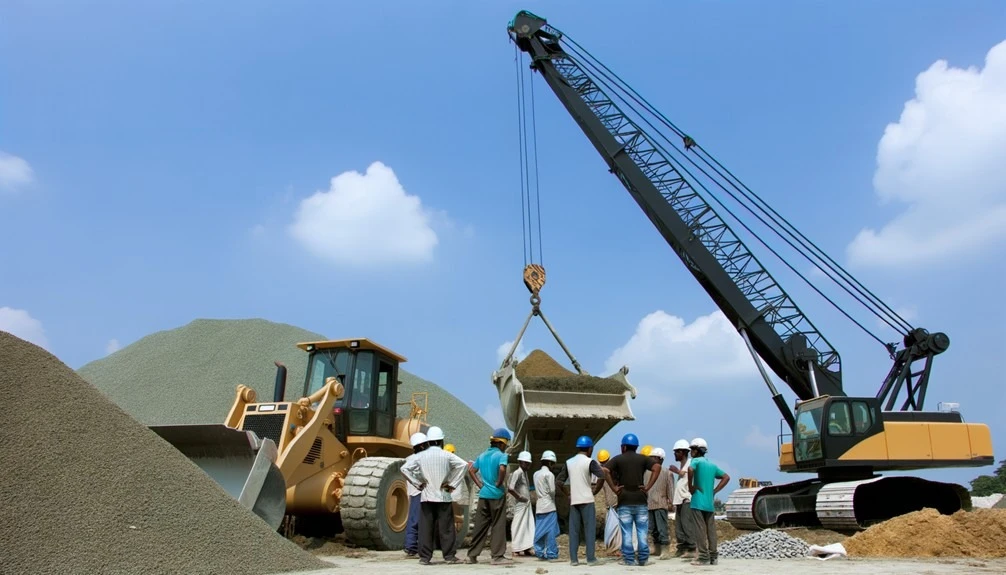
When it comes to heavy machinery for construction, understanding the right equipment can make or break your project. You need to identify the specific tasks your project requires, as different machines serve distinct purposes.
Excavators, for example, excel at digging, lifting, and moving earth or debris, making them crucial for site preparation. When you opt for a backhoe loader, you gain versatility; it combines the functions of a loader and an excavator, which can save you both time and costs on smaller projects.
For larger projects, consider a bulldozer. Its robust design allows for effective grading and moving heavy materials. If your project involves concrete, a concrete mixer truck guarantees the timely delivery of mixed materials, which is essential to maintaining the integrity of your work schedule.
Don’t overlook the importance of cranes; they’re important for lifting heavy loads to great heights, especially in urban environments.
Maintenance Vehicles
Heavy machinery plays a significant role in construction, but maintaining that infrastructure is equally important.
Maintenance vehicles are necessary for keeping roads, bridges, and public facilities in ideal condition. These vehicles guarantee timely repairs and reduce downtime, ultimately extending the lifespan of municipal assets.
Here are three key types of maintenance vehicles you should consider:
- Utility Trucks: Equipped with specialized tools and equipment, utility trucks facilitate quick repairs and emergency responses. They often feature aerial lifts for access to overhead structures.
- Road Sweepers: These vehicles play a fundamental role in maintaining cleanliness and safety on roadways. By removing debris and pollutants, road sweepers help prevent accidents and preserve pavement quality.
- Dump Trucks: Necessary for transporting materials like gravel or asphalt, dump trucks are essential for both maintenance and construction projects. Their versatility allows for efficient debris removal and material delivery.
Investing in the right maintenance vehicles enhances your operational efficiency, guaranteeing that infrastructure remains safe and functional.
Prioritizing these vehicles in your municipal fleet can lead to significant long-term benefits.
Water Supply Equipment

A reliable water supply system is fundamental for any municipality, guaranteeing that residents have access to clean and safe drinking water. To achieve this, you need a range of water supply equipment that functions efficiently and meets regulatory standards.
Key components include water treatment facilities, which utilize filtration and disinfection processes to remove contaminants. You must also invest in storage tanks and reservoirs, which maintain adequate pressure and supply during peak demand.
Pipelines play a significant role in transporting water from treatment facilities to consumers, so regular inspections and maintenance are essential to prevent leaks and maintain integrity. Additionally, implementing metering systems allows for accurate tracking of water usage, helping to manage resources effectively.
Pumps are another important piece of equipment, as they facilitate the movement of water through the distribution network and maintain necessary flow rates. Lastly, consider incorporating monitoring systems that provide real-time data on water quality and flow, enabling swift responses to any issues.
Waste Management Tools
Effective waste management tools are essential for municipalities working to maintain public health and environmental sustainability. By employing the right equipment, you can streamline waste collection, reduce landfill overflow, and promote recycling initiatives.
Here are three key tools that every municipality should consider:
- Automated Refuse Collection Vehicles: These trucks reduce labor costs and increase efficiency by utilizing advanced technology for waste collection. Their design minimizes spillage and improves safety for workers.
- Waste Sorting Systems: Implementing these systems at disposal sites allows for efficient segregation of recyclables, compostables, and general waste. This leads to higher recovery rates and minimizes contamination in recycling streams.
- Public Education Tools: Informative signage and mobile apps can enhance community engagement in waste management practices. By providing residents with clear guidance on proper disposal methods, you can foster a culture of responsibility and participation.
Incorporating these waste management tools helps guarantee that you’re adequately addressing the complexities of municipal waste.
As you focus on these solutions, you’ll enhance operational efficiency while contributing to a cleaner, healthier environment for your community.
Road Maintenance Gear
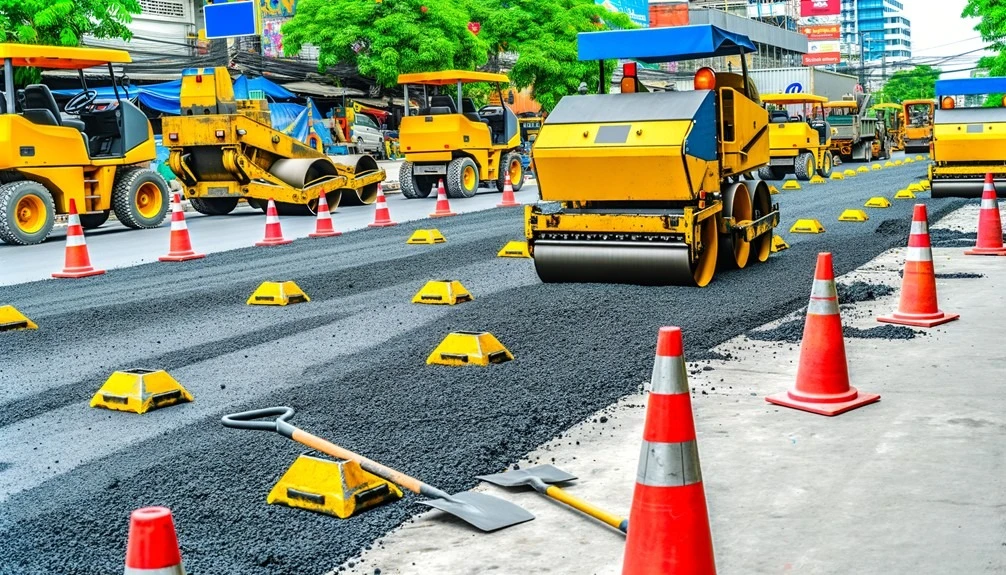
Maintaining smooth, safe roadways is essential for public safety and efficient transportation. To achieve this, you need a thorough set of road maintenance gear.
Start with crack sealing equipment, which is critical for preventing water infiltration and further deterioration. Hot and cold patching materials, along with applicators, allow you to repair potholes effectively before they escalate into larger problems.
You should also invest in a road grader. This piece of equipment guarantees an even road surface by redistributing materials and eliminating ruts. Additionally, a vibratory roller aids in compacting materials, important for maintaining structural integrity.
For sweeping and cleaning roads, a street sweeper is fundamental in removing debris and preventing sediment buildup that can lead to drainage issues.
Don’t overlook the importance of snow removal equipment, such as plows and salt spreaders, which help maintain road safety during winter months.
Lastly, personal protective equipment (PPE) for workers is non-negotiable. High-visibility vests, helmets, and gloves guarantee safety during maintenance operations.
Traffic Control Devices
Traffic control devices play an essential role in ensuring the safe and efficient flow of vehicles and pedestrians on municipal roadways.
These devices not only manage traffic patterns but also enhance safety measures for everyone on the road. As you consider the implementation of these devices, focus on the following key elements:
- Traffic Signals: These electronically controlled devices manage vehicle and pedestrian movement at intersections. By regulating flow, they reduce the likelihood of collisions and improve overall traffic efficiency.
- Road Signs: Crucial for conveying critical information, road signs guide drivers and pedestrians. They inform about speed limits, upcoming hazards, and directions, ensuring that all road users are aware of the rules and conditions.
- Pavement Markings: These provide clear visual cues on the road surface, indicating lanes, crosswalks, and other important features. Properly maintained markings enhance road safety by guiding drivers and pedestrians effectively.
Incorporating these traffic control devices into your municipal infrastructure helps optimize traffic flow and reduce accidents.
It’s essential to regularly assess their effectiveness, ensuring they meet the evolving demands of urban mobility.
Safety and Protective Equipment
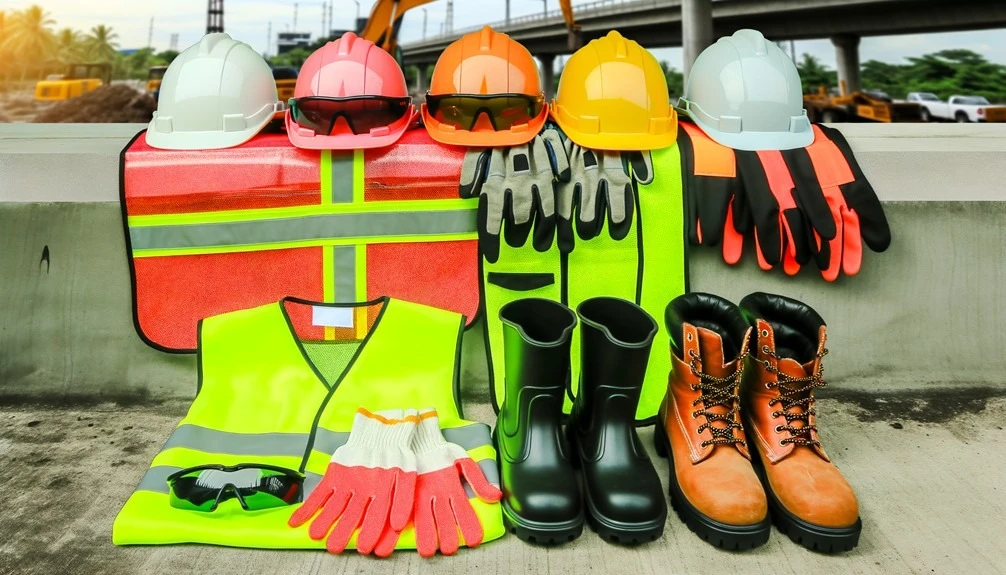
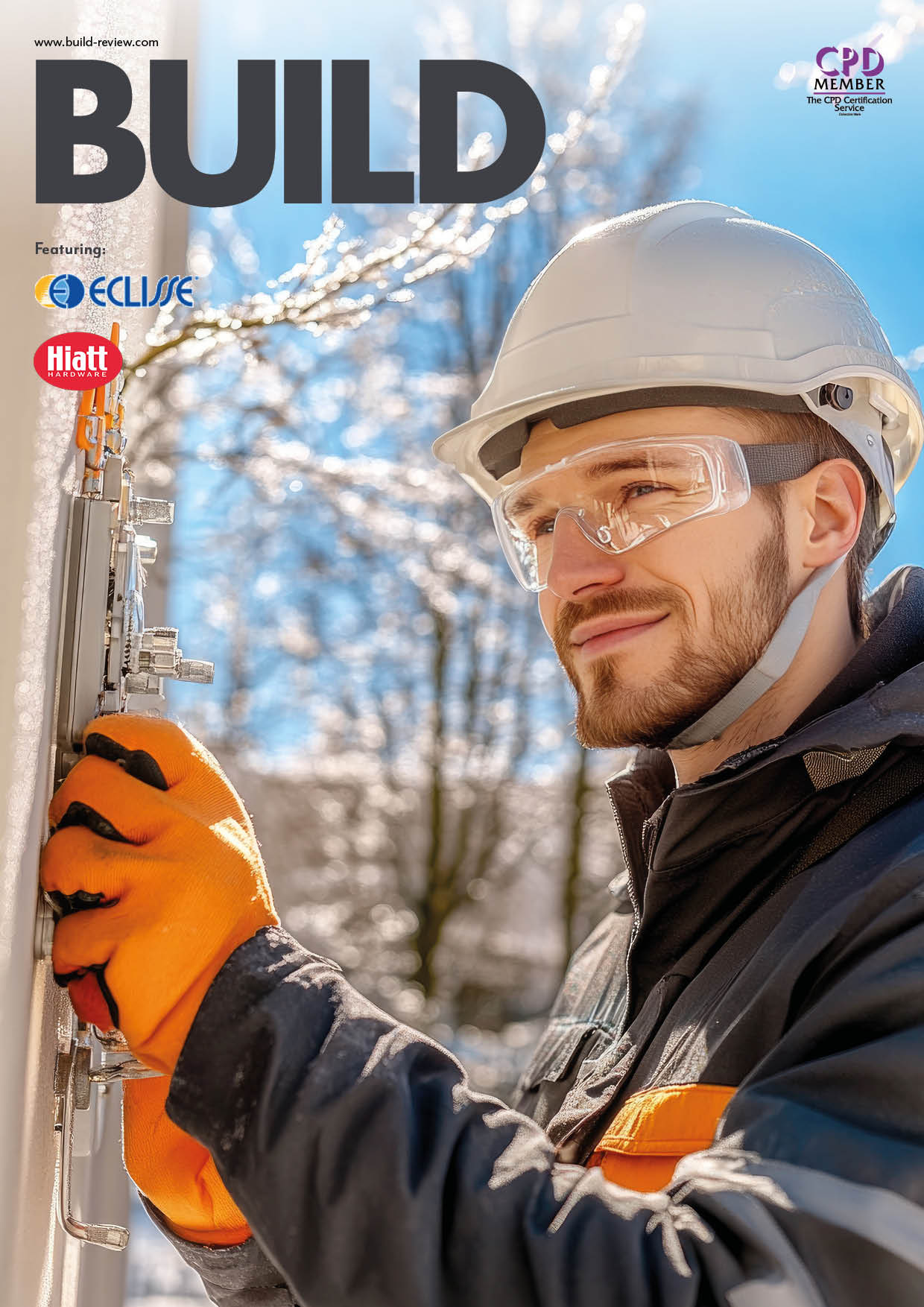
When it comes to guaranteeing the safety of workers and the public in municipal infrastructure projects, investing in high-quality safety and protective equipment is non-negotiable. This equipment includes personal protective gear such as hard hats, safety goggles, high-visibility vests, gloves, and steel-toed boots. Each item plays a vital role in mitigating risks associated with construction environments.
You need to assess specific hazards present on your job site. For instance, if you’re working near heavy machinery, make sure that workers wear appropriate hearing protection and are trained in its operation.
Additionally, fall protection systems, such as harnesses and guardrails, are essential when working at heights.
Beyond personal protective equipment, consider investing in safety signage and barriers to alert both workers and the public of ongoing hazards.
Regular training on equipment use and safety protocols can greatly reduce accident rates.
Surveying Instruments
Surveying instruments are fundamental tools for accurately measuring and mapping land in municipal infrastructure projects. They help you gather precise data, guaranteeing that your designs are both functional and compliant with regulations.
With the right instruments, you can accurately assess topography, boundaries, and existing conditions. Here are three key surveying instruments you should consider:
- Total Station: This versatile device combines electronic theodolite and distance measuring capabilities, allowing you to take angle and distance measurements simultaneously. It’s essential for site layout and design.
- GPS Survey Equipment: Utilizing satellite signals, GPS equipment provides high-accuracy positioning. It’s particularly useful for large-scale projects where traditional methods may be impractical or time-consuming.
- Leveling Instruments: These tools, such as automatic levels and laser levels, help you guarantee horizontal alignment across your construction site. They’re fundamental for establishing grades and elevations.
Communication Technology

How can effective communication technology transform municipal infrastructure projects? By integrating advanced communication systems, you can greatly enhance project efficiency and stakeholder collaboration.
Real-time data sharing tools—such as cloud-based platforms—enable instant access to project updates, ensuring all team members remain aligned. This minimizes miscommunication and delays, allowing for quicker decision-making.
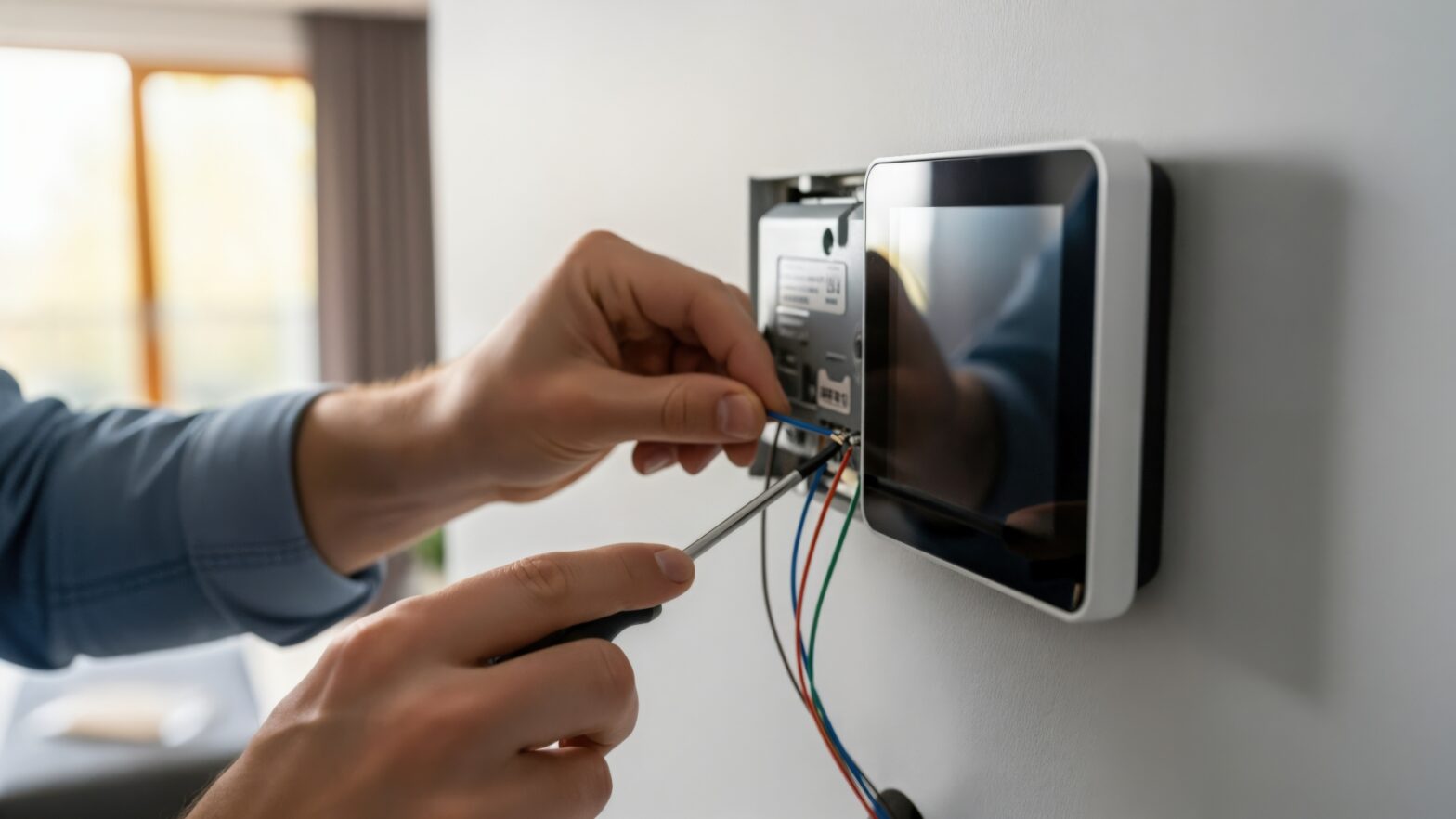
Moreover, employing IoT devices for monitoring various infrastructure components fosters proactive maintenance. Sensors can relay critical information about structural integrity or environmental conditions, allowing you to address issues before they escalate.
With mobile communication applications, field workers can report problems or progress instantly, streamlining workflows.
Utilizing Geographic Information Systems (GIS) paired with communication technology further enriches project planning and execution. These systems provide visual data that aids in spatial analysis, helping you make informed decisions about resource allocation and project timelines.
In addition, effective communication technology promotes transparency with the public. Through online portals, residents can access information about ongoing projects, fostering trust and community involvement.
Ultimately, by leveraging these technologies, you can create a more responsive, accountable, and efficient municipal infrastructure environment.
Conclusion
In conclusion, having the right equipment for municipal infrastructure is like having a well-tuned orchestra; each component plays an essential role in creating harmony within urban environments. From heavy machinery to traffic control devices, every tool enhances efficiency and safety. By investing in advanced technology and proper maintenance gear, you guarantee that your infrastructure projects run smoothly and effectively. Embracing these essentials not only improves functionality but also fosters a thriving community, ready to face the challenges of urbanization.