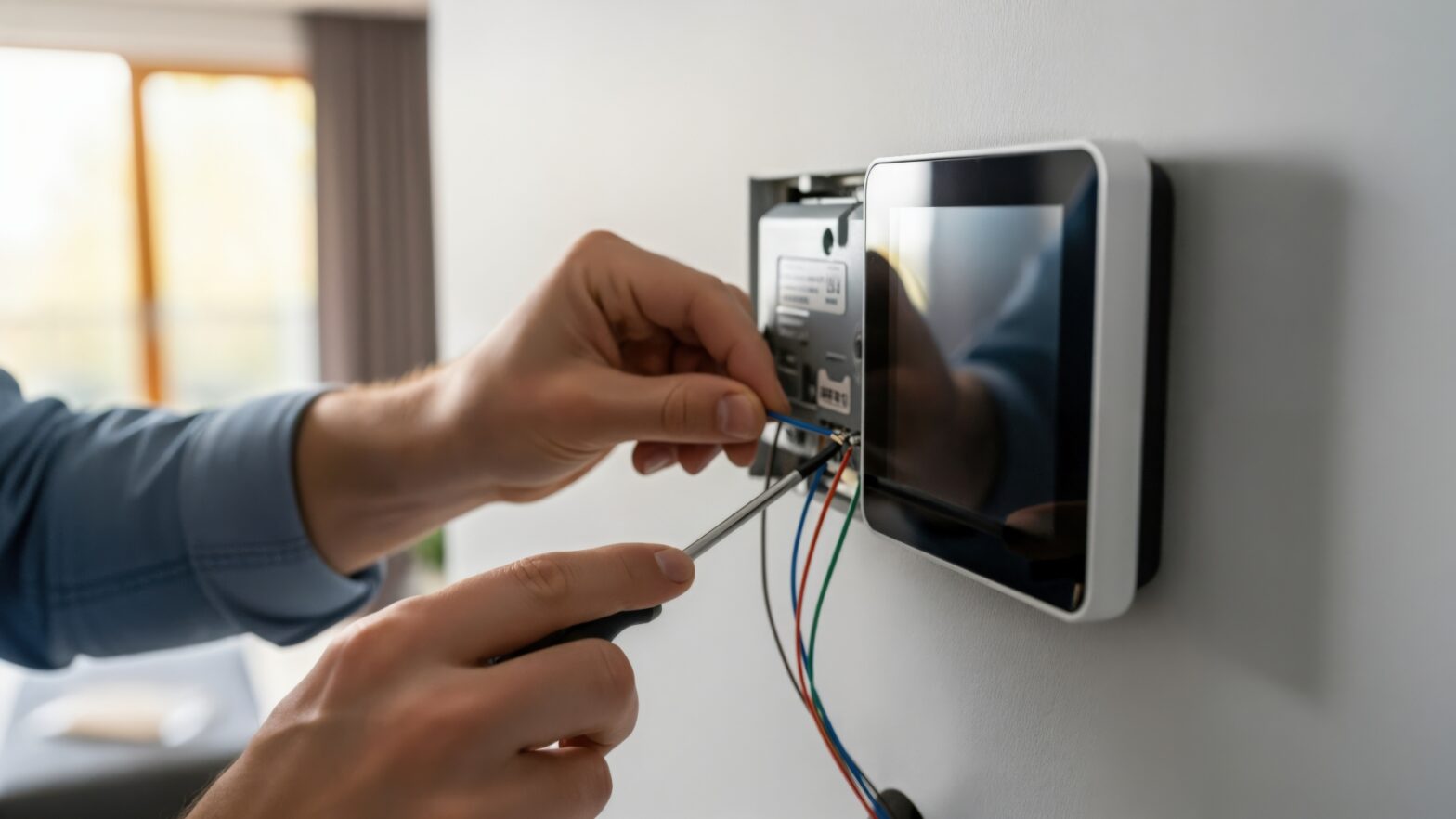



















Whether they’re providing electricity or lighting, cables provide essential connectivity throughout any commercial construction site. Cable management is a necessity to maintain safety as well as organisation and compliance, so workers can tend to their duties without having to worry about any exposed cables or tripping hazards. By factoring in cable management into early planning stages, contractors can ensure a safe and more efficient construction process.
Why is Commercial Cable Management Important?
During the build phase, temporary and permanent cable management is important. It serves many purposes, such as providing temporary lighting that allows teams to work safely in all conditions. Cables also help provide electricity to machinery, so workers can operate tools and equipment without disruption. Having cables run along defined routes prevents clutter and maintains compliance with BS 7671 safety standards.
Commercial cable management is a key aspect in keeping projects on schedule. The right solutions for cable management can be safely routed throughout a build seamlessly to provide an efficient, organised and safe work environment.
Top 5 Cable Management Considerations
We’ve provided a few helpful considerations to help manage cables on a commercial build. These considerations can help prioritise site safety as well as repairs and maintenance.
1. Accessibility
While it’s important to have cables routed and supported throughout the build phase, it’s equally important to have easy access to them should they require replacing or maintenance. The right solution can help keep your cables fastened and organised, as well as accessible. Solutions such as trays, baskets and conduits can help support cables and allow you to conveniently inspect and repair them without dismantling an entire system.
2. Code Compliance
Code compliance is essential in order to have a safe commercial build project. It ensures that all installations meet the required safety and performance standards. It’s important to follow these regulations to prevent accidents, fires and protect workers on site. By adhering to these standards, contractors are creating a more efficient construction site and are better equipped to deliver projects on time and within compliance.
3. System Separation
Not all cables serve the same function, and each type has a specific role on a construction site. Some provide electricity, others power heavy machinery, while some cables handle data connectivity. To maintain safety and efficiency, it’s important to segregate cables according to their purpose. Proper system separation prevents signal interference, reduces hazards and ensures that maintenance and repairs can be carried out more easily thanks to a more organised and accessible layout.
4. Support and Organised Routing
Cable routing is important on any construction site as it keeps them organised as well as prevents accidents such as tripping hazards from taking place. It also helps minimise fire risks, as some cables can overheat. Cable baskets can help provide support and ventilation for cables by ensuring they’re safely routed while maintaining airflow to prevent heat build-up. Cable trays, steel cable ladders and conduits also provide protection and routing by ensuring cables are routed securely throughout a construction site.
5. Labelling and Documentation
Accurate labelling and documentation are essential in cable management, specifically for commercial construction projects. Cables can be very difficult to identify based on appearance alone. This is why labelling and documentation are so important, as they help ensure every cable is traceable.
Labelling and documentation can also make for quicker inspections, as cables will be quicker to identify. It also improves safety by preventing accidental disconnections or crossovers between circuits. Alongside physical labels, keeping accurate documentation of routes, cable types and connection points provides contractors with a reliable reference during and after the build.
Top Tips For Commercial Construction Cable Management
Organisation is the foundation of any successful commercial construction project. Below are some more quick tips to ensure cables run smoothly on your construction site.
- Work closely with project managers and emphasise cable routing in the early planning stages
- Carry out risk assessments throughout a construction site
- Choose the correct containment system and fixings
- Above all, prioritise compliance with regulations