







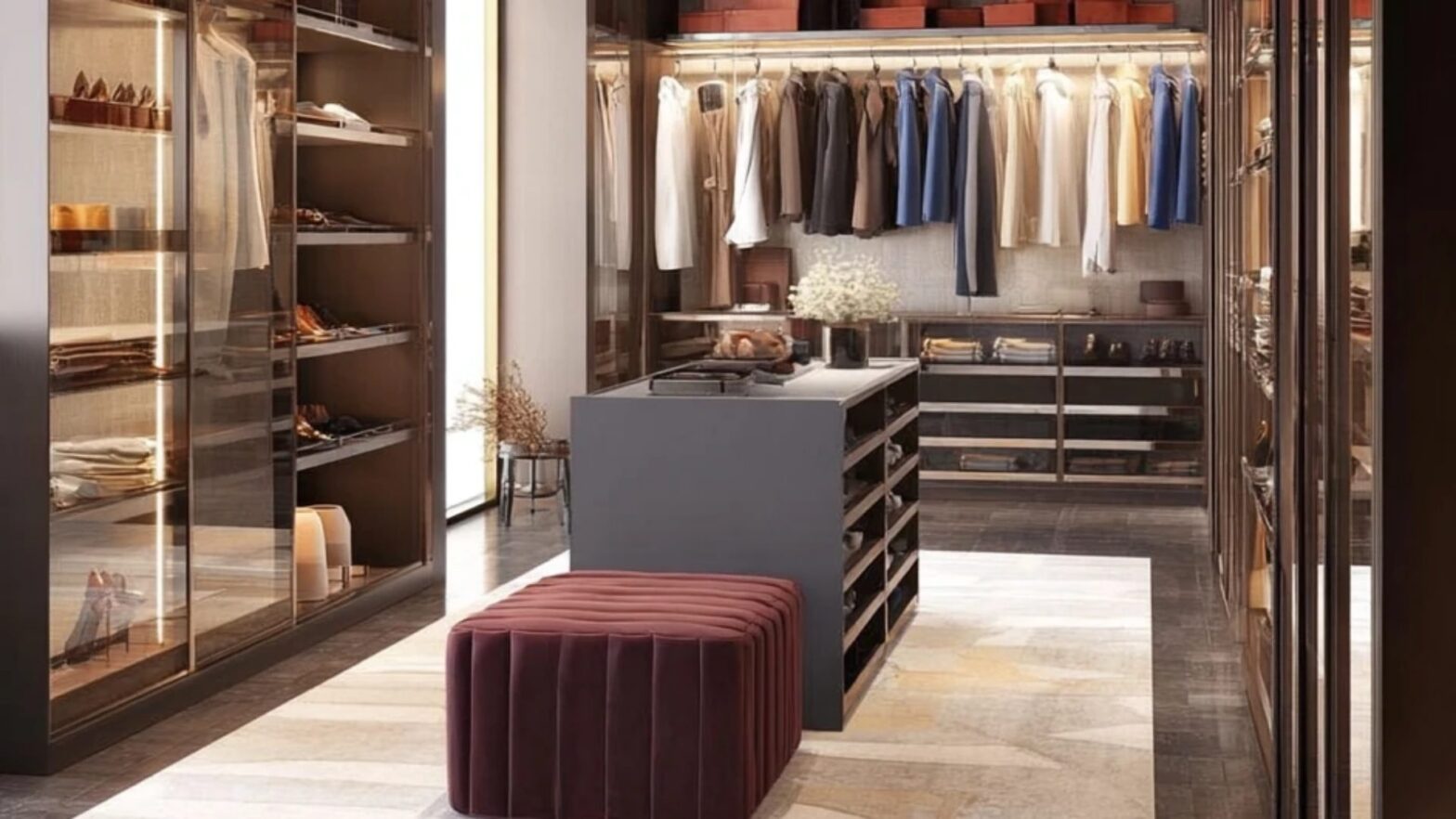











Walk-in closets have become one of the most requested features in new homes. They’re not only convenient, they also add comfort, organisation, and resale value. But if you’re planning to build a house from the ground up, your walk-in closet shouldn’t be an afterthought.
Planning it early in the construction process saves time, avoids layout conflicts, and ensures that the space functions as beautifully as it looks. If you then rightly want to focus directly on high-quality wardrobes such as Poliform closets or Novamobili wardrobes, it becomes more important than ever to plan the work in advance. Here are the key factors to consider before you start building.
1. Plan the Structure and Layout Early
Before construction begins, define the location and proportions of your walk-in closet in relation to the bedroom and bathroom. A single-sided layout generally requires at least 7 × 10 feet, while a double-sided design or one with a central island needs around 10 × 10 feet to allow comfortable movement.
Consider how the closet connects to other rooms. If it adjoins a bathroom, include a solid wall or door between the spaces to protect clothes from humidity. At the framing stage, your contractor can also plan proper wall reinforcement for hanging systems, cabinetry, and shelving that will carry significant weight over time.
2. Address Electrical and Lighting Requirements
Lighting can make or break the usability of a walk-in closet, and wiring should be planned before drywall installation. Combine different lighting types for best results:
- Recessed ceiling fixtures for general illumination
- LED strips under shelves or inside cabinets for accent lighting
- Task lights near mirrors or dressing areas
Add at least one power outlet for small appliances or chargers, and consider motion sensors or smart lighting systems for energy efficiency. If natural light is available, position mirrors to enhance brightness and reduce the need for additional fixtures.
3. Include Proper Ventilation and Climate Control
Closets are prone to humidity and poor air circulation, especially when located next to bathrooms. To prevent moisture damage, integrate the closet into the home’s HVAC system during planning.
Adding a small air vent or return duct maintains airflow and temperature consistency, reducing the risk of mildew and preserving the integrity of wood finishes and fabrics. In smaller or enclosed closets, an exhaust fan or dehumidifier can also help control moisture levels.
4. Choose Durable, Low-Maintenance Materials
Select finishes that balance appearance with practicality. While natural wood is attractive, it may warp or expand in changing humidity. Engineered wood, laminate panels, or melamine cabinetry offer more stability and are easier to clean.
For hardware, opt for corrosion-resistant materials such as stainless steel, anodised aluminum, or PVD-coated metals. These finishes maintain their look over time and resist fingerprints and tarnishing. Metallic accents like brushed gold or satin nickel can elevate the design, but they should be used selectively to avoid overwhelming the space.
5. Focus on Storage Efficiency
Think about daily use rather than just visual appeal. Plan for a combination of hanging rods, open shelving, and drawers at different heights. Include pull-out racks for accessories, shoe storage near the floor, and deep drawers for bulkier items.
If your layout allows for a central island or bench, maintain at least 36 inches of walking clearance on all sides to ensure accessibility. Custom modular systems from established brands can be installed during construction, but pre-planning the dimensions will ensure they fit seamlessly with the rest of the home’s framing.
6. Consider Flooring and Acoustics
Flooring affects comfort and sound levels in enclosed spaces. Carpet helps reduce noise and adds warmth, while engineered hardwood or luxury vinyl plank provides durability and easy maintenance. If you choose hard flooring, use an acoustic underlayment to minimise echo and add softness underfoot. Before cabinetry installation, verify that the subfloor is level: even small slopes can cause drawers or doors to misalign over time.
7. Optimise Mirror and Lighting Placement
Mirrors can double the sense of space and improve lighting efficiency. Place full-height mirrors opposite windows or artificial light sources to reflect brightness evenly across the room. If your closet is part of a new build, ask your contractor to frame dedicated wall sections for mirrors to avoid retrofitting later.
8. Budget and Resale Considerations
A custom walk-in closet is an investment. Construction costs vary widely depending on materials and features, typically ranging from $4,000 to $15,000 for most homes, with high-end projects exceeding $20,000. Despite the expense, a well-designed closet can increase resale value by up to 5%, according to real estate data. It signals quality, organisation, and attention to detail, traits highly valued by buyers. When budgeting, allocate funds for structural needs first (wiring, framing, ventilation), then for finishes and decorative upgrades. This approach ensures long-term functionality before focusing on appearance.