





















- Google searches for “loft storage solutions” are trending in the last month alone, as we look to tackle the New Year cleaning jobs
- According to a recent survey commissioned by Attic Self Storage, more than a third of Brits (36.50%) admit to using their loft for clutter
- Attic Self Storage have partnered with decluttering pro, Shannon Murphy, founder of Simpl Living Co, to share the do’s and don’ts of attic storage
January marks the month for a fresh start, with a home reset at the top of Brits lists. While it’s easy to focus on decluttering the most visible spaces in the home, experts have warned that one space is often misused during the annual declutter – the loft.
New research, commissioned by Attic Self Storage, surveyed 2,000 Brits to find out exactly how we use the spaces in our homes, revealing the spots which end up doubling up as storage.
Lofts and attic spaces were revealed to be the top place to store household clutter, with more than a third using the space in this way (36.50%). Interestingly, over half of women (55%) admit to storing clutter in their loft, compared to 47% of men.
And, when it comes to the cities with the most clutter in their loft, Southampton and Belfast were crowned the biggest hoarders, with 46% using their loft to stash away possessions. Sheffield follows closely at 45% while Plymouth and Newcastle are tied at 43%, suggesting lofts are a popular storage solution across the UK.
Danny King, Head of Stores at Attic Self Storage has partnered with professional organiser and decluttering pro, Shannon Murphy, founder of Simpl Living Co, to help people reclaim their loft space properly.
Shannon opens:
“A well-organised loft can be a valuable extension of your home, rather than just a dumping ground. However, there are some key risks of storing household items in your loft. These include pest infestations, structural damage from overloading, and potential roof leaks, which could damage stored items.
“Temperature extremes and fluctuations can also degrade belongings, especially sensitive materials.”
So what are the rules on storing household items in your loft? The experts advise…
Always prepare your loft for storing items first
Shannon says:
“Before using your loft for storage, always ensure the space is clean, dry, and pest-free.
“Boarding the loft floor sufficiently for your storage needs is important, but avoid boarding the entire loft if you want to limit how much you store.
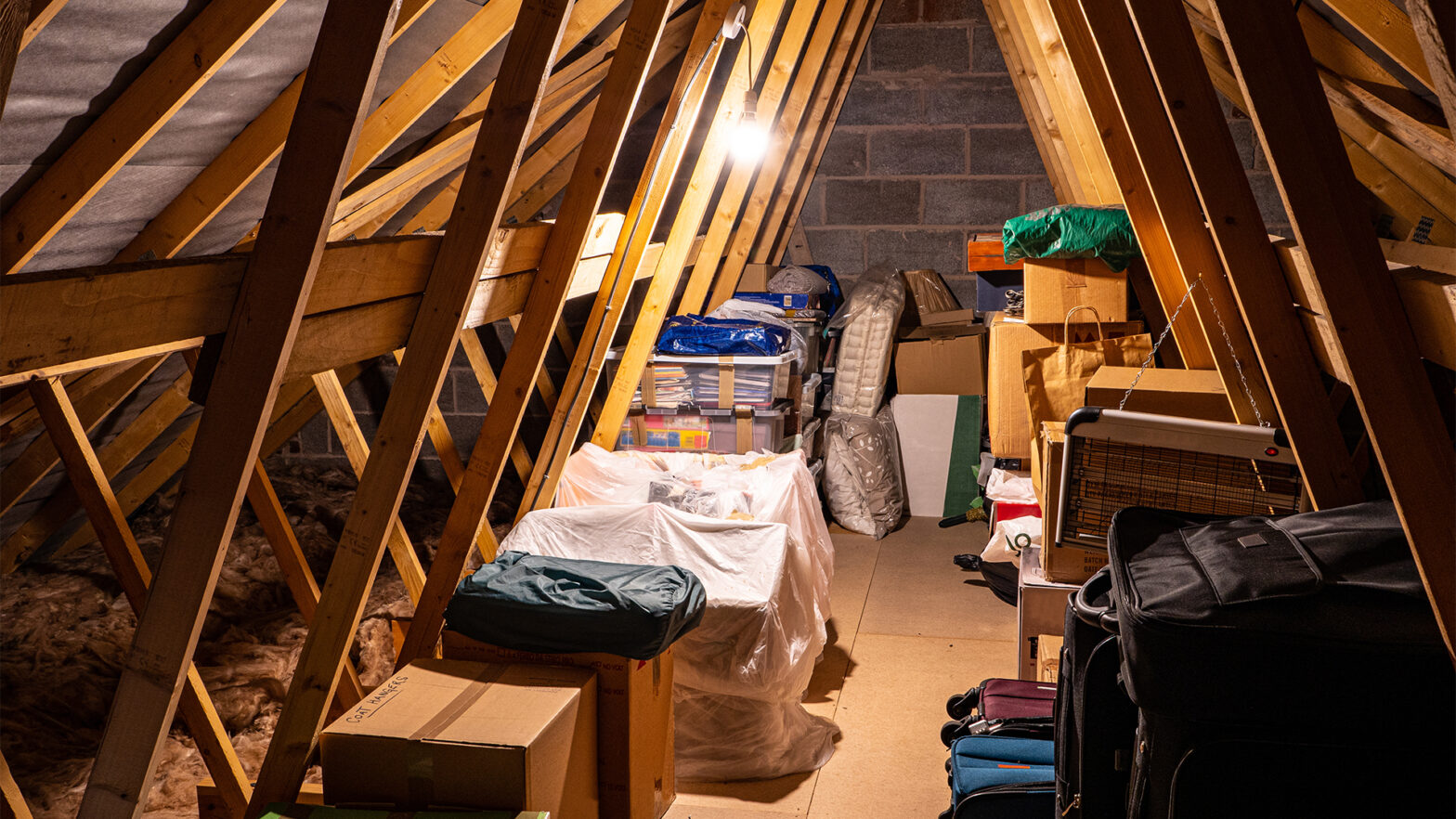
“Using tape to mark out labeled sections (e.g., camping gear, Christmas decorations) helps keep things organised and adding shelving in the eaves can maximise space and keep items off the floor.
“Make sure there’s safe and easy access, including a clear walkway so you can easily check for any roof leaks or drafts to help you protect your belongings.”
AVOID storing these four items in your loft
While it can be tempting to haul all of your household clutter up into your loft, the experts advise against this approach, warning to take extra care when storing paint, electronics, soft furnishings and bedding and heavy items such as furniture.
Shannon explains:
“Temperature extremes and fluctuations in your loft can cause items such as paint to separate or degrade, fabrics to weaken, and delicate items to become brittle or warped”
“Electronics, paper documents, and wooden items can also suffer damage. That’s why items sensitive to heat, cold, or moisture should be stored elsewhere or properly protected if stored in a loft.
“Paint requires a consistent climate and can be damaged by the heat of summer or cold winters typical in lofts.
“While soft furnishings and bedding can be stored if needed, they should always be vacuum-packed to protect against pests and moisture.
“Extremely heavy items are also best avoided due to the difficulty of navigating them through loft hatches and the risk of adding too much weight to the loft floor.”
Declutter your loft at least once a year
Shannon recommends:
“I recommend decluttering your loft at least once a year. Our needs and lifestyles change often, and regular decluttering ensures you keep only what you truly need and want. This practice frees up space, prevents overwhelming build-up, and makes future organisation easier and more manageable.”
Danny King, Head of Stores at Attic Self Storage adds:
“It’s best to check on the items in your loft three to four times a year, in line with the seasons changing. If there is particularly harsh weather, such as a storm, it’s always best to do a quick check to identify any issues such as leaks early on.
“Checking regularly also helps you to keep on top of any new issues such as mould or pest problems.”
Get organised to utilise the space properly
Shannon advises:
“Always declutter your loft first to keep only what you truly need and want. Group similar items together and use clear storage boxes so you can see your contents at a glance.
“Label boxes and mark storage zones on the loft floor with tape to make locating items quick and easy.
“Always keep a clear walkway to access all areas and consider adding shelving in the eaves, as this is a great way to create additional storage off the floor.”
Make sure not to overload the space
Danny warns:
“Overloading your loft can cause structural damage or impact air circulation, which could lead to the deterioration in the quality of any items stored.”
He continues:
“Overloaded lofts can cause structural problems such as sagging ceilings or joists which can be spotted in the rooms below. Cracks in ceiling plaster can also be signs, along with increased difficulty in opening or closing windows in the rooms below.
“Lofts do not generally have floors in the same way that the rest of the house does and are not designed to carry significant weight. Overloading the space also makes it more attractive to rodents and more likely to encounter issues such as condensation or mould.”
To find out more about how Brits utilise the space in their homes, visit: https://www.atticstorage.co.uk/blog/upsizing-uk-housing-market-statistics/