





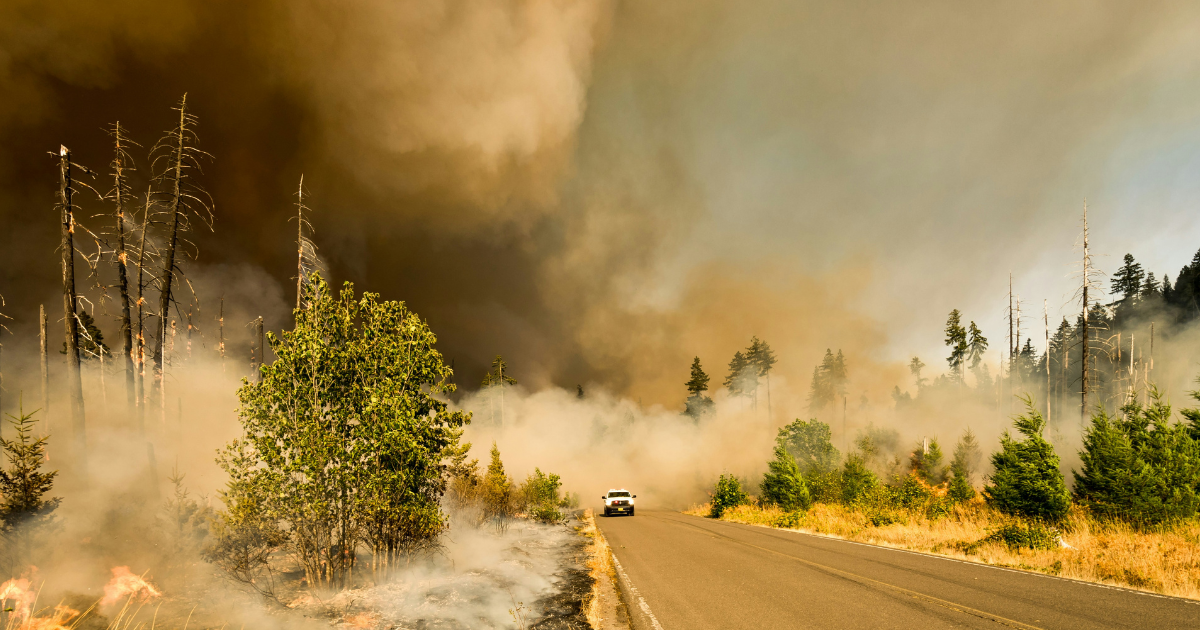











As cities continue to expand into areas surrounded by forests and grasslands, developers face an increasingly urgent challenge — how to build safely where nature and urban life meet. The wildland-urban interface construction standards were created precisely for this purpose, setting guidelines that help protect structures from the unpredictable threat of wildfire.
Roofing systems are vital for this defense. They’re often the first surface to be exposed to airborne embers, radiant heat and flame. For projects in high-risk areas, understanding and applying wildfire mitigation construction techniques is crucial for long-term resilience.
The Science of Ember Attack in Roof Systems
When wildfires burn, they generate countless glowing embers that can travel long distances through the air. These embers can lodge in roof coverings, collect in gutters or enter attics through vents. Even small accumulations can reach ignition temperatures, sparking a fire before the main flame front arrives.
Understanding how roofing systems respond to this threat is fundamental to prevention. Each component, from the surface material to the ventilation openings, has unique vulnerabilities and ignition thresholds.
| Roof Component | Vulnerability Mechanism | |
| _____________ | _____________________________________ | |
| Roof Covering | | | Direct ember impingement and heat conduction through materials such as shingles or tiles. Nonrated asphalt and wood coverings ignite rapidly under sustained ember exposure. |
| _____________ | _____________________________________ | |
| Ridges | | | Gaps beneath ridge caps allow embers to infiltrate attic spaces if not sealed properly. Wind-driven embers often settle here due to aerodynamics. |
| _____________ | _____________________________________ | |
| Valleys | | | Accumulation of debris, like leaves or needles, traps embers and sustains localized heating. |
| _____________ | _____________________________________ | |
| Eaves | | | Air currents carry embers into open eaves, igniting exposed wood or insulation. |
| _____________ | _____________________________________ | |
| Vents | | | Embers drawn into attic ventilation openings can ignite internal materials. |
Class A Roofing Materials: Technical Specifications
Class A roofing materials provide the highest level of fire resistance, as specified in ASTM E108 and UL 790 standards. These systems can withstand severe fire exposure, resist flame spread and prevent roof penetration.
This noncombustible roof materials comparison shows the top options for high-risk development zones:
- Clay and concrete tiles: Excellent heat resistance, noncombustible and ideal for sloped roofs. Require ember-blocking underlayments for optimal protection.
- Asphalt shingles: A durable, fire-resistant roofing option that protects against damage.
- Steel or aluminum roofing: Reflects radiant heat and resists ignition. However, edges and fasteners need sealing to prevent ember intrusion.
- Slate: Naturally noncombustible and durable, though heavier and more expensive to install.
- Synthetic composites: Engineered from fiberglass-reinforced asphalt or polymer blends designed to mimic traditional aesthetics with super fire performance.
Advanced Assembly Requirements for WUI Zones
A roof is only as strong as the assembly supporting it. In wildland-urban interface zones, layering and integration matter as much as the individual components.
An effective ember-resistant roof assembly typically begins with noncombustible deck sheathing, such as fiber-cement or gypsum board. Engineers then pair this base with Class A-rated coverings and a fire-resistant underlayment. Enclosed eaves and overhangs help prevent ember accumulation, while metal gutters with ember guards reduce the risk of ignition. Vent openings should utilize ember-proof mesh or baffle systems that have been tested to ASTM E2886 standards.
By viewing the roof as a complete assembly, builders can eliminate weak links that would otherwise compromise the entire structure.
Regulatory Framework and Code Compliance
Compliance is nonnegotiable for developers in fire-prone regions. U.S. building codes, specifically the International Wildland-Urban Interface Code and California Building Code, outline stringent roofing requirements for ignition-resistant construction. Key mandates include:
- Roof coverings must achieve a Class A rating.
- Open eaves are prohibited and must be fully enclosed with noncombustible roof materials.
- Vents must use ember-resistant mesh or be located to prevent ember intrusion.
- Gutters and downspouts should be constructed of noncombustible metal.
Adhering to these codes ensures safety and reduces insurance premiums and long-term maintenance costs.
Implementation Strategies for Developers
For developers building in high-risk wildfire zones, proactive planning and material sections are nonnegotiable. Success depends on understanding local risk profiles and integrating fire-resilient features from the earliest design stages.
Early Planning
Fire-resistant design begins before construction. Developers should start by mapping local fire risk zones and overlaying that data with project sites. Early collaboration between architects, fire engineers and roofing specialists ensures that safety measures are embedded in the design, not added as afterthoughts. It’s also critical for construction companies to stay on target with project timelines and budgets, and leveraging modern technology can make this easier.
Construction Oversight
During the construction process, quality control is crucial. Every layer of the roofing assembly must be installed to specification, including fasteners, underlayments and vent screens. Site inspections and third-party testing help verify compliance with wildfire mitigation construction techniques and ensure long-term durability.
Post-Construction Maintenance
A roof inspection should take place each year, as even the most advanced roofing system requires care. Regular debris removal, gutter cleaning and seal and vent inspection should be part of the homeowner’s maintenance plan. Ember-resistant roof assemblies can fail if organic material accumulates or protective coatings deteriorate over time.
Future Developments in Fireproof Roofing Technology
Innovation, sustainability and predictive technology are shaping the future of roofing. Researchers are making major strides in materials research in fire-resistant roofing, developing lightweight composites, nano-ceramic coatings and thermally stable membranes that can endure higher heat with lower environmental impact.
Smart roof systems combine real-time fire detection and suppression features through heat sensors, automated water misters or localized fire-retreat release mechanisms. These systems detect ember impact and respond immediately to reduce ignition potential.
There’s also a growing emphasis on integrating roofing systems with renewable energy infrastructure. Designers are creating solar panels and energy storage units in WUI areas with noncombustible mounts and insulating barriers to prevent heat transfer.
Predictive modeling tools for WUI zones development planning are transforming how communities assess wildfire exposure. These digital tools analyze topography, vegetation and climate data to forecast ember travel patterns and help determine optimal building placement and material selection.
Rising global temperatures, extended droughts and unpredictable wind patterns are intensifying wildfire risks, forcing a reevaluation of future WUI fire risk and building requirements. Adaptation will mean tougher materials and smarter, more proactive building strategies.
Building Resilience for the Next Generation
In wildfire-prone regions, the roof is a vulnerability and an opportunity. By understanding the science of ember attack and addressing weak points, developers can design structures that truly resist ignition. The future of wildfire mitigation construction lies in innovation, where sustainability, data and safety converge.