

















Imagine your roof as a ship steering through treacherous seas, constantly battered by salt and sun. The right materials can mean the difference between a sturdy vessel and a shipwreck. In coastal regions, where UV rays and corrosive air reign, choosing durable roofing isn’t just a matter of aesthetics; it’s essential for longevity and performance. Many homeowners turn to top-rated San Diego roofers for guidance on materials that hold up against salt air and intense sun exposure. So, how do you determine the best options that can withstand these harsh conditions while fitting your budget and style? Let’s explore the choices that can keep your home secure against nature’s elements.
Importance of Choosing Durable Roofing
When it comes to roofing, durability is vital. The roofing material you select directly influences your structure’s longevity and performance, especially in challenging environments. Given fluctuating weather patterns and extreme conditions, opting for durable roofing isn’t just a choice; it’s a necessity.
High-quality roofing materials can withstand severe elements, including UV radiation, heavy rainfall, and strong winds. For instance, asphalt shingles may suffice in temperate climates, but they won’t hold up well in regions experiencing intense heat or moisture. You need to take into account materials like slate, tile, or specially formulated synthetic products that offer enhanced longevity and resistance to harsh environmental factors.
Additionally, the cost of roofing is an important factor. While durable materials may carry a higher initial price tag, they often result in lower long-term maintenance costs and fewer replacements.
When you invest in durable roofing, you’re investing in the overall structural integrity of your property. Therefore, a careful evaluation of your local climate and potential environmental stressors is essential in guiding your material selection.
Ultimately, prioritizing durability guarantees your roof will protect your home effectively for years to come.
Metal Roofs for Coastal Areas
Coastal areas present unique challenges for roofing materials, making metal roofs an excellent choice for these environments. The primary concern in such regions is the corrosive nature of salt air, which can greatly degrade traditional roofing materials. Metal roofs, particularly those coated with a high-quality protective finish, resist corrosion effectively. This durability guarantees longevity, reducing the need for frequent replacements or repairs.
Additionally, metal roofs offer superior resistance to wind uplift, a critical factor in coastal areas prone to hurricanes and severe storms. Their interlocking panels and lightweight design contribute to enhanced structural integrity, minimizing the risk of roof failure during extreme weather.
Moreover, metal roofs reflect sunlight, which helps reduce cooling costs in hot, sunny climates. This energy efficiency is particularly beneficial in coastal areas, where temperature fluctuations can be considerable.
When choosing a metal roof, consider materials like aluminum or galvanized steel, as they provide excellent resistance to rust and corrosion.
With proper installation and maintenance, metal roofs can offer a lasting solution that withstands the rigors of coastal living, guaranteeing your home remains protected against the elements.
Tile Roofing Benefits
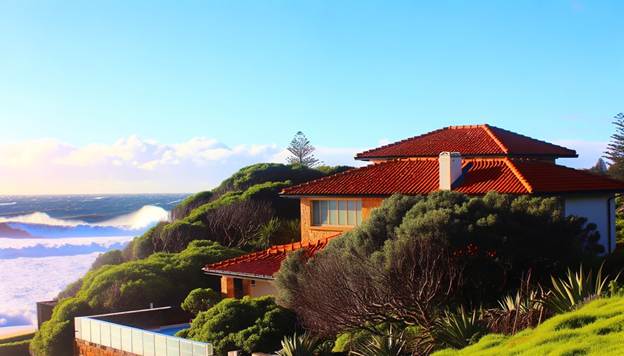
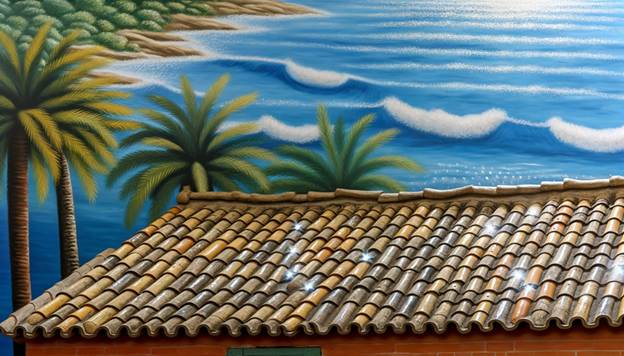
Tile roofing offers a robust solution for homeowners seeking durability and aesthetic appeal in harsh conditions. Its inherent properties make it particularly well-suited for environments characterized by intense sunlight and salt air exposure.
First, the material’s natural thermal resistance helps regulate indoor temperatures, reducing the need for excessive air conditioning. This energy efficiency can lead to significant cost savings over time.
Moreover, tile roofs are extremely durable. They can withstand extreme weather events, including high winds and heavy rains, without compromising structural integrity. Their non-combustible nature also adds a layer of safety, providing peace of mind against fire hazards.
In addition to functional benefits, tile roofs enhance your home’s curb appeal. Available in various styles and colors, they can complement any architectural design, increasing property value.
Maintenance is another essential aspect. While some roofing materials require frequent repairs or replacements, tile roofs can last for decades with minimal upkeep, primarily due to their resistance to rot and insect damage.
Impact of UV Rays on Roofing
Ultraviolet (UV) rays from the sun exert a notable impact on roofing materials, leading to degradation over time. These rays penetrate the surface of roofing products, causing chemical reactions that weaken their structural integrity.
For instance, asphalt shingles can suffer from granule loss, which diminishes their protective capabilities and accelerates the aging process.
When UV exposure occurs, materials may also experience thermal expansion and contraction, resulting in cracks and warping. This not only compromises waterproofing but can also lead to leaks, increasing maintenance costs and reducing the roof’s lifespan.
It’s essential to monitor signs of UV damage, such as discoloration or brittleness, as these indicators can signal a need for replacement.
You should also consider the reflectivity of your roofing material, as higher reflectivity can mitigate heat absorption and reduce UV impact.
Choosing materials specifically designed for UV resistance can greatly enhance your roof’s durability. Opting for coatings or treatments that provide additional UV protection is also advisable.
Synthetic Roofing Materials
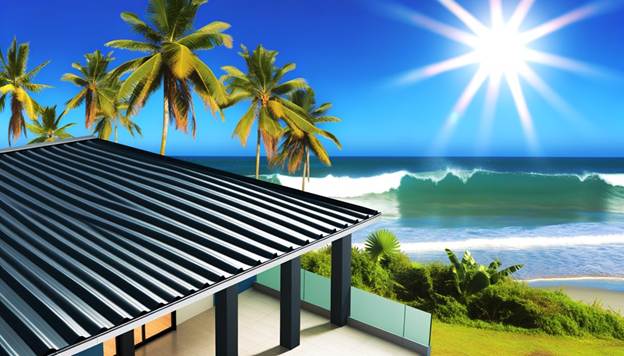
When selecting roofing materials that can withstand harsh environmental conditions, synthetic roofing options emerge as a viable alternative. These materials, such as synthetic slate and rubberized roofing, are engineered to resist UV degradation and salt air corrosion, making them ideal for coastal areas.
Synthetic roofing materials often mimic traditional options while providing superior durability. For instance, synthetic slate tiles are lightweight, reducing structural load, yet they maintain the aesthetic appeal of natural slate. Their composition typically includes high-density polymers, which enhance resistance to impact and weathering.
Moreover, synthetic materials offer enhanced longevity. Many manufacturers provide warranties extending up to 50 years, reflecting their confidence in durability. Additionally, these roofing systems generally require less maintenance, reducing long-term costs for homeowners.
It’s important to evaluate the installation process, as synthetic roofing may require specialized techniques or materials to guarantee peak performance.
You should also assess local climate conditions and consult with roofing professionals to determine the best synthetic option for your specific needs.
Cool Roof Technology
Cool roof technology represents an innovative approach to roofing that enhances energy efficiency and comfort in buildings. By utilizing reflective materials and coatings, these roofs minimize heat absorption, leading to cooler indoor environments and reduced energy costs. This technology is particularly beneficial in sunny, coastal areas where the sun’s intensity can greatly impact temperature regulation.
Consider the following emotional benefits of cool roof technology:
● Lower energy bills: Save money while staying comfortable.
● Extended roof lifespan: Protect your investment against heat damage.
● Environmental impact: Contribute to a greener planet by reducing energy consumption.
● Enhanced comfort: Enjoy a cooler living space during sweltering summer months.
●Increased property value: Boost your home’s appeal and resale potential.
Implementing cool roof technology not only aligns with sustainability goals but also enhances building performance.
As you explore options for your roofing project, consider materials that meet cool roof standards, ensuring a blend of durability and efficiency.
Investing in a cool roof today can lead to considerable long-term advantages, positioning your property as an energy-efficient solution in an increasingly eco-conscious market.
Maintenance Tips for Coastal Roofs
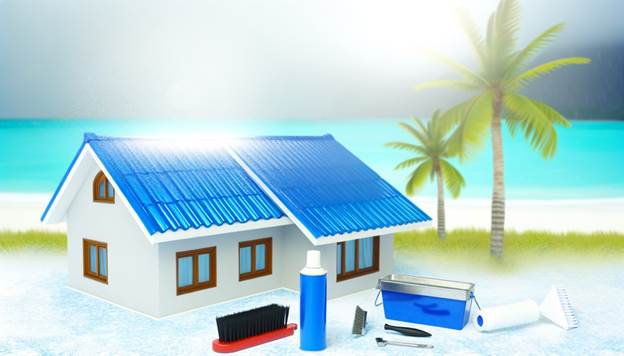
Maintaining a coastal roof requires a proactive approach to address the unique challenges posed by salty air, high humidity, and intense storms.
First, conduct regular inspections at least twice a year, focusing on flashing, seams, and potential corrosion points. Make sure to check for signs of wear or damage, particularly after severe weather events.
Cleaning your roof is essential. Remove debris, such as leaves and branches, that can trap moisture and promote mold growth. Use a mild detergent to wash the roof surface, ensuring you don’t damage any protective coatings.
Pay special attention to gutters and downspouts; clear them of blockages to prevent water accumulation, which can lead to structural damage.
Consider applying a protective sealant every few years to enhance resistance against salt and moisture. This not only extends the lifespan of your roofing materials but also reduces the need for costly repairs.
Comparing Costs of Roofing Options
Understanding the costs associated with various roofing options is essential for homeowners facing harsh conditions. The right choice can greatly impact both your budget and long-term maintenance needs.
Here’s a breakdown of common materials and their relative costs:
● Metal roofing: While upfront costs are higher, they’re long-lasting and resistant to corrosion, ultimately saving you money on repairs.
● Tile roofing: This option offers durability but can be hefty on your wallet initially, and installation can be complex, increasing labor costs.
● Asphalt shingles: These are generally the most affordable option, but their lifespan in coastal environments may lead to more frequent replacements.
● Synthetic materials: Though they can mimic other materials, synthetic options often come with varying price points, depending on quality and installation.
●Wood shingles: While aesthetically pleasing, their vulnerability to moisture and pests can lead to higher long-term costs.
Aesthetic Considerations for Coastal Homes
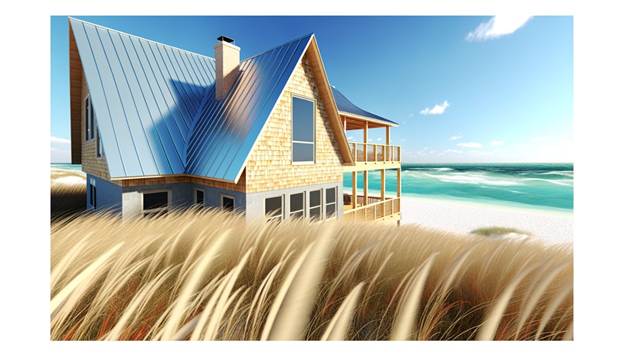
When selecting roofing materials for coastal homes, aesthetics play a considerable role in enhancing curb appeal while ensuring functionality. The visual impact of your roof contributes not only to the overall architectural style but also to the home’s harmony with its coastal environment.
You’ll want to choose materials that complement the natural surroundings, such as ocean blues, sandy beiges, and earthy tones.
Consider the texture and finish of your roofing materials. Smooth surfaces can reflect sunlight, while textured options may provide a more rustic appearance. For instance, metal roofs offer sleek lines and a modern look, whereas shingles can create a traditional aesthetic.
Color choices are equally important; lighter shades help reflect heat, aligning with both energy efficiency and style.
Moreover, think about the roof’s pitch and shape. A steeply pitched roof can evoke a classic seaside cottage feel, while a flatter profile may suit a contemporary design.
Ultimately, the right combination of materials, colors, and shapes won’t only withstand the coastal climate but also contribute considerably to your home’s aesthetic appeal, ensuring it stands out beautifully against the backdrop of sun and sea.
Local Regulations and Building Codes
Local regulations and building codes frequently dictate the types of roofing materials you can use in coastal areas. These rules are designed to guarantee safety, durability, and environmental compliance. You must familiarize yourself with local codes before selecting roofing options. Failure to comply can lead to costly penalties or the need for expensive modifications later.
Consider these vital aspects when maneuvering through regulations:
● Confirming your roof withstands high winds
● Selecting materials resistant to salt corrosion
● Meeting fire safety standards for your region
● Complying with energy efficiency requirements
●Securing necessary permits before construction
Each item on this list reflects the importance of adhering to local guidelines. Understanding these regulations isn’t just about compliance; it’s about protecting your investment and making sure your home can endure the coastal environment’s challenges.
Always consult your local building department for the most current regulations, as they can vary greatly by location. By doing so, you’ll avoid potential issues and achieve a successful roofing project that stands the test of time against harsh conditions.
Conclusion
To sum up, when it comes to roofing in harsh sun and salt air, choosing the right material isn’t just important—it’s absolutely critical for your home’s survival! Metal roofs will bravely withstand the most ferocious storms, while tile roofs will outlast time itself. Synthetic materials offer a stylish yet indestructible alternative. Don’t skimp on durability; your roof’s resilience is the fortress that protects everything beneath it. Remember, a wise choice now can save you from monumental headaches later!