












Looking to add comfort, style, and protection to your outdoor space? A weatherproof awning might be exactly what your home needs, and honestly, it’s one of those upgrades that makes a bigger difference than you’d expect.
Whether you’re shielding your patio from blazing summer sun, protecting doors from rain, or trying to extend your usable living space, choosing the right awning isn’t just about looks. It’s about performance and durability that’ll hold up through whatever weather your area throws at it.
With so many materials, designs, and installation options out there, it’s easy to feel overwhelmed when you start shopping around. Here’s how to choose a weatherproof awning that actually fits your home, your climate, and your lifestyle.
Know Your Awning Types Before You Shop
There are two main categories to choose from, and understanding the difference can save you from buyer’s remorse later. Fixed awnings are permanently installed and great for year-round protection, especially if you have a specific area that always needs coverage.
Retractable awnings offer flexible shade when you want it and can be retracted when you don’t, which is perfect if you sometimes want full sun or need to accommodate different seasons. Each type has real benefits depending on your situation.
Fixed options tend to be more durable for harsh weather since they’re built to stay put, while retractable ones offer convenience and space flexibility that many homeowners love. Also consider motorized versus manual retractables depending on your budget and how often you’ll actually use the retract feature.
Pick the Right Material for Your Climate
“Weatherproof” means absolutely nothing if the materials can’t handle your region’s specific conditions. Fabric options like acrylic or polyester are UV-resistant, water-repellent, and breathable, which works great for moderate climates.
Vinyl-coated fabric is your best bet for rain-heavy climates since it sheds water really well, but it may trap heat more than other options. Aluminum or polycarbonate materials are super durable for dealing with wind, snow, and intense sun, but they’re heavier and more permanent.
Think honestly about the elements your awning will face throughout the year. Is it mostly sun, heavy rain, strong winds, or all of the above? Your material choice should match your reality, not your wishful thinking about the weather.
Match the Awning to Your Home’s Architecture
Your awning should complement your home’s style, not fight with it or look like an afterthought. Traditional homes look great with canvas or scalloped-edge styles that add classic charm and character.
Modern designs call for sleek, flat-panel or metal awnings that look clean and minimal. Cottages or farmhouse styles work well with warm-toned fabric and curved lines that feel welcoming and cozy.
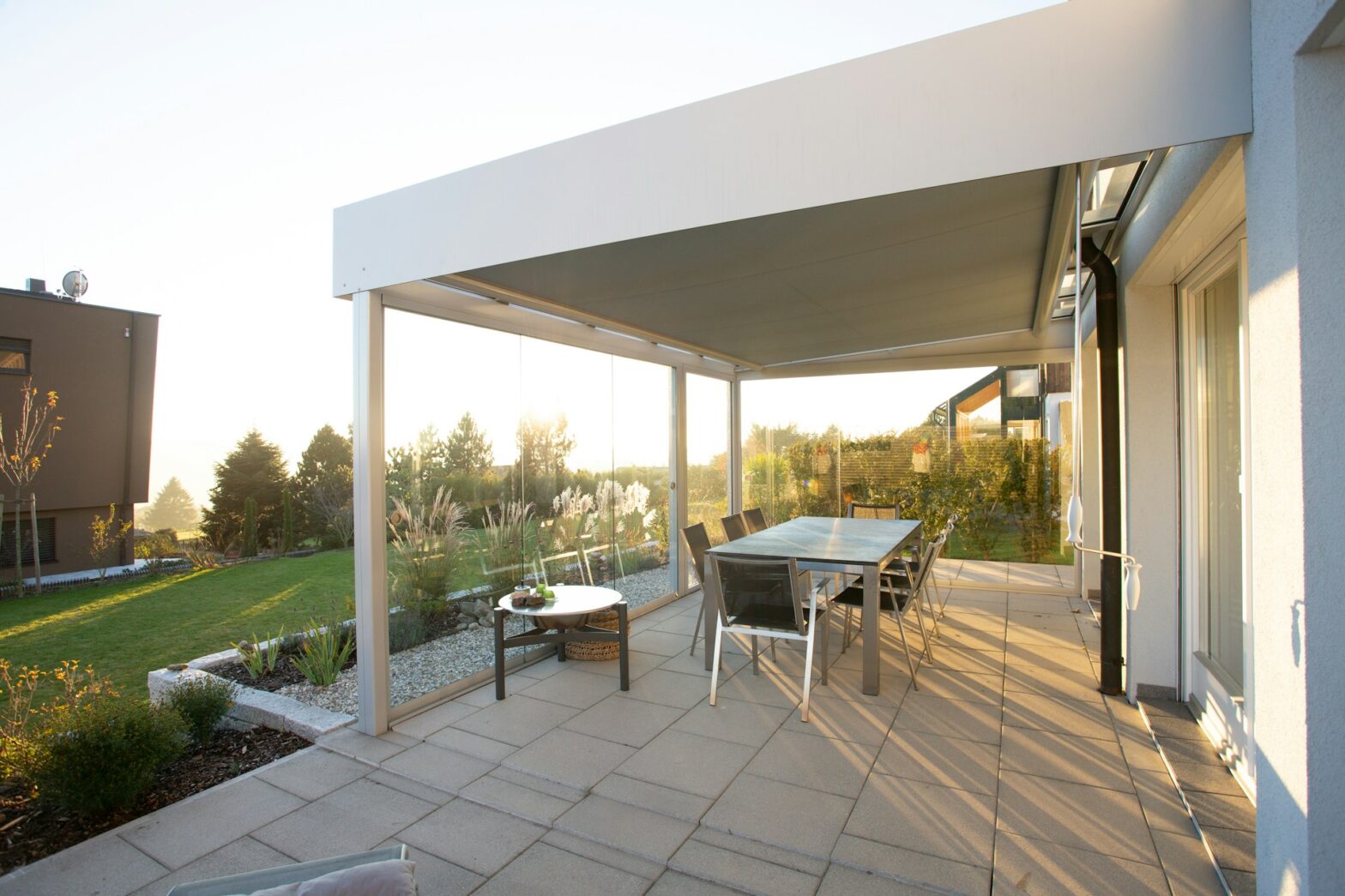
Also factor in placement when you’re planning. Will it go over a door, cover a patio, or span a full wall? This affects both visual balance and the structural support you’ll need, so think about the big picture.
Consider Installation, Maintenance, and Your Budget
DIY kits are definitely available if you’re handy, but some awnings, especially heavy-duty or motorized ones, really require professional installation. Don’t underestimate the complexity if you’re not experienced with this kind of project.
Maintenance is another factor that varies significantly by material. Fabric options need regular cleaning and occasional re-coating to stay weatherproof, while metal types require minimal upkeep but can dent or corrode over time.
Budget-wise, fabric retractables can start around $300 for basic models, while high-end motorized systems or custom aluminum options can run into the thousands. Choose something durable enough to be cost-effective over time rather than going cheap and replacing it in a few years.
Look for Extra Features That Actually Add Value
Today’s weatherproof awnings can come with extras that boost function beyond just basic shade. Built-in LED lighting lets you use your outdoor space in the evening, and wind sensors can auto-retract during storms to prevent damage.
Side panels add extra shade or privacy, which can be really valuable depending on your setup. Some companies even offer custom branding or logos for business properties that want to make their awning work double duty.
Ask about warranties too, because some brands offer 5-10 years of coverage on fabric and frame, which can help protect your investment. A good warranty often indicates a company that stands behind their product quality.
Think Long-Term, Not Just Initial Cost
Remember that the cheapest option upfront isn’t always the best value over time. A well-chosen awning should last years and provide consistent protection and comfort throughout different seasons.
Consider how much you’ll actually use your outdoor space and what kind of weather protection you really need. If you’re someone who spends a lot of time outside, investing in higher quality makes sense.
Make the Right Choice for Your Home
Choosing the right weatherproof awning for your home means balancing style, durability, and function in a way that makes sense for your specific situation. By honestly considering your climate, architecture, and usage goals, you can pick an awning that not only holds up through the seasons but also enhances your outdoor space for years to come.
Whether you go with a retractable fabric model or a permanent aluminum fixture, the right awning makes all the difference in comfort, curb appeal, and long-term value for your home.